
Finance Minister Nirmala Sitharaman is set to present her ninth consecutive Union Budget on February 1, 2026, amid expectations of income tax relief and customs duty reforms
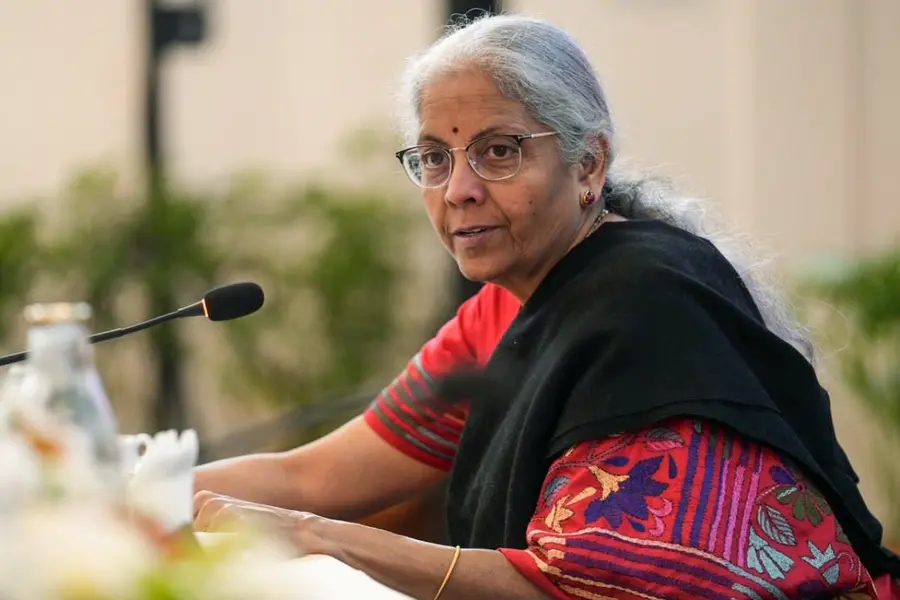
Union Budget 2026 will be presented by Finance Minister Nirmala Sitharaman in the Lok Sabha on February 1, marking the first time the Budget is scheduled on a Sunday. The Budget speech is expected to begin at 11 am. The presentation comes at a time of global economic uncertainty, driven by trade tensions and tariff escalations initiated by the United States.
A major focus of Budget 2026 is likely to be support for export-oriented sectors affected by steep tariffs, with industry seeking targeted relief measures to protect competitiveness. Customs duty rationalisation is also expected, with calls for fewer rate slabs, procedural simplification and an amnesty scheme to unlock disputes worth over ₹1.5 lakh crore.
For individuals, expectations centre on further income tax relief under the new tax regime. While last year’s exemption limit was raised to ₹12 lakh, taxpayers are now seeking an increase in standard deduction and clearer transition rules as the new Income Tax Act, 2025, comes into force from April 1. Industry has also pushed for rationalisation of TDS and TCS structures into fewer categories.
Defence spending is another key area in focus, particularly following Operation Sindoor and rising geopolitical tensions. Analysts expect higher allocations to strengthen military preparedness and domestic defence manufacturing.
Infrastructure development, especially railways, roadways and multimodal transport, is expected to remain central to the government’s growth strategy. Rail-led mobility, logistics efficiency and technology-driven transport solutions are being viewed as critical to reducing costs and supporting sustainable urbanisation.
The healthcare and medical devices sectors are seeking increased funding under production-linked incentive schemes, expansion of Ayushman Bharat coverage, and reduced customs duties on essential raw materials. The green energy sector is also looking for stronger financial incentives to accelerate India’s transition to a low-carbon economy.
Other key expectations include incentives for MSMEs, funding for critical minerals such as lithium and cobalt, provisions for the 8th Pay Commission, and higher outlays for employment generation schemes under the Viksit Bharat framework. Devolution of taxes to states, in line with the 16th Finance Commission’s recommendations, is also expected.
The Budget session of Parliament begins on January 28, with the Economic Survey 2025-26 to be tabled ahead of the Budget. Together, these documents will outline the government’s fiscal strategy as India shifts its focus from deficit management to reducing the debt-to-GDP ratio.
Published: 26 Jan 2026, 12:17 pm IST
Disclaimer: Kindly avoid objectionable, derogatory, unlawful and lewd comments, while responding to reports. Such comments are punishable under cyber laws. Please keep away from personal attacks. The opinions expressed here are the personal opinions of readers and not that of Mathrubhumi.
