
Adani Defence & Aerospace has teamed up with US-based Sparton DeLeon Springs, a subsidiary of Elbit Systems, to manufacture sonobuoys in India.
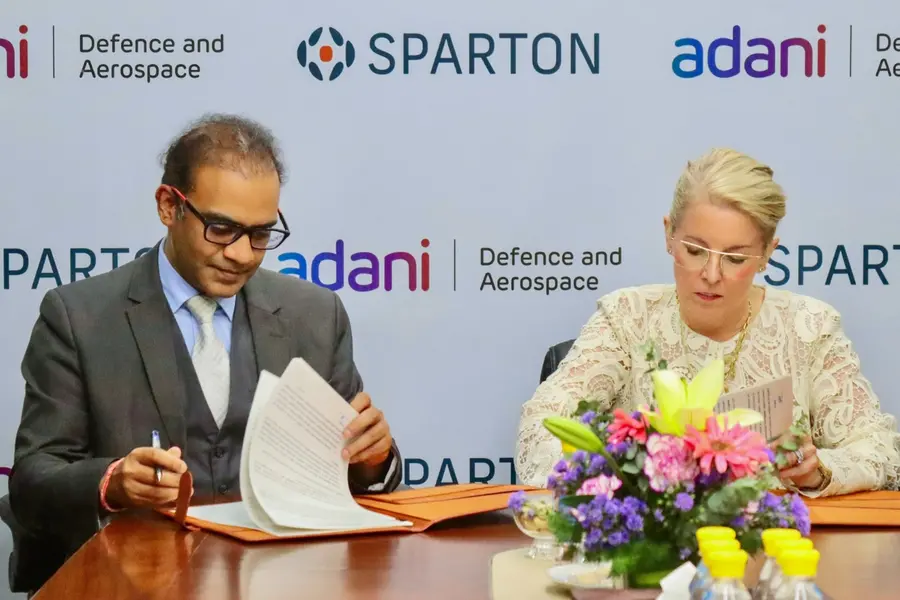
Adani Defence & Aerospace on 18 May signed a binding collaboration agreement with Sparton DeLeon Springs LLC — the anti-submarine warfare specialist owned by Elbit Systems of America — to indigenise production of sonobuoys, the expendable listening devices that underpin under-sea domain awareness (UDA) and anti-submarine warfare (ASW).
Announced from Ahmedabad, the accord makes Adani the first private Indian company to offer a home-grown sonobuoy solution and marks a significant milestone in New Delhi’s push for defence self-sufficiency.
Sparton, which traces its ASW heritage to World War II, will transfer technology, design data and integration support. Adani will handle localisation, assembly, testing and life-cycle support at its expanding defence manufacturing campuses. The companies will co-engineer variants optimised for the Indian Navy’s maritime-patrol aircraft and shipborne helicopter fleets.
Industry estimates peg India’s sonobuoy requirement at several thousand units a year, a market previously met almost entirely through imports from the United States and Europe. The Defence Ministry’s Positive Indigenisation List already mandates phased domestic sourcing of sonar-based expendables; the Adani–Sparton venture gives the Navy an immediate pathway to compliant supply, with export potential to friendly navies in the Indian Ocean region.
Jeet Adani called robust ASW capability “an imperative for safeguarding sovereignty” in increasingly contested seas. Sparton president Donnelly Bohan said the tie-up would “create high-technology skill sets” and deliver “reliable ASW solutions tailored to the Indian Navy’s needs.” CEO Ashish Rajvanshi added that localised sonobuoy production follows earlier Adani-Elbit successes, including UAV manufacture and autonomous aerial systems design centres set up since 2016.
The partnership’s first phase covers assembly from semi-knocked-down kits, progressing to full-scale indigenous manufacture of acoustic sensors, RF transmitters and pyrotechnic deployment cartridges. Adani expects deliveries to start within eighteen months, subject to user trials and acceptance. The Defence Ministry is finalising an initial acquisition under the Buy (Indian-IDDM) category, which offers the highest indigenous-content weighting in procurement scoring.
Defence analysts say the project could catalyse an Indian supply chain for piezo-ceramic transducers, signal-processing hardware and specialised lithium batteries — components that presently face import-licensing hurdles. By mirroring recent breakthroughs in missile-warhead and seeker localisation, the sonobuoy programme illustrates how private-sector participation is expanding beyond aerospace into the traditionally government-dominated naval-sensors domain.
Published: 18 May 2025, 04:40 pm IST
Related Topics
Disclaimer: Kindly avoid objectionable, derogatory, unlawful and lewd comments, while responding to reports. Such comments are punishable under cyber laws. Please keep away from personal attacks. The opinions expressed here are the personal opinions of readers and not that of Mathrubhumi.
