
Pensioners are demanding clarity from the government over the 8th Pay Commission, with REWA seeking an amendment to explicitly cover retirees before January 1, 2026.
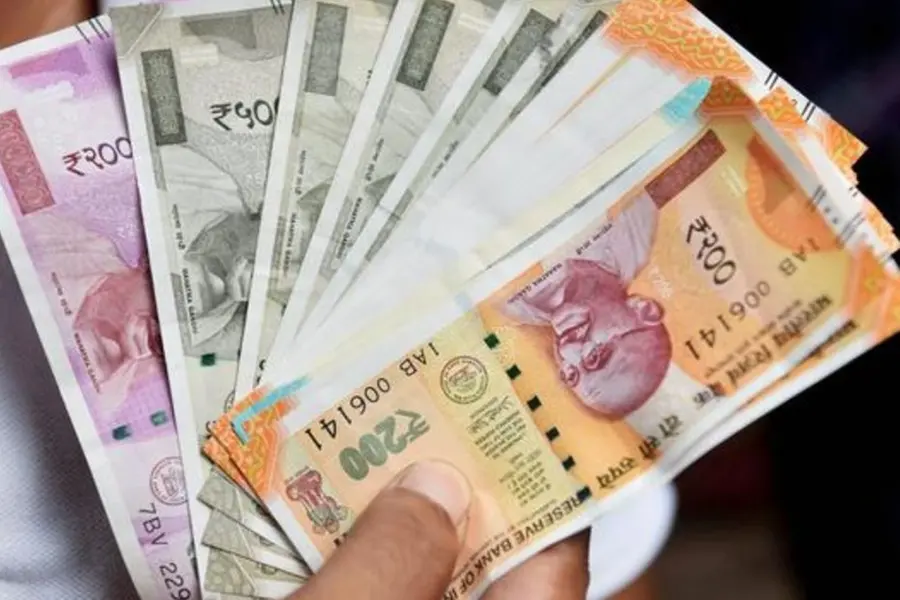
Pensioners are seeking clarity over whether retirees who left government service before January 1, 2026, will have their pensions revised under the 8th Pay Commission, with the Retired Employees Welfare Association (REWA) asking the government to amend its Terms of Reference.
What are pensioners demanding?
Also Read

REWA has written to Prime Minister Narendra Modi seeking a specific amendment to the 8th Pay Commission's ToR to cover pension and family pension revision for all pensioners and family pensioners who retired before January 1, 2026.
In its September 7 representation, the association said the existing wording has created uncertainty among around 69 lakh pensioners and family pensioners.
REWA has also asked the government to issue an official clarification if it does not amend the ToR.
Why is the ToR causing concern?
The issue centres on Para 2(e) of the 8th Pay Commission's Terms of Reference.
The provision refers to reviewing the structure of Death-cum-Retirement Gratuity and pensions of employees not covered under the National Pension System, including those under the Unified Pension Scheme.
Pensioner organisations argue that the wording does not explicitly state that people who had already retired before January 1, 2026, are covered for pension revision.
Their demand is therefore for the government to remove the ambiguity by expressly including pre-2026 retirees.
What happened under previous Pay Commissions?
Pensioner organisations have pointed to the wording of earlier Pay Commission ToRs.
REWA and other bodies say the 5th, 6th and 7th Pay Commission frameworks contained clearer references to pensioners, including pension revision for existing or past pensioners.
The comparison has become a central part of the demand for an amendment to the 8th CPC ToR.
Other pensioner demands
The disagreement goes beyond the question of whether pre-2026 pensioners are covered.
Pensioner and employee organisations have also raised concerns about:
- Revision of family pension.
- Pension parity between past and future pensioners.
- The effective date of pension revision.
- Retirement benefits.
The reference to the “unfunded cost of non-contributory pension schemes” in the ToR.
Interim relief during the Pay Commission process.
The Bharat Pensioners' Samaj and All India Defence Employees' Federation have previously raised similar concerns.
Where does the 8th Pay Commission stand?
The 8th Central Pay Commission was announced in January 2025. The Union Cabinet approved its Terms of Reference on October 28, 2025, and the Commission was formally constituted through a Gazette notification dated November 3, 2025.
The Commission is headed by Justice Ranjana Prakash Desai, with Prof. Pulak Ghosh as part-time member and Pankaj Jain as member-secretary.
It has 18 months from its constitution to submit its recommendations, putting the expected deadline around May 2027.
The Commission has already completed its questionnaire and memorandum exercises and is now conducting wider consultations with employees, pensioners and other stakeholders.
What happens next?
The immediate issue for pensioners is whether the government will amend the ToR.
The Commission can receive representations and hear pensioner organisations, but any formal change to its mandate would require government action.
If the government amends the ToR, pre-January 1, 2026 retirees could receive explicit coverage within the Commission's pension-revision mandate. If there is no amendment, the existing wording could remain a point of contention during the Commission's work.
However, there is currently no government decision confirming either the exclusion or guaranteed inclusion of pre-2026 pensioners.
Will pensions increase from January 1, 2026?
There is no confirmed payment date or final pension increase yet.
The Commission is expected to submit its recommendations around May 2027, after which the government will decide which recommendations to accept and how they will be implemented.
The government has indicated that, following the usual 10-year cycle, the recommendations would normally be expected to take effect from January 1, 2026. However, the implementation date is not expressly specified in the notified ToR.
Therefore, any discussion of a confirmed pension hike, arrears or payment schedule remains premature.
Why the ToR matters
The pensioners' current demand is fundamentally about the scope of the Pay Commission's mandate, rather than the size of any eventual pension increase.
If existing retirees are explicitly included in the ToR, there would be greater clarity that the Commission can make recommendations concerning their pension and family pension. Without such wording, pensioner organisations fear that the final recommendations could leave questions about the treatment of past retirees unresolved.
The issue of pension parity is also significant. A revised pension structure for employees retiring after the implementation of the 8th CPC could potentially create differences with people who retired shortly before the new structure takes effect. Pensioner organisations are therefore seeking explicit provisions covering both groups.
The next important development will be any government response to the demand for a ToR amendment or clarification.
Published: 10 Sept 2026, 08:12 am IST
ABOUT THE AUTHOR
Disclaimer: Kindly avoid objectionable, derogatory, unlawful and lewd comments, while responding to reports. Such comments are punishable under cyber laws. Please keep away from personal attacks. The opinions expressed here are the personal opinions of readers and not that of Mathrubhumi.