
A detailed look at why the trial court found no conspiracy charge against Dileep and how survivor and prosecution challenges persist.
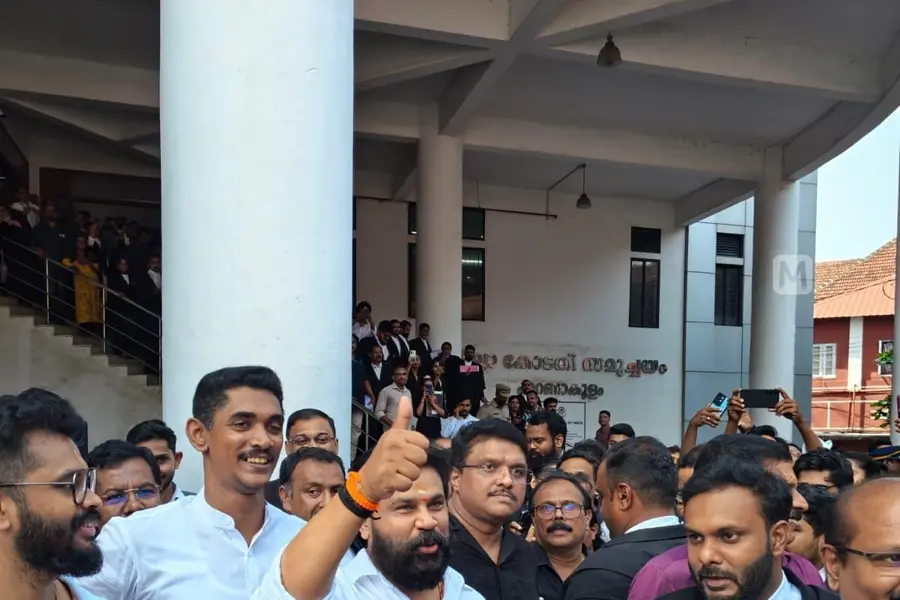
Kochi: Although the trial court has ruled that actor Dileep—accused by the investigation team of being the mastermind in the actress assault case—is not guilty, neither the prosecution nor the survivor sees this as the end of their battle. The detailed judgment will be released on December 12, after sentencing the convicted accused. Only then will it become clear on what grounds the trial court concluded that the conspiracy charge against Dileep cannot be sustained. After receiving the order, the State will file an appeal in the High Court.
The prosecution had strongly argued that there were several factors linking Dileep to the case. However, it appears that the trial court found these insufficient to establish criminal conspiracy. The prosecution and the lawyers representing the survivor are confident that the evidence unearthed during investigation can be effectively presented before the appellate courts. Director General of Prosecutions T A Shaji confirmed that an appeal would be filed immediately after the judgment is issued. The prosecution had submitted a 1,512-page explanatory brief before the trial court, detailing the evidence connecting Dileep to the case. They point out that once the matter reaches the higher courts, Dileep will have to respond to these points in writing.
From the beginning, Dileep’s stand was that he did not know Pulsar Suni. The prosecution’s position was that this claim was false. According to the records, the statement given by the survivor’s brother at the initial stage of the case already contained indications of Dileep’s involvement.
From the inception, the survivor ‘distrusted’ the court
A rare feature of this case was that both the survivor and the State expressed a lack of trust in the trial court from the outset. The survivor and the State approached both the High Court and the Supreme Court twice, seeking the removal of Judge Honey M Varghese from the trial. At one point, even the earlier demand that a woman judge should hear the case was withdrawn by the survivor and the government. The woman judge had originally been appointed based on the survivor’s request.
According to the survivor, the judge’s approach had been difficult from the very beginning of the trial. The State also backed this concern. There were allegations that the court even questioned the survivor’s character.
The main complaints raised against the court were as follows:
• The survivor’s cross-examination extended over several days until 7 pm.
• More than 30 defence lawyers participated, causing distress to the survivor.
• The judge did not attempt to balance the positions of the prosecution and defence.
• The court did not stop the harsh manner in which the survivor was questioned.
• Repeating the events in front of so many lawyers emotionally broke the survivor.
However, the High Court did not accept the request to replace the trial court judge, and the Supreme Court too declined to intervene. The resignation of two Special Public Prosecutors appointed earlier must also be viewed in this context. A Sureshan resigned first, followed by V N Anilkumar. It was strongly alleged that dissatisfaction with the court’s approach led to their departures.
Charges levelled against the accused
- IPC 376(D) – Gang rape (life imprisonment or minimum 20 years of rigorous imprisonment)
- IPC 120B – Criminal conspiracy
- IPC 342 – Wrongful confinement
- IPC 354 – Assault or criminal force with intent to outrage a woman’s modesty
- IPC 354(B) – Assault with intent to disrobe a woman
- IPC 357 – Assault or criminal force during an attempt to wrongfully confine
- IPC 109 – Abetment
- IPC 366 – Kidnapping a woman using force
- IT Act 66(E) – Violation of privacy
- IT Act 67(A) – Circulation of sexually explicit videos
Published: 09 Dec 2025, 07:39 am IST
Disclaimer: Kindly avoid objectionable, derogatory, unlawful and lewd comments, while responding to reports. Such comments are punishable under cyber laws. Please keep away from personal attacks. The opinions expressed here are the personal opinions of readers and not that of Mathrubhumi.
