
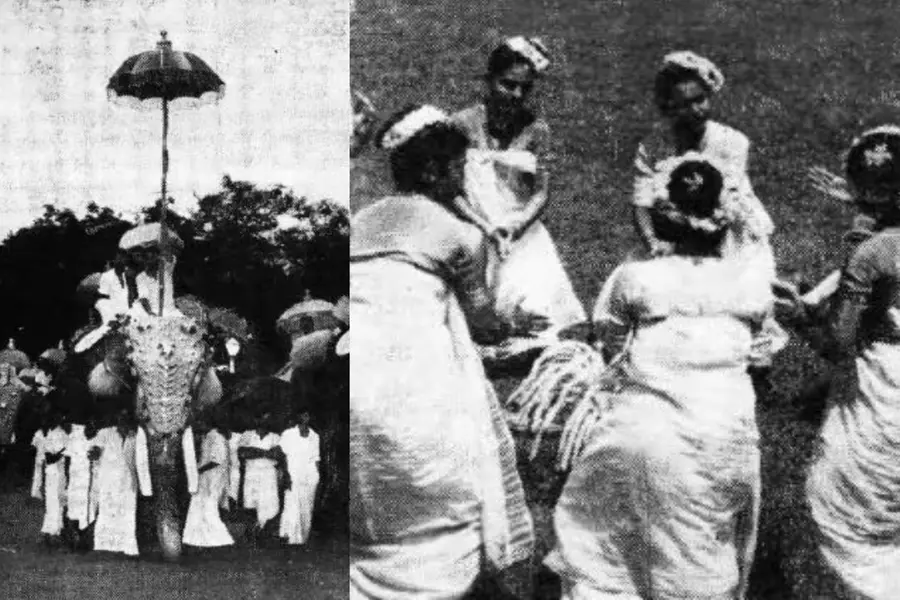
In 1961, the southern Indian state of Kerala embarked on a historic initiative—hosting its first government-sponsored Onam festival. The festival, traditionally celebrated by all Malayalees regardless of caste or creed, was given new purpose: to foster tourism and promote emotional integration among Kerala’s diverse population. The state's Department of Tourism, driven by a vision to showcase Kerala’s vibrant cultural heritage to both locals and the world, set the wheels in motion.
The Kerala State Tourist Traffic Advisory Board convened on June 15, 1961, to formalize the idea. It was decided that the grand festival would be held in three key regional centers—Kozhikode, Ernakulam, and Thiruvananthapuram—where the majority of activities would take place. This marked a new chapter in Onam celebrations, extending its significance beyond individual homes and communities and presenting it as a national event that represented the spirit of Kerala.
Committees and planning
The execution of this grand vision required a well-structured organization. Committees were established at both state and district levels to oversee the festivities. Leading the efforts were some of the state’s highest-ranking officials, including the Governor, Chief Minister, and Deputy Chief Minister, who served as patrons of the Central Advisory Committee. The Minister of Public Works was appointed Chairman, with key officials such as the Director of Public Relations and Director of the Tourist Department playing critical roles.
This collaboration of government and non-government figures demonstrated a collective effort to use Onam not only as a celebration but as a tool for national integration. The Governor of Kerala, Sri Giri, captured the essence of this sentiment, saying:
"Let this be an occasion for sinking past rivalries and for cultivating goodwill among all sections of the people."
With a budget of one lakh rupees, provided by the Tourism Department, the stage was set for an Onam celebration like no other.
A grand inauguration in Tripunithura
The formal inauguration of the 1962 Onam festival took place on September 2, known as Atham day, in Tripunithura, a town located 6 miles east of Ernakulam. Tripunithura was chosen as the starting point due to its historical significance; it was here that the Kings of Cochin once led Onam celebrations.
The inaugural event was a magnificent spectacle, with the Governor, Sri Giri, ceremonially handing over the Onam flag to the Convener of the State Committee. The flag, a yellow cloth adorned with the design of a Nilavilakku (brass votive lamp) flanked by two ears of paddy, symbolized Kerala’s rich agricultural and cultural heritage. Following this, the Governor lit the Onam torch, marking the beginning of a colorful procession that wound its way through the streets, featuring:
- Caparisoned elephants leading the parade.
- Military-like formations of National Cadet Corps, Home Guards, Boy Scouts, and Girl Guides.
- Bands playing traditional instruments such as the Nadaswaram, Panchavadyam, and Chenda.
- The highlight of the procession was a series of 36 tableaus, each depicting various legends and myths associated with Onam, as well as different aspects of Kerala's culture and way of life.
Festivities and inclusivity
One of the most unique aspects of the government-sponsored Onam festival was its effort to bring people together, transcending traditional caste and class boundaries. A community feast was organized at the Tripunithura School, where participants from all walks of life dined together without observing caste distinctions—a significant gesture of social unity. The feast was followed by a flower carpet competition, where prizes were awarded to young artists for their intricate and vibrant designs.

At the same time, a large fair was held, drawing people from across the state to buy and sell a variety of local products, such as screw-pine mats, reed baskets, wooden agricultural tools, and grinding stones. This marketplace was not just a commercial gathering, but a celebration of Kerala's artisanal traditions.
Statewide celebrations
While the festival was formally launched on September 2, the bulk of the festivities took place from September 10 to 16, covering various districts across Kerala. District-level programs were organised, featuring sports, games, drama, dances, and Kavi Sammelans at various locations. Heads of departments issued directives to institutions to celebrate Onam officially, collaborating with local communities. Development Blocks were tasked with organising sports and community feasts at schools, libraries, and Panchayats within their areas. Each Block was allocated Rs. 250/- from its budget, while Panchayats received Rs. 50/-.
The Onam celebration committee aimed to showcase Kerala's traditional culture by including 'Nadaswarakachery' (pipe recital), wrestling, Kalaripayattu (a traditional martial art), flower carpet exhibitions, folk dances, and a fancy football match in the agenda.
In Kannur, the celebrations included a pipe recital (Nadaswara Kachery) and light music, followed by wrestling, Kalari-payattu (a traditional martial art), and a dance drama. The festivities also featured a flower carpet exhibition, a fancy football match, folk dances, and a community lunch.
In Kozhikode, the events kicked off with a Panchavadyam (recital of five musical instruments), a mass rally by school children, a torchlight tableau, and a drama. The programme also included Kalaripayattu, variety entertainments, circus acts, folk dances, fancy dress, football matches, and more folk performances. Additionally, there were ballet performances, variety entertainment, pageants, fireworks, and Kathakali (classical dance-drama).
In Palakkad, the celebrations started with Children's Day, followed by a song recital and music programmes. Highlights included Kalaripayattu and Kanniyarkali (a folk dance of young girls), along with a flower carpet competition, music, dance, and community feasting.
In Thrissur, Children's Day was observed along with a community feast, a water carnival, Kavi Sammelan (poet's gathering), and a Kathakali performance.
In Ernakulam, the events included Youth's Day with folk dances, a water carnival, Chavuttu-natakam (a folk dance), and fireworks.
In Kottayam, Children's Day was observed featured indigenous games and sports, and the events continued with a boat race, a water carnival, and a youth festival that included sports and drama.
Alappuzha hosted a series of boat races, including the traditional snake boat race at Aranmula. The district also held a children's film festival, Women's Day celebrations, dance programmes, and a pageant.
In Palakkad, the focus was on children’s day celebrations, music, and community feasts, while Thrissur hosted a water carnival and Kavi Sammelan (poetry gathering).
In Kollam, the Onam celebrations featured a water carnival, drama and a Kathakali performance.
In Thiruvananthapuram, the festivities began with variety entertainments and music. The celebrations also included sports and a ballot, and concluded with a pageant, fireworks, and more variety entertainments.
Success and challenges
At every venue, community feasts were a central feature, providing an opportunity for people to come together over shared meals. These events were designed to encourage national and religious integration. However, there were challenges. In many locations, it was noted that mostly younger individuals and lower caste groups participated in these feasts, while older, more orthodox members of society often abstained. As one elder remarked:
"Let the present orthodoxy—if you call it orthodoxy—continue till we live."
Source: Monograph Series, Onam A Festival of Kerala, Part VII-B, Vol-I
Published: 12 Sept 2024, 03:37 pm IST
Related Topics
Disclaimer: Kindly avoid objectionable, derogatory, unlawful and lewd comments, while responding to reports. Such comments are punishable under cyber laws. Please keep away from personal attacks. The opinions expressed here are the personal opinions of readers and not that of Mathrubhumi.