
With strong performance and strategic location, the port is rapidly emerging as a key player in global cargo movement
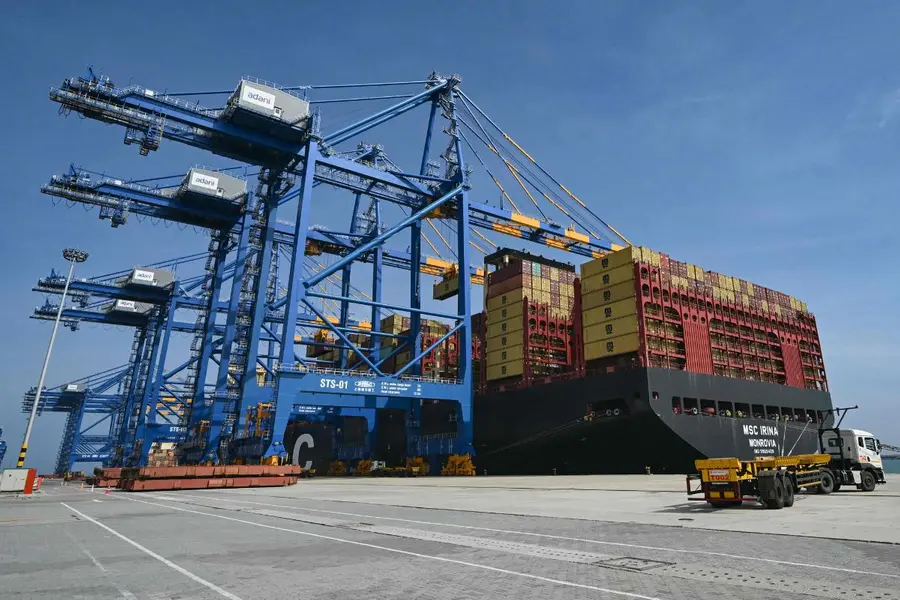
Thiruvananthapuram: Disruptions at key ports across West Asia, triggered by ongoing tensions between the United States and Iran, are pushing major global shipping companies to look towards Vizhinjam for transshipment operations. With important maritime routes affected, the global cargo network has been under strain, forcing shipping firms and the import-export sector to explore reliable alternatives.
Vizhinjam is emerging as a strong option because it remains unaffected by conflict zones, allowing smoother and safer cargo movement. Its steady performance over the past year has also brought international attention, with industry leaders now viewing it as a promising transshipment hub in the Indian Ocean.
Top shipping firms show interest
Several of the world’s leading shipping companies, including Maersk, Hyundai, Evergreen, COSCO, Ocean Network and HMM, have recently approached Vizhinjam for transshipment services. However, the port currently has only two berths that can handle large mother ships.
These berths are reserved for MSC under a long-term agreement, limiting access for other operators. As a result, multiple MSC vessels are often seen waiting offshore each day before they can dock.
West Asian ports operating partially
The situation has been further influenced by reduced operations at major transshipment hubs in West Asia.
Ports such as Jebel Ali in Dubai, Khalifa Port in Abu Dhabi, Hamad Port in Doha and King Abdul Aziz Port in Dammam are currently functioning partially, increasing the importance of alternative hubs like Vizhinjam.
The port’s natural depth of about 24 metres and its proximity to major international shipping routes make it particularly attractive. These advantages have also prompted the central government to take steps to develop Vizhinjam into a key global transshipment hub.
Rising traffic and capacity pressure
At present, Vizhinjam handles around 60 ships each month and processes nearly 1.2 lakh containers. Since the start of operations, the port has received 840 vessels and handled a total of 18.5 lakh containers.
The yard can accommodate 36,000 TEU, but around 40,000 TEU are currently being stored daily, including in areas outside the main yard. This highlights the growing pressure on existing infrastructure.
Expansion to meet demand
To manage increasing traffic, expansion work is planned in phases. A 1.2 kilometre yard will be developed in three stages of 400 metres each. The first 400 metre berth is expected to be ready by early next year, while the second 400 metre section is likely to be completed by the end of the year.
Published: 21 Apr 2026, 11:04 am IST
Disclaimer: Kindly avoid objectionable, derogatory, unlawful and lewd comments, while responding to reports. Such comments are punishable under cyber laws. Please keep away from personal attacks. The opinions expressed here are the personal opinions of readers and not that of Mathrubhumi.
