
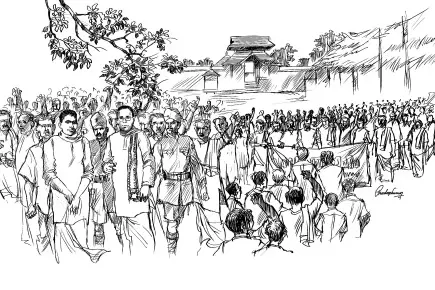
India's one of the most supported and widely accepted protests, ‘Vaikom Satyagraha', is celebrating 100 years on Saturday. It not only challenged caste oppression but also demolished the social norms of the Kingdom of Travancore.
Led by prominent Congress leaders including T K Madhavan, K Kelappan, K P Kesava Menon and George Joseph, alongside the influential E V Ramasamy Periyar, the satyagraha aimed to dismantle the barriers that prevented backward caste Hindus from accessing the public roads surrounding the Vaikom Temple. The non-violent agitation started on March 30, 1924.
Despite facing arrests and acts of violence, the protesters remained steadfast in their commitment to justice. Supporters marched to the Travancore police barricades, singing patriotic songs and blocking roads to show their disapproval of the oppression.
Under the guidance of Mahatma Gandhi, a compromise was made with Regent Sethu Lakshmi Bayi, who not only released all those arrested but also opened the north, south, and west public roads leading to Vaikom Mahadeva Temple to all castes.
Though this marked a significant historic moment in this fight, the goal of temple entry for marginalised communities remained unfulfilled. Criticising this act, Sri Narayana Guru at the time asserted that the rights to access the forbidden roads are not just the real motive but also to enter the temple itself.
His vision was later realised in 1936 with the Temple Entry Proclamation, which granted access to the eastern road and entry into the temple for backward castes, signalling a monumental shift towards inclusivity and equality.
Published: 29 Mar 2024, 08:34 am IST
Related Topics
Disclaimer: Kindly avoid objectionable, derogatory, unlawful and lewd comments, while responding to reports. Such comments are punishable under cyber laws. Please keep away from personal attacks. The opinions expressed here are the personal opinions of readers and not that of Mathrubhumi.
