
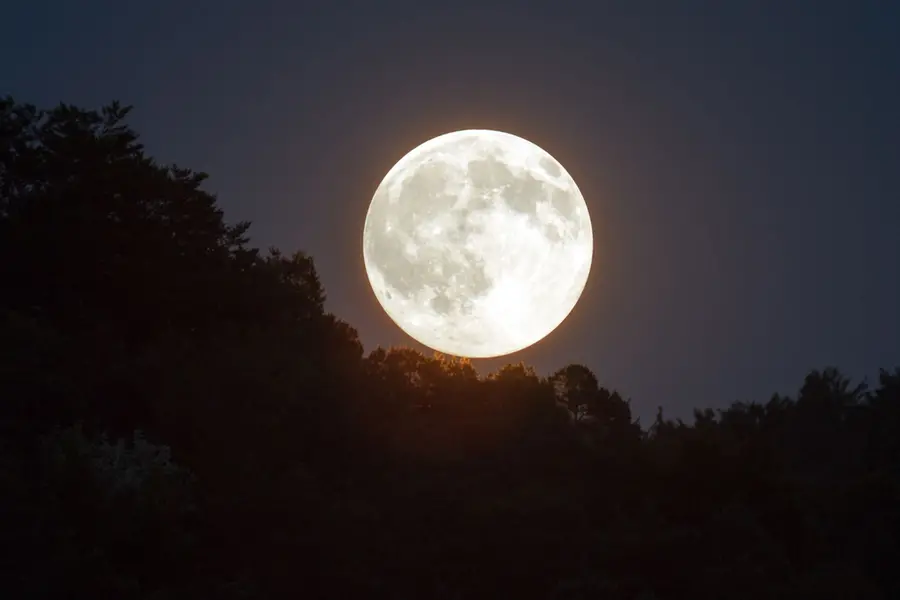
Skywatchers are set for a spectacular view on Monday (August 19) as a supermoon will grace the sky. This supermoon, one of the largest and brightest of 2024, happens when the moon is at its closest distance to Earth during a full moon, making it appear much larger and more luminous in the sky.
In a double delight for the skygazers, this supermoon will also be a blue moon, a rare phenomenon that occurs only a few times each decade. As the August full moon is traditionally known as the ‘Sturgeon Moon’, this event will be referred to as the ‘Sturgeon Moon Blue Moon’.
What does ‘blue moon’ mean?
Despite its name, a blue moon doesn’t actually refer to the moon’s color. There are two types of blue moons: seasonal and monthly. A seasonal blue moon occurs when there are four full moons in a single season, making the third one of the season a blue moon. This will happen on August 19. The other type, a monthly blue moon, is the second full moon in a single calendar month. The term "blue moon" has been in use since at least 1528, with various theories about its origin. These include an old English phrase meaning "betrayer Moon" or its connection to rare atmospheric conditions that can give the moon a blue appearance.
How to observe the Supermoon?
The supermoon will be visible on August 19, appearing full in the sky for three days, with its peak view expected at 11:56 pm IST. For the best experience, find a spot with minimal air pollution and a clear horizon. The moon will rise in the southeast and east, so an open area away from city lights is ideal.
While the supermoon can be seen with the naked eye, a telescope or binoculars will enhance the view and reveal more details of the moon's surface. Make sure to check the local weather forecast to avoid cloud obstruction.
Experts suggest allowing your eyes to adjust to the darkness for optimal viewing. It can take up to an hour for full black-and-white vision adaptation, so limit exposure to bright lights to preserve your night vision.
Upcoming Supermoons
Following the August supermoon, three more supermoons are scheduled for 2024. On September 17, the Harvest Moon will be partially eclipsed by Earth. The Hunter's Moon, which will be the closest full moon of the year, is set for October 17. The final supermoon of 2024 will take place on November 15.
Published: 18 Aug 2024, 09:11 pm IST
Related Topics
Disclaimer: Kindly avoid objectionable, derogatory, unlawful and lewd comments, while responding to reports. Such comments are punishable under cyber laws. Please keep away from personal attacks. The opinions expressed here are the personal opinions of readers and not that of Mathrubhumi.
