

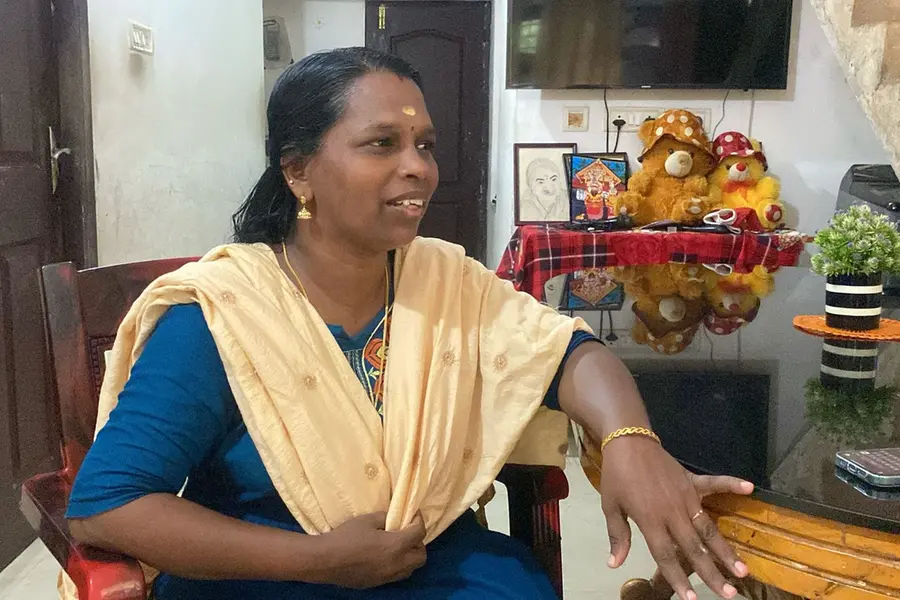
Babygirija has spent over a decade working as an ASHA (Accredited Social Health Activist) worker in Kerala, dedicating herself to the health and well-being of her community. Yet, despite her tireless commitment, she finds herself caught in the grind of financial instability, unrecognised labour, and a lack of support. Her story reflects the struggles faced by countless ASHA workers across Kerala who serve on the frontlines of healthcare but remain invisible and undervalued.
Speaking to Mathrubhumi English at her residence in Kozhikode, Babygirija couldn’t hide her emotions. Sitting in the living room of her house, with the upper floor still incomplete, she felt as though she was reiterating the same concerns for the hundredth time.
I became an ASHA worker in 2008, and by 2010, we had formed a union... We protested many times, and the result of it was an increase in our honorarium, from just 100 rupees to Rs 7,000. But even with that, the workload keeps increasing.
Her words carry the weight of years of unrelenting work. The Rs 7,000 she mentions are her honorarium, but that's far from the full picture. ASHA workers also earn incentives based on their work count--vaccinations, registering pregnant women, delivering healthcare services, but these payments are delayed. “The honorarium comes on time, but the incentive payments are often late,” Babygirija notes. “As of today, I still haven’t received my incentive from January.”
Despite the delays and the inconsistent payments, Babygirija continues to fulfill her duties with dedication. “We have to travel the most... Even if we have to attend a meeting at the main center, I have to spend Rs 200 on travel, which almost eats up my entire daily remuneration.” This isn’t a rare occurrence; even traveling to visit palliative care patients at home adds to the financial strain, an expense that Babygirija and her colleagues bear without reimbursement.
The situation only worsened during the pandemic, when ASHA workers found themselves on the frontlines of a health crisis, with no additional compensation or benefits.
During COVID-19, we were there for everyone, helping day and night...My kids used to ask me, ‘Why are you the only ones going out? Everyone else is scared and staying quarantined.’ But for us, it was about our work.
Even then, there were no additional payments, no benefits, and no acknowledgment. “They told us it was part of our duty...Even when the work was beyond our control, we were expected to continue. So we went on protesting, demanding better pay.”
This ongoing fight for recognition and better conditions is now reaching a boiling point. Many ASHA workers are currently participating in an indefinite strike in the state capital that began over three weeks ago. The strike, launched after a large gathering known as the ‘Maha Sangamam,’ demands a increase in honorarium--from Rs 7,000 to Rs 21,000 and a few other benefits, including retirement support and the clearance of pending payments.
“We are asking for better wages and benefits...” Babygirija says, connecting her personal struggle to the wider movement. The protests, which have been ongoing for 23 days now, are fueled by a growing sense of injustice. ASHA workers are frustrated by the government's prioritisation of higher-ranking officials and the lack of funding allocated to workers like them. “They say they have no funds for us” she adds. But their demands have been met with indifference from the government, fueling the anger and resolve of the workers.
The emotional toll of the work is there but it’s the financial burden that weighs most heavily on Babygirija’s shoulders. “I have a husband, two sons, a daughter-in-law and two grandkids and it's hard to make ends meet,” she confesses. “We don't have any side businesses or extra income. If we could at least receive a basic salary, like a daily laborer, it would help us manage our families.”
Yet, despite the hardships, there’s a deep sense of connection and purpose in Babygirija’s work. Over the years, she and her fellow ASHA workers have formed a bond with the community.
During the pandemic, when no one else was willing to care for people, we were there...Now, people trust us. They call us when something goes wrong, when a palliative care patient's tube comes loose or leaks, they reach out to us. That bond is strong.
Babygirija’s work is varied and demanding. Apart from field duty, she’s often called to attend meetings at panchayats and main centers, perform palliative care tasks, and register pregnant women and other patients for various health programs. Her days are long, often stretching to five hours or more. Even organising a yoga class requires a lot of effort, she has to share photos and videos to prove that it took place in order to receive the incentive.
“We used to receive benefits for delivering medicines to tuberculosis patients, but for the past six years, we haven’t received anything... We’ve asked about it, and they say it’s because the Union government hasn’t issued the funds. The patients themselves used to get a small benefit, but they haven’t received that either. It’s been six years without any payments, and we don’t know when it will change,” she stated.
Perhaps the most harrowing aspect of her work, however, is the lack of healthcare support for ASHA workers. Babygirija is a heart patient herself, and until recently, she had benefits under the state insurance scheme. “But now we’re no longer entitled to those benefits...If I need surgery or medical care, I’ll have to pay for it all myself. We’ve been removed from the state insurance scheme, and the panchayat has informed us that we no longer have access to it.”
Babygirija also recalled the death of a fellow ASHA worker who succumbed to cancer. “She didn’t receive any benefits. We all contributed what we could and gave it to her family, but that was it...There were no official benefits, and now, with the insurance gone, it’s going to be even harder for us.”
She added, “We don’t even get holidays. We work on Sundays, there’s no leave even on second Saturdays or during any festivals...No Vishu, no Onam, no Eid. We have asked for these things to be reduced, but it hasn’t changed. We work all year long, and it feels like there’s no respite. We want at least a basic pay, something that will help us manage our expenses. We have been working for years without recognition, without proper compensation, but we won’t stop demanding our rights.”
"Government should recognise us as permanent workers"
Shanthi, a middle-aged ASHA (Accredited Social Health Activist) worker from the Pokkunnu ward in Kozhikode, takes pride in her work despite the challenges it brings.
Like Babygirija, she emphasized that her role should be viewed not just from the perspective of an individual worker or their family, but from a broader, societal viewpoint.
"In the health sector, we are the primary workers who handle a variety of tasks. The public depends on us even more than they do on doctors for many health-related issues. Whether providing palliative care or educating people about health conditions and diseases, we are often the first point of contact. For instance, a family caring for an ageing relative who needs palliative care may turn to us more than to local representatives. Such is the trust they place in us," she explains.
Shanthi hopes that the government will recognize ASHA workers as permanent employees and take action to increase their honorarium.
"We are demanding an increase in our honorarium from Rs. 7,000 to Rs. 21,000. This demand stems from the increased workload we face. We provide essential services such as palliative care, ensuring vaccinations, monitoring the health of young children, administering medication to pregnant women, and answering countless health-related questions. People ask us more questions than they would a nurse. Our efforts to raise awareness about vaccination have significantly contributed to reaching people more effectively," she added.
''Our health should be a priority"
Devi (name changed), an ASHA worker from Ernakulam and a mother of two, shared her concerns about the need for better health care treatment and support for workers like herself
"My biggest concern is the health of my family. As an ASHA worker for the past five years, I have witnessed the effects of COVID-19 and various other contagious diseases firsthand. Since we are the primary point of contact for the public, we often have to deal with these diseases without fully realizing the risks they pose to us or our loved ones. During the COVID-19 pandemic, we returned home every day hoping we wouldn’t contract the virus. This is why I believe that, in addition to increasing our honorarium, it’s crucial to ensure that ASHA workers and their families are provided with health insurance coverage," she said.
Published: 05 Mar 2025, 08:00 pm IST
ABOUT THE AUTHOR
Related Topics
Disclaimer: Kindly avoid objectionable, derogatory, unlawful and lewd comments, while responding to reports. Such comments are punishable under cyber laws. Please keep away from personal attacks. The opinions expressed here are the personal opinions of readers and not that of Mathrubhumi.