
Kerala government joins PM SHRI scheme as a strategic move to secure central funds, while retaining full control over state curriculum and education values, claims Education Minister V Sivankutty.
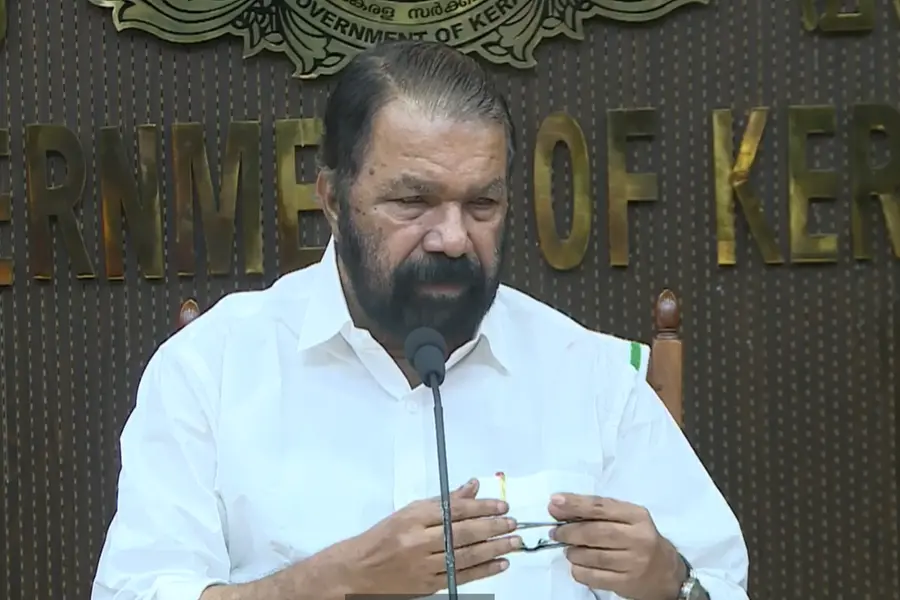
Thiruvananthapuram: Education Minister V Sivankutty has described the government’s decision to participate in the PM SHRI scheme, part of the National Education Policy (NEP), as a strategic move.
“This is a strategic measure to overcome the Central Government’s attempts to financially squeeze Kerala by withholding the central funds worth thousands of crores to which our children are entitled,” the Minister said. Sivankutty’s clarification comes amid controversy over Kerala signing the PM SHRI scheme despite opposition from the CPI.
“This is an issue that affects the very foundation of public education. We will not allow political pressure to jeopardise the future of our children. This is not the generosity of any political party. Rather, it is the funds rightly due to our children from Kerala’s share of taxes,” he added.
“Not a single rupee to which children are entitled will be lost. The Central Government had withheld funds as a comprehensive penalty because Kerala had not signed the PM SHRI scheme. In 2023–24, Kerala lost ₹188.58 crore; in 2024–25, the pending amount is ₹513.54 crore; and for 2025–26, ₹456.1 crore has been withheld. In total, ₹1,158.13 crore has already been lost. By signing now, the state will receive ₹1,476.13 crore, including arrears and PM SHRI funds. Currently, ₹971 crore has been agreed to be released by the Centre,” the Minister said.
Sivankutty clarified that Kerala signing PM SHRI does not technically mean it has fully adopted the National Education Policy. The NEP was presented by the Central Government as a condition for implementing the comprehensive penalty scheme. However, the scheme has been implemented in line with state interests and educational values. Kerala is still far ahead of the NEP in many areas, having implemented several measures years ago. The state has not allowed any communalisation of the curriculum, he added.
“Kerala itself decides its curriculum. Section 4.32, page 17, of the NEP clearly states that the final decision on curriculum rests with the state governments. Since the introduction of NEP, Kerala is the only state that revised the curriculum and textbooks for classes 1 to 10. Our curriculum emphasises secularism, scientific thinking and constitutional values, and these revisions have been implemented after careful consideration,” Sivankutty said.
Kerala has also taken additional steps by converting excised NCERT content—such as the chapters on Gandhi’s assassination and Mughal history—into supplementary textbooks for students, with assessments based on them. These textbooks and curricula will continue to be taught in all schools in the state without any changes.
“This decision is part of the fight to uphold federal principles. During the NCERT General Body meeting in Delhi, attended by Ministers from 20 states, Kerala’s Education Minister was the only one to speak out against the Central Government’s flawed policies. Kerala opposed attempts to communalise government institutions and public spaces, boycotted related events, and incorporated lessons on constitutional powers and state-centre relations in our textbooks,” he said.
Responses to criticism:
- Criticism: Small schools will be closed under the school complex system.
Response: Not a single school will be closed. This government has even taken over schools closed by the UDF to protect public education, bringing 1.1 million children back into public schools over nine years. The funds will be used to enhance the quality of existing schools.
- Criticism: The scheme is being implemented in the name of the Prime Minister.
Response: This is standard for Central Government schemes. Selected schools must include ‘PM SHRI’ in their name; it does not require the PM’s picture or name to be displayed. Currently, other Central schemes also use similar naming conventions. Out of 82 Central schemes, 17 begin with “PM”, including six within the Education Department itself.
- Criticism: Only 150 schools in Kerala will be part of PM SHRI.
Response: No such decision has been made.
- Criticism: NCERT textbooks must be taught in PM SHRI schools as per NEP.
Response: This is incorrect. PM SHRI schools will follow the SCERT syllabus, as implemented in Kerala. The scheme follows state curricula, unlike Odisha, Gujarat, Telangana or Himachal Pradesh.
- Criticism: The Central Government will oversee PM SHRI schools.
Response: Management and oversight remain under existing state-district-block structures (DIET, BRCs, etc.). PM SHRI guidelines (page 99) explicitly state this.
- Criticism: PM SHRI will create a two-tier system of schools.
Response: No. SCERT curriculum continues in all schools; the scheme only intervenes in areas where the comprehensive penalty scheme already operates.
- Criticism: Basic infrastructure improvements must be implemented under PM SHRI.
Response: Most infrastructure upgrades are already covered under the comprehensive penalty scheme and older universal education initiatives. PM SHRI funds are necessary to prevent disruption of ongoing projects. For two years, Kerala has not received any comprehensive penalty funds due to not signing PM SHRI. The scheme ensures the implementation of NEP-compliant educational activities.
Sivankutty emphasised, “This is merely a technicality. Denying benefits to 4,00,000 children on this basis would be an injustice. Kerala will continue to resist Central Government policies aiming to implement RSS agendas through education. Even during severe financial crises, our children will not be deprived of over ₹1,400 crore due to our rightful claim. By signing PM SHRI, there will be no compromise on the secular, democratic and scientific foundation of Kerala’s public education system. I assure the people of Kerala of this.”
Published: 24 Oct 2025, 06:08 pm IST
Disclaimer: Kindly avoid objectionable, derogatory, unlawful and lewd comments, while responding to reports. Such comments are punishable under cyber laws. Please keep away from personal attacks. The opinions expressed here are the personal opinions of readers and not that of Mathrubhumi.
