
The Travancore Devaswom Board has clarified that the Sabarimala entry restriction on women aged 10–50 is a religious custom, not gender discrimination
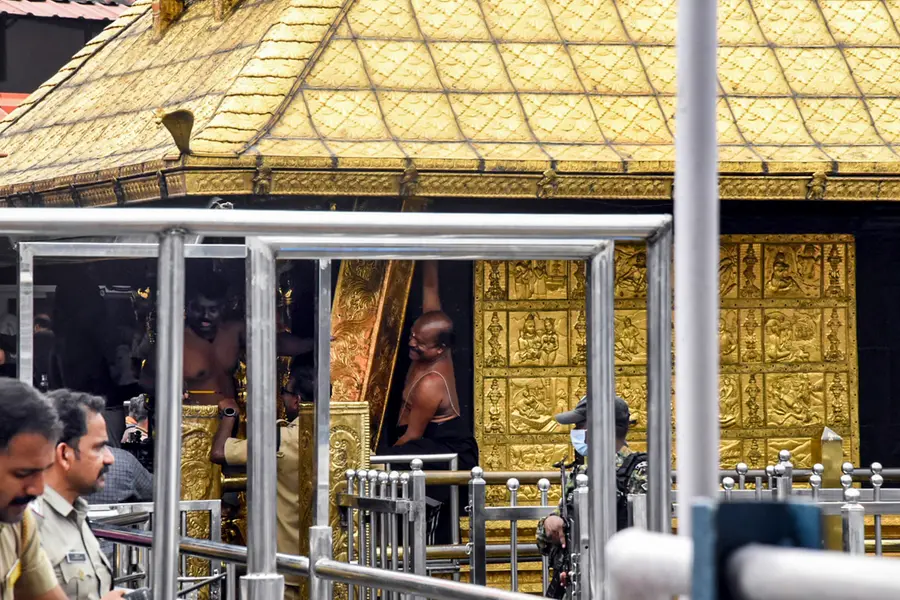
New Delhi: The Travancore Devaswom Board (TDB) on Monday informed the Supreme Court that there is no gender discrimination at the Sabarimala temple, clarifying that the restriction applies only to women between 10 and 50 years of age.
Meanwhile, girls below ten and women above fifty are allowed entry, and the ban is linked to the temple’s long-standing customs.
Also Read

To justify the restriction, the Devaswom Board cited an international thesis from Carleton University, Ottawa, prepared by Radhika Sekhar in 1987, along with a 2003 research paper published by the Royal Anthropological Institute.
Both studies indicate that the ban is a traditional practice rather than an act of discrimination. The researchers highlight that the age-based restriction is part of Sabarimala’s religious customs and not intended to violate equality rights.
“While there are numerous Ayyappa temples across India (around 1,000), the Sabarimala temple is believed to represent ‘Naishtika Brahmacharya’—that is, a deity who is a perpetual celibate. His spiritual strength is said to stem from his ascetic practices, particularly abstinence from sexual activity, a discipline that is also observed by pilgrims before and during the pilgrimage to Sabarimala,” the board said.
The TDB also noted that “the question whether a group or a sect constitutes a religious denomination is a mixed question of law and fact and can be decided by a Court only after examination of documentary and oral evidence”.
Published: 23 Mar 2026, 07:26 pm IST
Disclaimer: Kindly avoid objectionable, derogatory, unlawful and lewd comments, while responding to reports. Such comments are punishable under cyber laws. Please keep away from personal attacks. The opinions expressed here are the personal opinions of readers and not that of Mathrubhumi.