
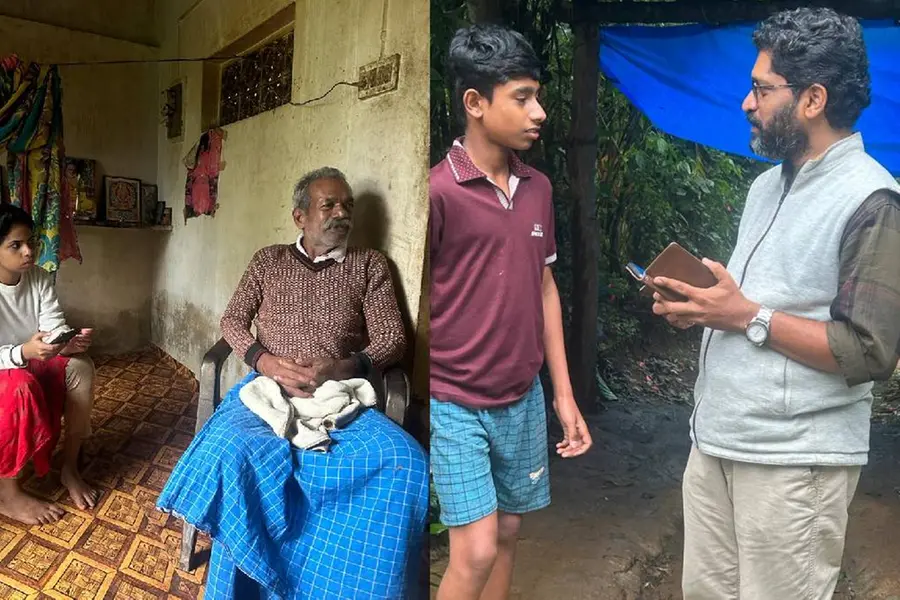
Idukki: Ernakulam-based PAMA Research Institute, an independent 'transdisciplinary research collective,' closely associated with the Muziris project and the Pattanam excavations, has taken up an oral history project in the Idukki district of Kerala. The one-year-long project is organised in association with Nedumkandam-based PAPPINI Research Centre and has the permission of the Archaeological Survey of India, the Forest and Schedule Tribe Departments of Kerala and in partnership with the Tamilnadu Department of Archaeology, the institute said.
The institute has engaged 'citizen scientists' - local residents and students who were given training to interview - to collect data from elderly people in Idukki. The first phase of the research documented the locational and morphological details of Iron Age remains in the 22 wards of Nedumkandam panchayat, the institute said.
'The Muziris port was an ancient harbour and an urban centre that lasted between 300 BC and 300 AD. For a port to function for so long, there should be a steady inflow of materials. We believe explorations along the Periyar river basin would provide evidence for this. When we proposed the plan, the Archaeological Survey of India gave permission to conduct research in one district. The Sangam literature (100 BC to 250 AD) has plenty of references to Kurinji Thinai (the mountainous region). So we picked Idukki as our first location for the research,' said Dr PJ Cherian, principal investigator of the project.
'The present-day settlement in high ranges in the state began almost 100 years ago. Hence the people who first settled in Idukki will be in their final years of life. It is crucial to know what they saw when they arrived here,' he added. 'Over 12 years of excavations in the Pattanam village located between North Paravur and Kodungallur have revealed the global significance of Muciri Pattinam or Muziris. As per the excavated evidence, people and goods of the Idukki basin had interactions with over three dozen cultures in the Mediterranean, Nile, Red Sea, Arabian Sea, Bay of Bengal and South China Sea during this period. Muziris on the west coast and Alagankulam on the east coast are located at the mouths of Periyar and Mullayaar-Vaigai respectively. Both sites have yielded evidence of trans oceanic exchange with the Mediterranean and Chinese regions,' the institute stated.
Citizen scientists' use the mobile application Kobocollect to 'scientifically document' memories and the physical contexts of material evidence such as urn burials, menhirs, dolmens, and hood stones. 'This will help us to understand the human settlement patterns of the Idukki region 2,000 years ago which created the earliest urban culture,' the institute said.
The pilot survey in Nedumkandam 'reveals potential sites of early human activities in the region. Archaeological information collected from memory and surface surveys of the locations revealed multiple burial sites and sites of human activities,' it claimed. 'One is a roughly 100 square metre area on a flat hilltop east of the Nedumkandam where remains of stone slabs (menhirs, stone circles, pathikals possibly) were spread across the hilltop. Along with stone clusters, and a cave on the eastern slope. Iron Age in the subcontinent is associated with such monuments often erected/built on the hilltops or their slopes, which we believe to be memorial edicts of the ancient ancestors associated with funerary practices. They probably represent the Early Historic Age (600 BCE to 300 CE) of the Idukki region,' it stated.
'Numerous streams, soil fertility, forest resources, agricultural products, medicinal plants, spices and technological acumen of the indigenous people of Idukki resemble the Greek mountainous geography which gave birth to ports like Delos and classical Greek culture. The rich Kurinji landscape of the Sangam Age had a pivotal role in making Muziris on the river mouth of Periyar and Alagankulam, a world famous port. Archaeological evidence from Pattanam, Muziris papyrus, a 2nd CE trade agreement, and other written evidence in Greek, Latin, Tamil and Sanskrit sources vouch for the importance of Idukki as the resource base of Muziris,' said Cherian.
Dr. Rajeev Puliyur, convenor and co-investigator of the explorations, commented that the Idukki region, now marked as the birthplace of the earliest river valley cultures, spread to both sides of the Western Ghats and contributed to the ancient Sangam Age culture. The project is planning to recruit more 'citizen scientist' volunteers in all the 861 wards of Idukki, involving interested researchers from outside and local residents of the district. The data collection survey will be exercises of Taluk bases starting with Udumbanchola in August.
The 2nd and 3rd phases of the project are meant to help the local self government agencies in developing projects of museums, recreational and learning spaces in select locations in the district. However, the research has hit a roadblock with the district collector of Idukki issuing a stop memo due to 'complaints from local residents.' However, Cherian has dismissed such concerns. 'Only a few people are against the project. We were received with high enthusiasm in the area. There is no need for panic as we aim only at finding historical evidence,' said Cherian. They plan to organise the memory collection exercise in all 52 local bodies in the district.
Published: 03 Aug 2023, 06:44 pm IST
Related Topics
Disclaimer: Kindly avoid objectionable, derogatory, unlawful and lewd comments, while responding to reports. Such comments are punishable under cyber laws. Please keep away from personal attacks. The opinions expressed here are the personal opinions of readers and not that of Mathrubhumi.
