
The poles will be installed at intervals of 38 to 42 metres. Each pole will hold two bulbs, ranging from 180 to 250 watts.
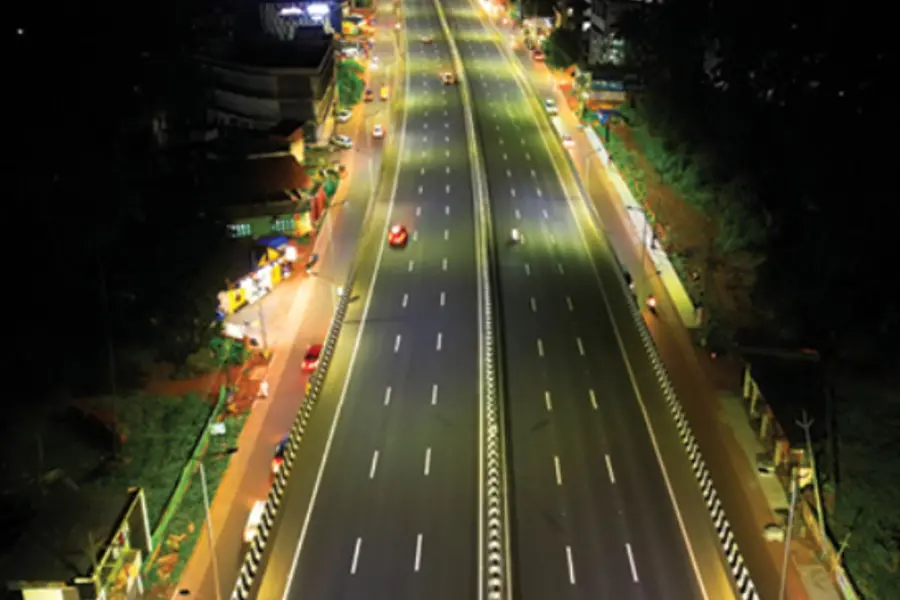
Kannur: A total of 64,500 LED lights will brighten the 645-kilometre-long National Highway-66 in Kerala, effectively turning night into day. These LED bulbs will provide illumination at an intensity of 40 lux.
The poles will be installed at intervals of 38 to 42 metres. Each pole will hold two bulbs, ranging from 180 to 250 watts. The upper bulb will light the six-lane highway, while the lower one will illuminate the service roads.
Trial lighting begins on Thalappady–Chengala stretch
In the Thalappady–Chengala stretch (39 km), which is ready for inauguration, 3,200 bulbs have already been lit as part of the initial implementation.
Within every 38–42 metres, there will be two poles, meaning four bulbs will light that section. This translates to at least 100 lights per kilometre — excluding the illumination planned for underpasses and flyovers.
Power consumption and pole specifications
Each lighting pole will be installed 10 metres away from the road, and the height of each pole is approximately 10 metres. The average power consumption per pole is estimated at 30 kilowatts.
To power the entire lighting system across the highway in Kerala, a total of 16,700 kilowatts (16.70 megawatts) will be required. The streetlights on newly constructed parts of the highway are already operational.
Who pays the bill?
The construction agency handling each reach (segment) of the highway will be responsible for paying the electricity charges for a period of 15 years.
The Kerala State Electricity Board (KSEB) will supply the electricity, with the connection registered under the National Highways Authority. The streetlight tariff is based on an approximate rate of ₹5 per unit.
Each kilometre is expected to consume around 12 to 15 kilowatts of electricity.
Automated lighting control system
There are 70 feeder pillars (control boxes) installed across the stretch. These include three-phase energy meters to monitor consumption. The lights are managed using a timer-based system, which ensures they turn on at 6 pm and turn off at 6 am.
Published: 11 Aug 2025, 10:37 am IST
Related Topics
Disclaimer: Kindly avoid objectionable, derogatory, unlawful and lewd comments, while responding to reports. Such comments are punishable under cyber laws. Please keep away from personal attacks. The opinions expressed here are the personal opinions of readers and not that of Mathrubhumi.
