
Kochi: The ongoing investigation into the parallel exchange case has been allegedly attempted to sabotage by the close aides of the accused in the case. It was also alleged that a close aide of the accused met a prominent Left leader in the state to transfer the head of the investigation team, TP Sreejith, ACP of C-Branch Kozhikode and the other officials in the team.
The team has been probing the case very effectively ever since the exchange was busted in Kozhikode and visited various states as part of widening the probe. The team found out that huge hawala and drug deals were behind operating parallel exchanges and also arrested a notorious criminal Ibrahim Pullattil, who is an accused in the Bengalooru parallel exchange case, after finding him involved in it. The other accused in the case are still absconding and the investigating officials told Mathrubhumi.com that since the probe is in the right direction, the accused have been taking all possible measures to sabotage the probe by dispersing the team.
“Now we are in possession of the database of the phone calls made through the exchanges from the year 2017. We have found that continuous calls were received from Yemen, Syria, Dubai, Tanzania, Uganda, Eritrea, Indonesia, Pakistan, Bangladesh, Afghanistan and China. Analysing the database will spread lights into the many unsolved cases across the country, including the gold smuggling cases in Kerala, Hyderabad black money case etc. Niyas and Shabeer know it very well and they are plotting to sabotage the case as we got crucial evidence in this regard,” said an official.
The accused in the case have huge real estate investments in various states and they accumulated massive wealth in a shorter period. Activities that affect even national security took place through parallel exchanges, said the officials. It was on July 1, 2021, one Juraise from Kozhikode was arrested for running a parallel exchange. Soon, the team traced the role of Ibrahim Pullattil and the investigation further identified the role of Kozhikode residents Niyas and Shabeer in the case. Niyas and Shabeer are absconding.
Accused were trained by Chinese engineers in Dubai
The investigation also found that all the accused were trained by Chinese engineers at an undisclosed location in Dubai and the role of a Dubai-based lobby in luring people into it has also been found. Chinese experts trained them on the ways to operate the devices and the precautions to be taken to avoid getting caught. They were even trained to face police interrogation, if caught.
The probe team suspects an ‘international conspiracy’ behind the thriving parallel exchanges in the nation. The C-Branch has found that all the arrested had visited Dubai for undergoing training. WhatsApp audio messages of Chinese engineers speaking English to provide training have also been recovered from the phones seized from the accused.
Probe team seeks help of C-DAC for scientific analysis
The investigating officials now plan to seek the help of Center for Development and Advanced Computing (C-DAC) for holding a scientific examination of the data seized from them. The Crime Branch has been probing around 20 cases associated with this across the state. However, they couldn’t examine the devices seized properly so far due to lack of expertise.
According to the official, Ibrahim Pullattil sold a 'call route' to a Pakistani national and two routes to Chinese nationals for Rs 20 lakhs. The investigating officers give special focus on the Pakistani route and the C-DAC help will help decode the details of all calls that came from Pakistan. “This is not just a telecom fraud to make cheap international calls. We have so many apps now to make calls for free. For making calls, we actually do not need parallel exchange. In fact, these exchanges facilitated room for huge hawala and drug deals.”
All the accused in the case are very brilliant and they were trained in advance to face police integration once caught. “Questioning them would not yield any good result as we lack expertise in technology. The experts from C-DAC may be able to help us in this regard.”
The currency counting machines seized from the house of Ibrahim Pullattil and other accused in the case evoke suspicion of huge hawala deals.
Call to hand over the case to NIA
Considering the vastness of the crime, the Crime Branch has its own limitations in ensuring an effective probe and there were reports that the National Investigation Agency (NIA) would take over the investigation.
"In fact, it is a very serious issue that affects our national security. This has to be addressed properly and an effective mechanism should be developed on war-footing to monitor such anti-national practices. Otherwise, we may have to pay a huge price," said an investigating officer.
What is a parallel exchange?
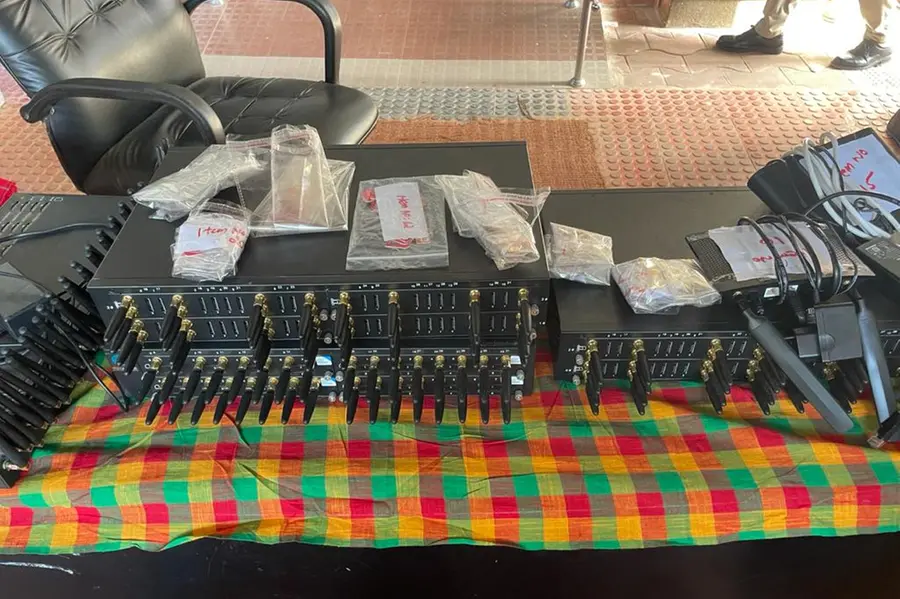
Like the name indicates, Parallel exchange is not a huge device with so many wires and equipment, but a small gadget, named 'Subscriber Identity Module Box (SIMbox). The SIMbox is used as part of a Voice Over Internet Protocol (VoIP) gateway installation in the unit that works as a parallel exchange. “The accused in the case received SIMbox for free from China. The arrested had visited China to get this device mainly from three companies, Dinstar, Skytel and Goyibe. A SIMbox costs Rs 80,000 to Rs 3 lakhs depending upon the number of SIM cards it can accomodate.”
The investigating officers say, China provides these devices for free to promote all sorts of antisocial activities to weaken India. The accused got fake SIM cards from Odisha and Bengal to activate the SIMbox. After activating the Simbox, they sold 'call routes' to people from various nations. Once linking is done, a buyer can make calls. The call made using VoIP goes through the SIMbox and reaches the recipient as a local call. Since it is converted into a local call it would be extremely difficult to trace the origin of the call.
These exchanges have been unearthed not just in Kerala but across the nation and the Keralites arrested over the case have links with the accused in similar cases in Tamil Nadu, Karnataka and Andhra Pradesh.
In the last few months, over 500 such parallel exchanges were spotted across the state over a tip-off received from the Telangana police. The Telangana police developed a software to trace such exchanges after realising the seriousness of the crime. The C-Branch officials told Mathrubhumi.com that there could be hundreds of untraced exchanges still in the state. The suspected involvement of extremist elements in the case makes it even more serious.
Published: 28 Mar 2022, 02:35 pm IST
Related Topics
Disclaimer: Kindly avoid objectionable, derogatory, unlawful and lewd comments, while responding to reports. Such comments are punishable under cyber laws. Please keep away from personal attacks. The opinions expressed here are the personal opinions of readers and not that of Mathrubhumi.
