
Manjeshwar comprises eight panchayats, Enmakaje, Kumbla, Mangalpady, Manjeswaram, Meenja, Paivalike, Puthige and Vorkady, each contributing to a diverse and fragmented voter base.
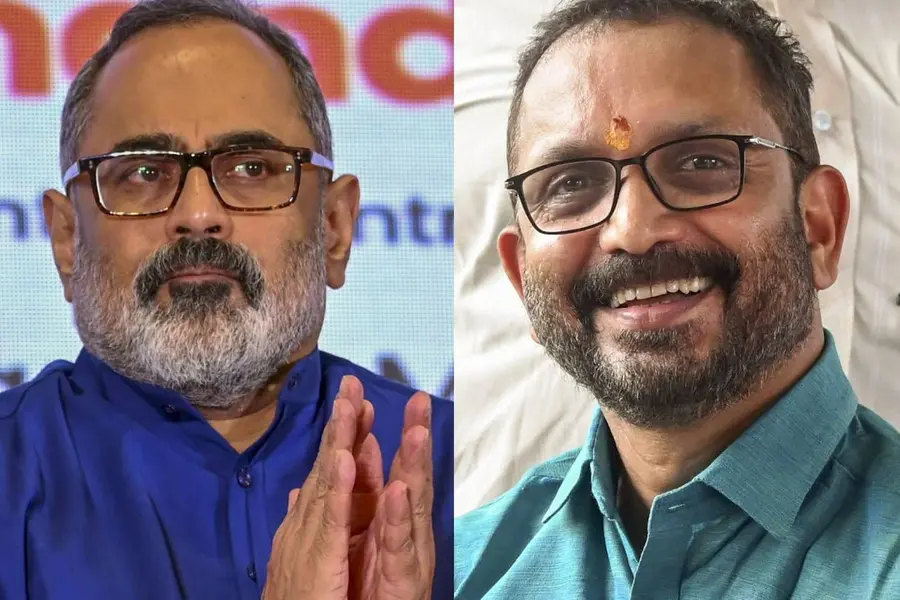
Manjeswaram/Manjeshwar constituency, located in Kasaragod district along the Karnataka border, is once again shaping up as a high-stakes battleground in the upcoming Kerala Assembly elections, marked by its history of razor-thin margins and evolving political dynamics.
While the BJP is eyeing gains in multiple seats in Thiruvananthapuram and Palakkad, this constituency remains its most promising opportunity to establish a foothold in north Kerala.
Long regarded as a bastion of the Indian Union Muslim League (IUML), a key constituent of the United Democratic Front (UDF), Manjeshwar has largely remained under its influence since 1957, barring a few victories by the Left Democratic Front (LDF). However, the political landscape has grown more competitive over the past decade, driven largely by the Bharatiya Janata Party’s (BJP) steady expansion in the region.
The turning point came in 2016, when BJP’s K Surendran lost by just 89 votes, one of the narrowest margins in Kerala’s electoral history. Since then, the party has managed to consolidate its vote base, with near parity between the UDF and NDA blocs in the 2021 Assembly election.
With Surendran back in the fray, the BJP is banking on sustained momentum and anti-incumbency factors. However, translating vote share into victory remains a challenge in a constituency where small swings can determine the outcome.
UDF holds an advantage
The UDF enters the contest with sitting MLA AKM Ashraf. Recent local body election results suggest that the UDF retains an edge, securing around 47% vote share, compared to the NDA’s roughly 31%. Despite this lead, the constituency’s history warns against complacency. Narrow margins and fluctuating voter loyalties mean even a minor shift could tilt the balance.
LDF’s limited edge
The LDF, though not seen as a frontrunner, could play a decisive spoiler. Its candidate, KR Jayanandan, represents a vote base that, while not dominant, is significant enough to influence the final outcome. In a close contest, even marginal erosion or consolidation of LDF votes could benefit either of the leading fronts.
However, the DYFI had demanded that young politician Shanavas Padoor be given the opportunity to contest the seat instead of Jayanandan. The organisation even sent a letter to the CPM district committee, clearly outlining its position. Despite this, the party decided to proceed with Jayanandan as its candidate.
The electoral arithmetic in Manjeshwar is further complicated by the potential entry of smaller but influential groups like the Social Democratic Party of India (SDPI).
Meanwhile, a section of the Konkani Latin Christian Association is exploring the possibility of fielding its own candidate, citing frustration over successive LDF and UDF governments. The group’s long-standing demand to be formally recognised as Latin Catholics under Kerala’s affirmative action framework has been repeatedly overlooked. Currently, Latin Catholics in Kerala fall under the Other Backward Classes (OBC) category, making them eligible for a 4% reservation in state government jobs and educational institutions.
Manjeshwar comprises eight panchayats: Enmakaje, Kumbla, Mangalpady, Manjeswaram, Meenja, Paivalike, Puthige and Vorkady, each contributing to a diverse and fragmented voter base. In such a setting, electoral outcomes are often decided not by sweeping mandates but by micro-level shifts.
Published: 21 Mar 2026, 02:15 pm IST
Related Topics
Disclaimer: Kindly avoid objectionable, derogatory, unlawful and lewd comments, while responding to reports. Such comments are punishable under cyber laws. Please keep away from personal attacks. The opinions expressed here are the personal opinions of readers and not that of Mathrubhumi.