
The research project is scheduled to run from November 2025 to November 2029. The study focuses on coral organisms found along the coast of Vizhinjam in Thiruvananthapuram.
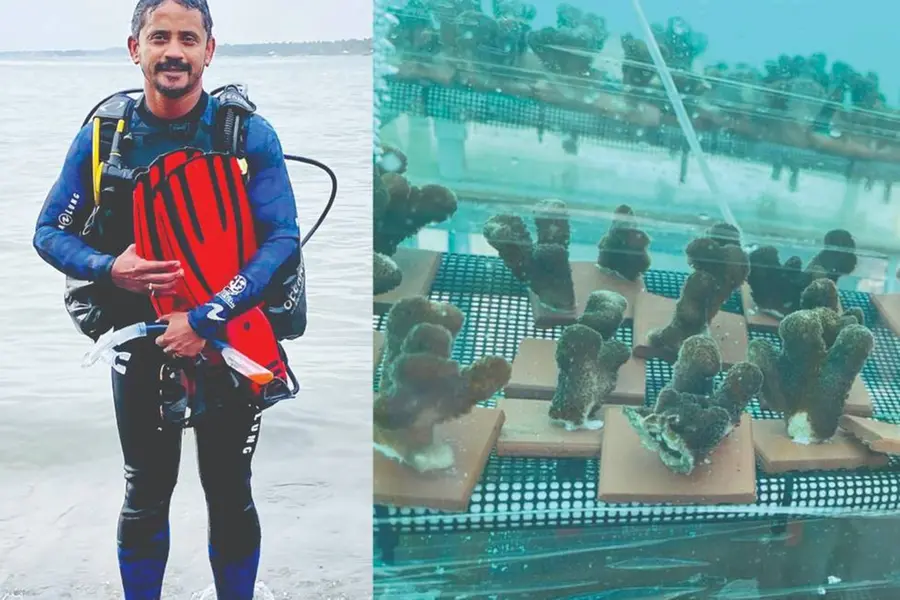
Ramanattukara: A Malayali researcher is working to restore endangered coral reefs by growing them in onshore nurseries and transplanting them back into the sea. Arun Aloysius, a research scholar at Kerala University of Fisheries and Ocean Studies (KUFOS) and principal of Beypore Fisheries Higher Secondary School, is leading this mission to help coral organisms survive.
Corals are organisms with natural resistance to tsunamis and are crucial for maintaining the stability of marine ecosystems. Arun, a native of Perumon and a scuba diving instructor, says this is the first attempt of its kind in India. According to him, establishing coral reefs can help restore marine habitats and increase fish resources and related biodiversity.
The process involves collecting endangered coral colonies from seas, nurturing them for a certain period on land, and then transplanting them back into the ocean to create new coral reefs. The first six-month phase of the research has been completed under the guidance of a five-member team led by Dr G Shaila from the Fisheries Faculty at KUFOS.
The research project is scheduled to run from November 2025 to November 2029. The study focuses on coral organisms found along the coast of Vizhinjam in Thiruvananthapuram. Corals collected from the sea are maintained and studied at the Vizhinjam centre of the Central Marine Fisheries Research Institute (CMFRI) as well as at KUFOS.
These corals, which spread across the seabed like clusters of flowers attached to one another, are collected from depths of 7 to 13 metres through scuba diving by Arun himself. They are then carefully separated using chisel-like tools. The fragments are placed in small tanks filled with seawater in nursery facilities where they are nurtured and grown.
Each coral colony can grow five to eight metres in length, but their growth rate is extremely slow—only one to four centimetres per year. Their lifespan is estimated at 10 to 15 years. Data indicates that the number of coral organisms in the country has declined sharply over the past decade.
Published: 08 Mar 2026, 10:17 am IST
Disclaimer: Kindly avoid objectionable, derogatory, unlawful and lewd comments, while responding to reports. Such comments are punishable under cyber laws. Please keep away from personal attacks. The opinions expressed here are the personal opinions of readers and not that of Mathrubhumi.
