
Each major natural disaster returned his warnings to the public conversation, underlining a legacy that extends beyond his lifetime.
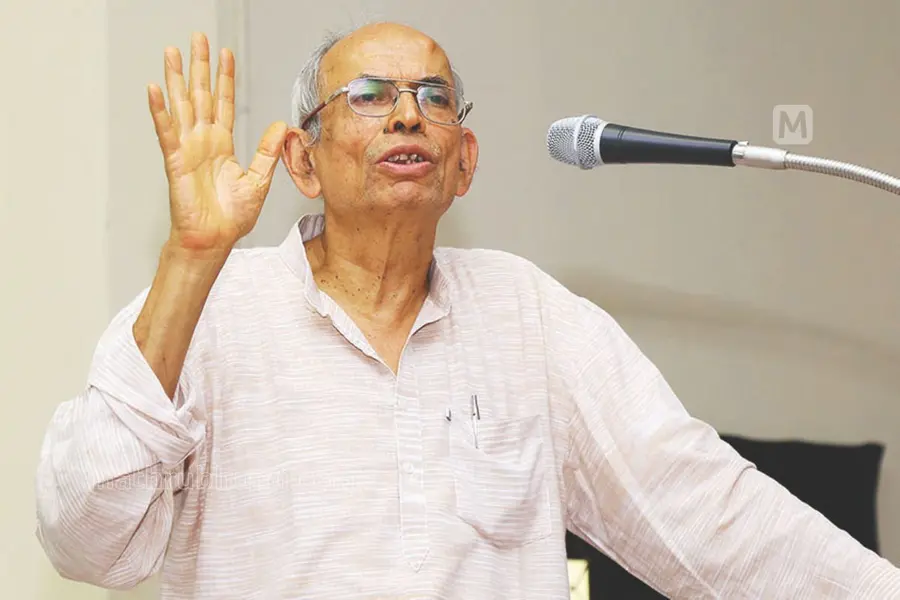
Veteran ecologist Madhav Gadgil, 83, passed away today (Thursday, January 8). Widely respected for reshaping India’s environmental thinking, Gadgil also became a household name in Kerala, not for quiet academic work, but for a report that triggered one of the state’s fiercest environmental and political debates. Even as successive governments rejected his ideas, every major disaster ensured that his warnings returned to the public conversation. His legacy will endure far beyond his lifetime.
The Western Ghats report that shook Kerala
Also Read

In 2010, the Union Ministry of Environment, Forest and Climate Change appointed Madhav Gadgil to head the Western Ghats Ecology Expert Panel (WGEEP). The panel submitted its report in 2011, recommending that the entire Western Ghats be declared an ecologically sensitive area. It proposed dividing the region into three zones—ESZ-1, ESZ-2 and ESZ-3—with strict controls on construction, mining, quarrying, and diversion of forest land.
The report suggested that 37 per cent of the Ghats be treated as ecologically fragile and emphasised local self-government participation in conservation. For Kerala, heavily dependent on hydropower and high-range agriculture, the recommendations triggered an immediate political backlash.
Oommen Chandy and Church-led protests
When the Union environment ministry moved towards implementing the report following directions from the National Green Tribunal, then Chief Minister Oommen Chandy convened an emergency all-party meeting. The Congress-led United Democratic Front government, the Opposition Left Democratic Front, and multiple political parties jointly urged the Centre to reject the report.
Protests erupted across high-range districts such as Idukki. The Syro-Malabar Catholic Church, representing a large number of farmers in the Western Ghats, strongly opposed the report, warning that thousands of families would lose their livelihoods. Political leaders argued that development would come to a standstill, power projects would be stalled, and hydel dams could even face demolition.
The resistance culminated in hartals, aggressive protests, and blanket rejection of the WGEEP recommendations by Kerala’s political establishment.
CPM, Pinarayi Vijayan and the question of “pragmatism”
The CPM, both in opposition and later in power, consistently described the Gadgil report as impractical. After the 2024 Wayanad landslides, Chief Minister Pinarayi Vijayan reiterated that the Gadgil and Kasturirangan committee recommendations did not adequately consider social realities. He argued that people who had lived for centuries in fragile zones were not treated as part of the ecosystem and that small farmers were unfairly equated with large miners and real estate interests.
Vijayan maintained that such recommendations ignored Kerala’s dense population, developmental needs, and reliance on hydropower, forcing states to disregard them.
Disasters bring Gadgil back into the spotlight
Kerala’s devastating floods in 2018, which killed more than 400 people, and the Wayanad landslides of 2024 revived attention on Gadgil’s warnings. Many of the worst-hit regions were earlier identified by the WGEEP as ecologically sensitive zones.
Gadgil repeatedly pointed to unregulated quarrying, deforestation, and policy neglect as key reasons behind landslides and floods. He argued that the disasters were not purely natural but the result of long-term environmental mismanagement.
A complex legacy that refuses to fade
In later years, Gadgil’s call for prioritising human safety—including licensed hunting and wildlife control outside protected areas—won him unexpected support from Church groups that had once led protests against him.
With every disaster, experts and sections of civil society return to the WGEEP report, arguing that its implementation could have reduced the scale of destruction. Gadgil’s legacy, rooted in science and community participation, remains uncomfortable for politicians—but increasingly difficult to dismiss.
Published: 08 Jan 2026, 09:51 am IST
Related Topics
Disclaimer: Kindly avoid objectionable, derogatory, unlawful and lewd comments, while responding to reports. Such comments are punishable under cyber laws. Please keep away from personal attacks. The opinions expressed here are the personal opinions of readers and not that of Mathrubhumi.