
The outcome would mark the first time since 1977 that Left parties do not hold power in any state
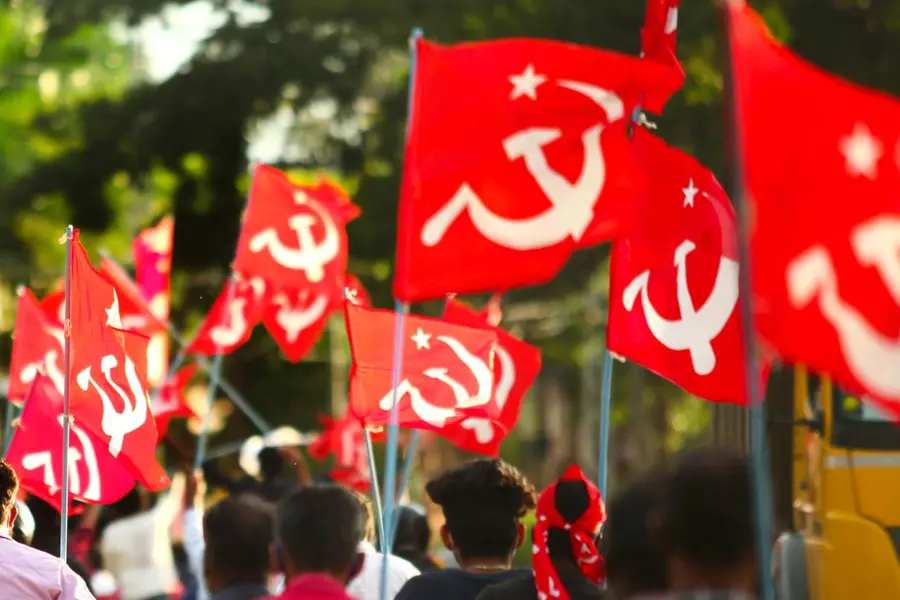
The imminent defeat of the Left Democratic Front (LDF) in Kerala has left Left parties on course to be without a single state government for the first time in nearly five decades, signalling a major political downturn.
By Monday evening, trends indicated a decisive lead for the Congress-led United Democratic Front (UDF), which had secured 58 seats and was ahead in five more constituencies. The LDF, meanwhile, was trailing significantly with 24 seats and leading in just two. A lone Left candidate was also reported to be ahead in Domkal in West Bengal.
End of an era for Left governance in states
If confirmed, the outcome would mark the first time since 1977 that Left parties do not hold power in any state. Kerala, governed by the LDF since 2016, has been its last remaining stronghold following the loss of West Bengal in 2011 after 34 years of uninterrupted rule and Tripura in 2018.
The state has long been central to Left politics, notably electing the world’s first democratically elected Communist government in 1957 under E. M. S. Namboodiripad. Since then, Kerala has remained a key arena of bipolar contest between the LDF and UDF.
From national influence to electoral contraction
The Left once held considerable national influence, with the Communist Party of India (Marxist) emerging as a major parliamentary force at various points. Its peak came in 2004, when it won 61 Lok Sabha seats and supported the Congress-led UPA government from outside, shaping key policy decisions.
In earlier decades, Left parties maintained a strong presence in Parliament, with influence rooted in trade unions, peasant movements and organised cadre networks. At one point in 1996, the United Front coalition even raised the possibility of a Communist prime minister, though it did not materialise.
Structural shifts behind the decline
Observers attribute the Left’s decline to economic liberalisation, weakening traditional labour bases, and the rise of identity-driven politics. Long periods in power in states such as West Bengal and Tripura also led to anti-incumbency and organisational fatigue, contributing to electoral setbacks.
The loss of West Bengal and Tripura significantly reduced the Left’s national footprint, leaving Kerala as its last governing stronghold for nearly a decade.
Kerala setback deepens political marginalisation
Kerala had offered the Left a rare exception, with welfare-focused governance helping sustain support and even breaking the state’s pattern of alternating governments in 2021. However, the current election trends suggest that this remaining base of state power may also be slipping away.
If the result holds, it would further weaken the Left’s organisational strength, visibility, and ability to influence national politics, reducing it to a marginal presence in Parliament and ending an era of continuous state-level governance that began nearly half a century ago.
Published: 04 May 2026, 07:10 pm IST
Related Topics
Disclaimer: Kindly avoid objectionable, derogatory, unlawful and lewd comments, while responding to reports. Such comments are punishable under cyber laws. Please keep away from personal attacks. The opinions expressed here are the personal opinions of readers and not that of Mathrubhumi.
