
Kerala had around 24,000 private buses a decade ago, but that number has now fallen to fewer than 8,000
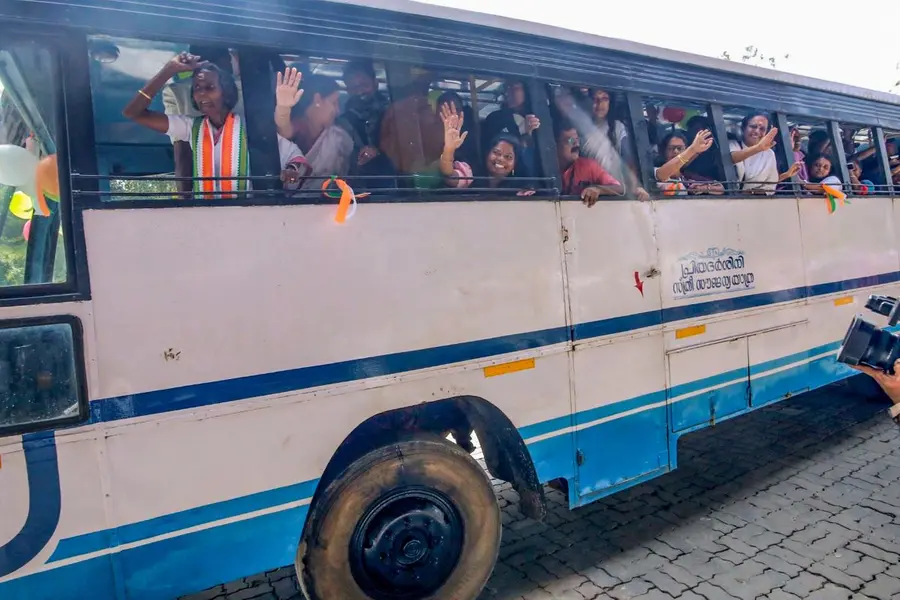
Thiruvananthapuram: The Kerala State Road Transport Corporation (KSRTC) is set to revise the timings of its Priyadarshini ordinary bus services in an effort to reduce the financial strain on private bus operators following the introduction of free travel for women on ordinary buses.
The proposal aims to adjust the schedules of KSRTC ordinary buses by five to ten minutes on routes where they compete directly with private buses, allowing private operators a fairer share of passengers without causing inconvenience to commuters.
Also Read

Free travel for women is currently available on 3,125 KSRTC ordinary buses. Preliminary estimates suggest that around 40 per cent of these services overlap with routes operated by private buses.
The existing schedules were designed to maximise revenue, often placing KSRTC buses in direct competition with private operators. In several cases, KSRTC secured more favourable timings during route conferences, and there were instances of ordinary buses being scheduled ahead of private buses carrying passengers. Depot managers were under pressure to maximise revenue, which contributed to these scheduling practices.
No changes were made to these schedules when the free travel scheme was introduced. There are also complaints that some routes have more Priyadarshini ordinary buses than required, while others have limited access to the scheme. In several areas, particularly in the southern districts, passengers have alleged that the government's free travel benefit is not uniformly available across all routes.
In Thiruvananthapuram city, around 320 City Fast buses also operate primarily on select routes, while certain other routes are served only by Priyadarshini ordinary buses.
During the Assembly session, Transport Minister C. P. John said private bus operators have been incurring daily losses of ₹1,500 to ₹2,000 on routes shared with Priyadarshini services since the scheme's launch. He noted that even with a 50 per cent tax concession, many operators are unable to absorb such losses.
Kerala had around 24,000 private buses a decade ago, but that number has now fallen to fewer than 8,000. Various stakeholders have warned that if more private operators withdraw from the sector because of the Priyadarshini scheme, it could undermine the state's broader public transport network. Against this backdrop, the government is considering revising KSRTC schedules as part of its ongoing review of the scheme.
At the same time, KSRTC has benefited from the initiative. The corporation has recorded a 30 per cent increase in women passengers under the Priyadarshini scheme, while its revenue has also risen as the government reimburses the cost of free tickets.
Published: 01 Jul 2026, 09:28 am IST
Related Topics
Disclaimer: Kindly avoid objectionable, derogatory, unlawful and lewd comments, while responding to reports. Such comments are punishable under cyber laws. Please keep away from personal attacks. The opinions expressed here are the personal opinions of readers and not that of Mathrubhumi.