
Kerala CM Pinarayi Vijayan highlights urgent steps to tackle rapid urbanisation at Urban Conclave in Kochi.
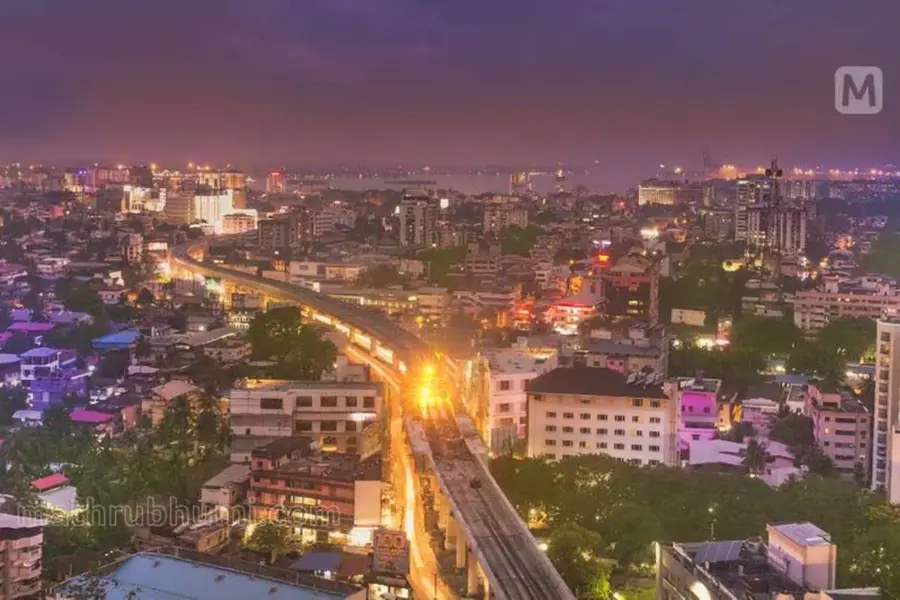
Kochi: Chief Minister Pinarayi Vijayan on Friday said Kerala, which has a higher urban growth rate than the national average, is preparing to address the challenges of urbanisation.
He was speaking after inaugurating the Urban Conclave organised by the Local Self-Government Department (LSGD) in Kochi. The conclave, being held on Friday and Saturday, is part of efforts to formulate a state-level urban policy.
Kerala’s rapid urbanisation
The chief minister said the rapid pace of urbanisation in Kerala needs close evaluation. Despite being geographically smaller than many states, Kerala remains one of the most densely populated.
"By 2035, more than 90 per cent of Kerala's population is expected to be urban, according to experts. Our rate of urban growth is far above the national average. All this means Kerala is becoming a state where urbanisation has to be addressed with utmost seriousness," he said.
Factors shaping urban growth
Vijayan pointed out that urbanisation in Kerala has not been a by-product of industrialisation alone. "There are many social, economic and environmental factors intertwined with it. Long-standing trade relations with foreign countries, a peaceful atmosphere, social harmony, an extensive coastline, higher living standards, better average incomes, aspirations for improved life amenities, and climatic factors have all contributed," he said.
He noted that land reforms, the agrarian relations bill and eviction restrictions made ordinary people landowners, while educational reforms created an educated population. From micro and small enterprises to large industries, state support brought industries to all corners of Kerala.
"Today, Kerala is essentially a network of large cities and numerous small towns. Building on this foundation, the Left Democratic Front government that came to power in 2016 has approached urbanisation as part of the state's overall development vision," he said.
Infrastructure and poverty eradication
On infrastructure, Vijayan said interventions were carried out both through government-led projects and local self-government institutions. A significant share of plan funds was devolved to local bodies.
"Further, efforts were made to address urban poverty, waste management, environmental protection and employment generation. Special initiatives were taken to uplift families identified as extremely poor. I am happy to announce that by the upcoming Kerala Piravi Day, Kerala will become a state free of extreme poverty," he said.
Employment and entrepreneurship
On employment, he said entrepreneurship promotion and skill development were being actively pursued. The ‘One Lakh Enterprises in One Year’ initiative had surpassed expectations, leading to the establishment of 3.75 lakh enterprises, the creation of 7.5 lakh jobs and Rs 23,000 crore in investments.
He added that the Centre had recognised the initiative, while Kerala achieved ‘Top Achiever’ status in Ease of Doing Business. "Our IT exports are nearing Rs 1 lakh crore, and the number of startups has grown 21 times in the past nine years," he said.
Commission and urban concerns
The chief minister said a commission of national and international experts was appointed to study urbanisation, and its report has been submitted. The conclave would deliberate in detail on key recommendations.
He emphasised that urban flooding and water management are among the most serious concerns. "Though Kerala is rich in water resources, many remain unused. There should be deliberations on how to rejuvenate and make them usable in our cities," he said.
Cities for the future
Referring to emerging technologies, Vijayan said AI-driven traffic and energy systems must be harnessed effectively. "Also, cities must have mechanisms to manage pandemics and other crises without severely impacting people. Special attention is needed to make all cities fully disability-friendly, in line with the vision of a Barrier-Free Kerala," he said.
Published: 12 Sept 2025, 02:22 pm IST
Related Topics
Disclaimer: Kindly avoid objectionable, derogatory, unlawful and lewd comments, while responding to reports. Such comments are punishable under cyber laws. Please keep away from personal attacks. The opinions expressed here are the personal opinions of readers and not that of Mathrubhumi.
