
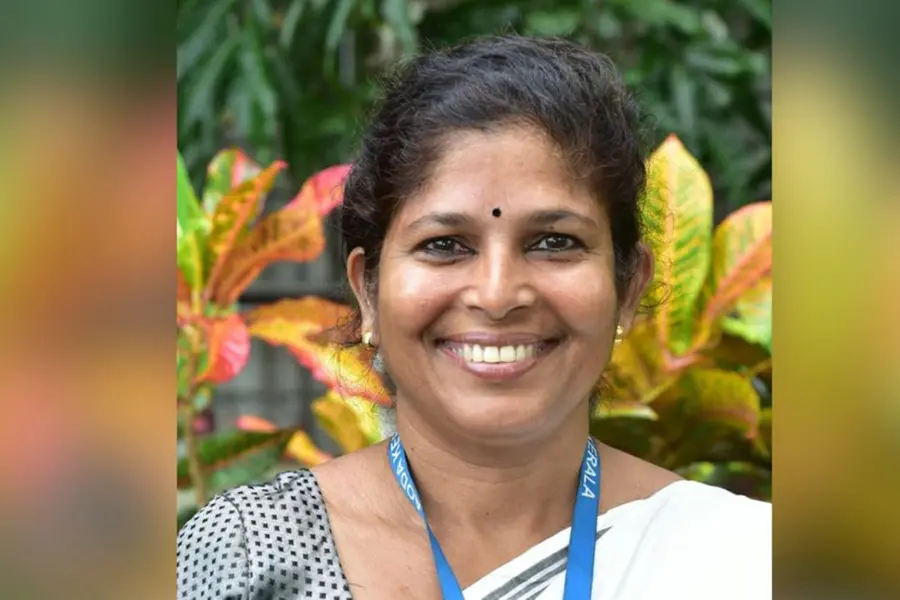
She was back home after a round-the-clock schedule, steering through narrow hilly terrains. Not a doctor or a nurse, yet she saves lives with her unwavering commitment. How? Meet Mariyamma Babu — one of Kerala's pioneer women ambulance drivers, who has been at the wheel for the pain and palliative care wing of a private hospital in Thiruvambady, Kozhikode, for 14 years.
Meet Mariamma Babu, a social worker by profession, who has been driving with unwavering dedication, serving the pain and palliative care unit of Lisa Hospital in Thiruvambady. Behind the wheels of an ambulance, she not only drives patients to hospitals and back home but also brings them hope and comfort through her compassionate service.
Mariamma, 54, holds an MSW from the School of Social Work, Roshni Nilaya, Mangalore. Since completing her studies in 1996, she has donned various hats — student trainer, counsellor, Arogya Keralam coordinator, KILA faculty and Sthree Shaktheekaranam volunteer. After her marriage brought her to Thiruvambady, she began working with Lisa Hospital’s pain and palliative care unit, offering home care for bedridden patients. When the hospital struggled to find drivers for its free ambulance service, Mariamma took up the challenge herself.
"I always loved adventure. During my college days, I was an active member of the adventure club and used to go rock climbing. I got a driving licence soon after my studies," she recalls, while speaking to Mathrubhumi English.
Hailing from Chakkittappara, Mariamma is the eldest daughter of Cheruvillattu Varkey and Mary. While her parents always supported her, it was her brother Saji who encouraged her to take on bigger vehicles beyond her moped scooty. The jeep and autorickshaw she learned to drive in her youth would later become valuable stepping stones in her journey.
Mariamma learned driving from a driving school like anyone else, but her relentless dedication helped her master the skill. Today, she is a familiar face in Thiruvambady, loved and respected by patients, their families and the hospital alike.
The journey, however, was not without heart-wrenching moments.
"During the Covid-19 pandemic period, instead of taking patients to hospitals or back to their residences, I had to carry bodies to cemeteries for cremation. That was quite disturbing. Similarly, during the Mundakkai-Chooralmala disaster, I volunteered. There too, I had to carry only lifeless bodies, not any alive persons."
Mariamma, who also serves as a trainer at the Kozhikode Initiative in Palliative Care (KIP), guiding aspiring volunteers, has a simple yet powerful message to women breaking stereotypes.
"Each individual has immense talents. The inhibitions come from within. If we have a goal, we have to push ourselves to go ahead. What we need is trust in oneself and the realisation of what we can do," Mariamma says.
For Mariamma, every ride is not just a journey but a mission— “A stone on our way can be a stepping stone or a stopping stone. It is we who have to decide how it can be perceived,” she adds.
Published: 08 Mar 2025, 09:00 am IST
ABOUT THE AUTHOR

Related Topics
Disclaimer: Kindly avoid objectionable, derogatory, unlawful and lewd comments, while responding to reports. Such comments are punishable under cyber laws. Please keep away from personal attacks. The opinions expressed here are the personal opinions of readers and not that of Mathrubhumi.