
Resignations, rebel votes, surprise alliances and even draws turned Kerala’s panchayat president elections into a gripping political spectacle across districts.
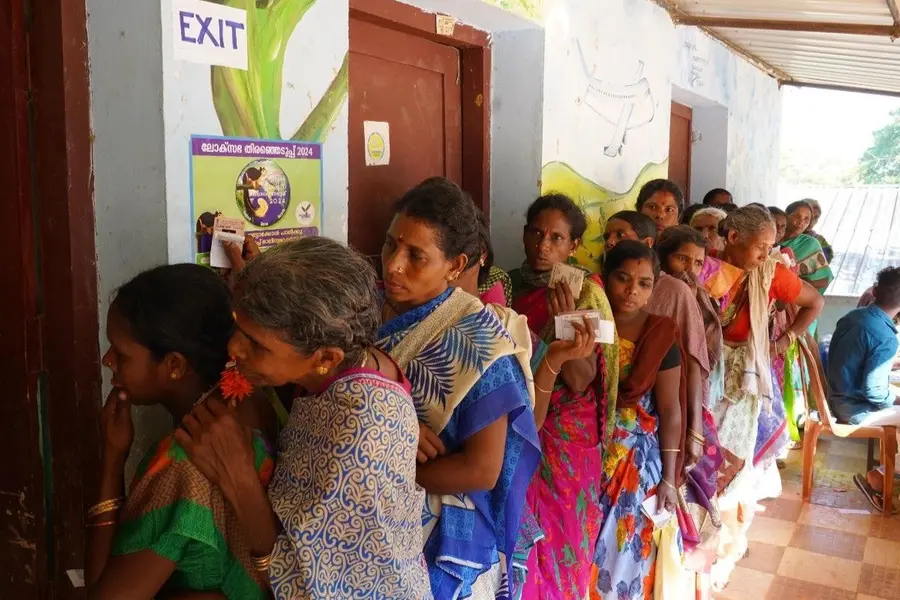
Kerala’s latest round of panchayat president elections unfolded less like routine local governance and more like a political thriller, marked by defections, improbable alliances, invalid votes, and even decisions settled by the drawing of lots.
Across districts, scenes rarely witnessed in the state’s grassroots politics played out, reshaping power equations and leaving major parties scrambling for explanations.
In several panchayats, evenly split councils forced officials to resort to a draw to elect presidents and vice presidents. Elsewhere, the absence of quorum led to postponements, while in some cases, parties with a numerical majority lost power after key votes were invalidated — a reminder of how fragile local majorities can be.
The most dramatic upheaval occurred in Mattathur panchayat in Thrissur district, where eight Congress members resigned from the party and aligned with the BJP to seize control. In a stunning turn, Tessy Jose Kallarakkal, elected as an independent, emerged as president.
The resignations reportedly stemmed from internal dissatisfaction over local issues. Despite disciplinary action against some leaders, the Congress continues to reel under what party insiders describe as an “Operation Tamara”-style setback.
Political embarrassment deepened for the UDF in Kottangal panchayat in Pathanamthitta, where the newly elected president resigned from the coalition immediately after assuming office, citing his victory with the support of the SDPI. Meanwhile, Kumarakom panchayat in Kottayam witnessed an unlikely BJP–UDF power-sharing arrangement, with both sides backing UDF independent A P Gopi for the president’s post.
Rebel politics also reshaped outcomes in the north. In the Delampadi panchayat, Kasaragod, CPM rebel Mustafa Haji clinched the presidency, underlining internal strains within the ruling Left.
In the Chennampallippuram grama panchayat in Alappuzha, the BJP secured both the president and vice-president posts through a draw after the NDA and UDF were locked at seven members each, with the LDF holding five seats.
A similar lottery-decided outcome unfolded in Naranganam panchayat, Pathanamthitta, where a BJP member became president and a Congress member vice-president.
Perhaps most politically symbolic was the Azhoor panchayat in Thiruvananthapuram district — the home turf of CPM district secretary and MLA V Joy. Despite the CPM holding just four seats, the NDA candidate secured nine votes for the presidency, with Congress contributing five votes.
In Vempayam panchayat, the invalidation of a Congress member’s vote tilted the balance in favour of the LDF, enabling Amita Babu to become president. In another case, the vote of Congress leader Kanakode Bhuvanachandran was declared invalid, resulting in an LDF victory with eight votes against Congress’s seven, while BJP and SDPI members abstained.
Taken together, the elections have exposed unprecedented fluidity in Kerala’s grassroots politics — where ideology yielded to arithmetic, loyalty bent under local pressures, and power shifted not through sweeping mandates but narrow margins, chance, and defiance.
Published: 27 Dec 2025, 06:19 pm IST
Disclaimer: Kindly avoid objectionable, derogatory, unlawful and lewd comments, while responding to reports. Such comments are punishable under cyber laws. Please keep away from personal attacks. The opinions expressed here are the personal opinions of readers and not that of Mathrubhumi.
