
Protecting young children demands an all-round approach.
The proceedings in the Kerala Legislative Assembly on Wednesday brought renewed focus to the tragic death of a two-year-old boy in Haripad, Alappuzha, who was found lifeless at his home on October 18. Medical examination revealed that the toddler was severely malnourished and acutely anaemic, weighing barely 7.6 kg at the time of death compared with an expected benchmark of around 12 kg for his age group. The tragic incident has sent shockwaves across the state, bringing urgent attention to the gaps between child protection interventions and parental cooperation.
Addressing the Assembly during Question Hour, Women and Child Development Minister Bindhu Krishna detailed how state welfare agencies had made repeated, unsuccessful attempts since 2022 to rescue the boy and his four siblings. Integrated Child Development Services (ICDS) and Child Welfare Committee (CWC) officials had previously placed the children in care homes, but the parents continually removed them. During one intervention at a care facility in Pathanapuram, the mother threatened to die by suicide, forcing officials to allow the family to return home. Minister Krishna assured MLAs that legal proceedings would be registered against the parents, while psychological counselling and schemes such as Mission Vatsalya are being deployed to secure the welfare of the remaining children.
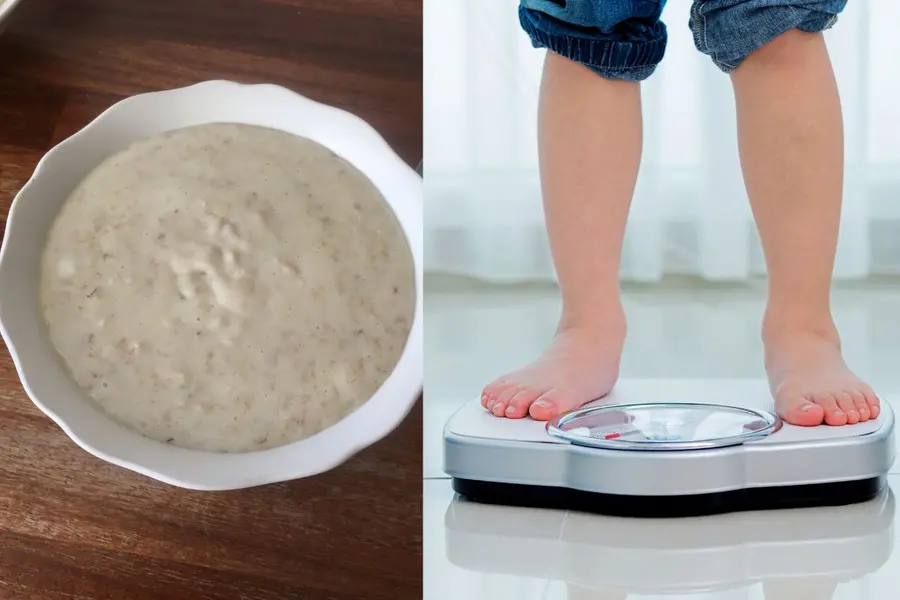
The reports that no food was found in the child's stomach at the time of death have triggered widespread anger, stoking intense public debate across Kerala. The media narrative has overwhelmingly focused on the stark weight contrast—7.6 kg versus 12 kg—as the primary evidence of extreme nutritional neglect. However, senior medical professionals caution against reducing complex child health evaluations to a single reading on a weighing scale.
Does a 12 kg scale reading mean a child is healthy?
Dr Saju Samuel Jacob, Senior Consultant in the Department of Paediatrics and Medical Superintendent at Apollo Adlux Hospital, told Mathrubhumi English that whilst a healthy two-year-old born at a normal weight of 2.5 kg typically weighs around 12 kg, weight alone cannot provide a complete assessment of nutritional health. General reference benchmarks expect a child to weigh approximately 10 kg at one year, 12 kg at two years, 14 kg at three years, 16 kg at four years, and 18 kg at five years. Yet, a child might look reasonably heavy on a scale while still suffering from underlying micronutrient deficiencies, or conversely, be underweight due to chronic undernutrition.
"Weight is an important indicator, but it cannot independently provide a complete assessment of a child's nutritional status," explained Dr Jacob. A thorough medical evaluation for children under five requires tracking three distinct parameters: weight-for-age, height-for-age, and weight-for-height. Together with mid-upper arm circumference (MUAC) measurements, these figures help doctors spot underweight status, stunting, and muscle wasting.
Dr Jacob highlighted that both maternal and paternal health influence a child's growth through inherited genetic material and the overall living environment. Furthermore, he emphasized that watching a child's growth trajectory over time matters far more than a single measurement. A child whose weight continuously slips across percentile lines on a growth chart requires immediate clinical investigation. Addressing the connection between body weight and blood health, Dr Jacob clarified that low weight and anaemia often exist independently. Undernourished children frequently lack iron, folate, and vitamin B12 needed to produce red blood cells. However, anaemia can also stem from recurrent infections, poor nutrient absorption, or inherited blood conditions like thalassaemia.
"Severe anaemia can be life-threatening and may affect a child's physical activity, development and overall health," said Dr Jacob, warning that caregivers should look out for fatigue, pale skin, poor appetite, and swelling in both feet. He stresses that primary health workers—including Anganwadi staff, ASHA workers, and auxiliary nurse midwives—must routinely interpret growth charts to catch health deviations early.
Why traditional porridge alone falls short for growing toddlers
Expanding on clinical frameworks, Dr Sumayya Abdulla, Specialist in Paediatrics & Neonatology at Aster MIMS Mother Hospital Areekode, told Mathrubhumi English that doctors evaluate severe undernutrition through a clinical concept known as Failure to Thrive (FTT). FTT is diagnosed when a toddler's weight drops below the 3rd percentile for their age, falls more than two standard deviations (-2 SD) below the mean, or when weight-for-height dips below a -2 Z-score, signalling acute physical wasting.
Dr Abdulla pointed out that for toddlers past six months of age, growth faltering is frequently tied to improper solid feeding practices. After six months, maternal breast milk alone can no longer satisfy a child's rapidly growing nutritional demands. This makes the timely shift to nutrient-rich solid foods—known as complementary feeding—absolutely vital.
In many households, caregivers rely heavily on thin, over-diluted porridges (kurukku). Dr Abdulla warned that feeding toddlers only liquid or semi-solid porridges starves them of vital iron and proteins needed for muscle growth and blood formation.
"Parents who continuously feed toddlers only liquid or semi-solid porridges (kurukku) hinder the development of these chewing skills, unintentionally causing long-term dietary deficits and faltering growth," highlighted Dr Abdulla. By one year of age, toddlers need to develop the necessary mouth muscle skills to bite and chew solid family food like dosa. Continuing with thin gruel prevents these chewing skills from forming, leaving children trapped in a cycle of poor weight gain and severe anaemia.
Dr Abdulla also emphasized the critical shadow cast by maternal health factors. Malnourished mothers or those with closely spaced pregnancies frequently give birth to low-birth-weight babies with depleted iron reserves. If a mother faces physical or mental health complications after delivery, or becomes pregnant again quickly, the toddler may experience unintentional neglect, compounding the risk of severe nutritional deficits. Additionally, doctors must carefully screen for organic conditions like tuberculosis, asthma, cystic fibrosis, congenital heart disease, chronic renal failure, coeliac disease, inflammatory bowel disease, sluggish thyroid function (hypothyroidism), or rare genetic disorders known as Inborn Errors of Metabolism (IEM).
Building a broader safety
Protecting young children demands an all-round approach that combines balanced solid meals, clean drinking water, proper sanitation, and routine immunisations to prevent infections that cause sudden weight loss.
Supporting maternal health, encouraging family planning, and ensuring family stability are equally crucial in preventing unintentional child neglect during critical early years.
Published: 29 Oct 2026, 02:24 pm IST
Disclaimer: Kindly avoid objectionable, derogatory, unlawful and lewd comments, while responding to reports. Such comments are punishable under cyber laws. Please keep away from personal attacks. The opinions expressed here are the personal opinions of readers and not that of Mathrubhumi.
