
Early trends suggest the UDF is gaining the upper hand in the race for power in the Kannur Municipal Corporation.
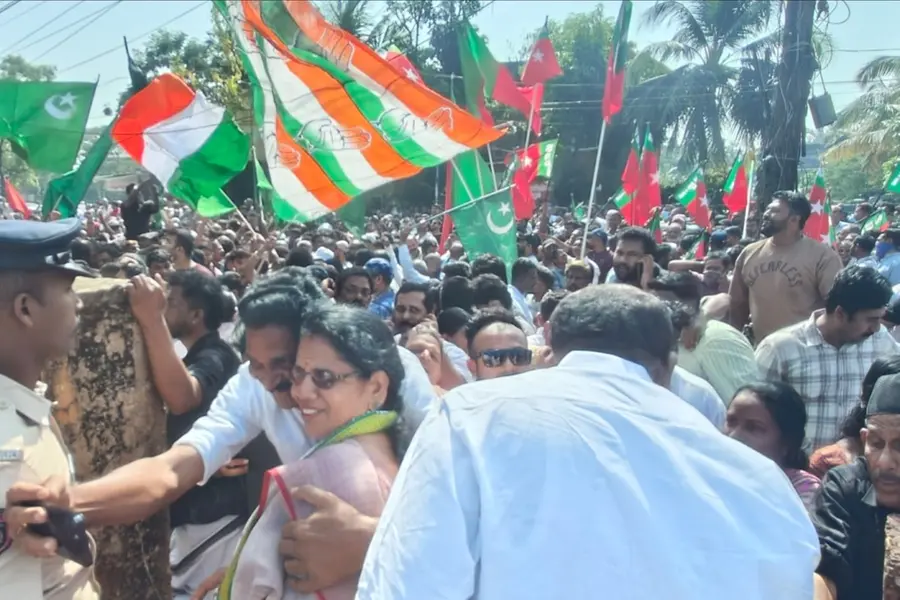
Kannur: The Congress-led United Democratic Front (UDF) continued its winning streak in Kannur Corporation, dealing a major setback to the CPM-led Left Democratic Front (LDF), which had hoped to reclaim control amid the UDF wave sweeping Kerala. Not only did the LDF fail to retain its previously held divisions, but the UDF also increased its seat tally, consolidating its dominance.
Out of the 56 divisions in Kannur Corporation, the UDF secured 36 seats. The LDF was limited to 15 divisions, suffering a significant blow to its hopes of regaining power. The National Democratic Alliance (NDA) also improved its performance, increasing its representation from one to four divisions, while the SDPI won a seat in Arakkal division, marking its first-ever presence in the corporation.
In the previous 2020 elections, the UDF had won 34 of 55 seats, with the LDF taking 19. The NDA had also won a single ward, while one independent candidate, who later supported the UDF, had been victorious. This year, the UDF maintained its hold in Pallikkunnu and further extended its influence, while the NDA captured Kokkanpara, Thulissery, and Temple divisions, signaling its growing urban presence. The SDPI’s historic win came in Arakkal, where candidate K. Sameer emerged victorious.
Kannur in 2020: A Stunning UDF Sweep Against the District’s LDF Dominance
The 2020 local body elections delivered a result that surprised even seasoned political observers. Despite the Left Democratic Front’s strong influence across Kannur district—where it dominated the majority of grama panchayats, blocks, municipalities, and the district panchayat—the United Democratic Front (UDF) secured a decisive victory in the Kannur Municipal Corporation.
Of the corporation’s 55 divisions, the UDF bagged 34 seats, leaving the LDF with just 19. The NDA, led by the BJP, made history by securing its first-ever seat in the corporation, while one independent candidate also triumphed.
Breaking down the 2020 result:
UDF – 34 seats
- Congress: 20
- IUML: 14
LDF – 19 seats
- CPM: 17
- CPI: 2
NDA – 1 seat
Independents/Others – 1 seat
Political analysts were particularly struck by the UDF’s ability to wrest eight wards previously held by the LDF. The UDF consolidated its hold over divisions such as Thulicheri, Kakkadu North, Valiyannoor, Melechovva, Attadappa, Thottada, and Padanna, while also reclaiming areas earlier won by independents.
The LDF did manage to take Thalikkavu by electing its candidate Chithira Sasidharan, but this lone gain did little to offset the broader UDF surge.
The 2020 victory was also symbolic for the UDF. In 2015, despite finishing neck-and-neck with the LDF in terms of seats, the UDF had lost control of the corporation due to post-poll manoeuvring. A Congress rebel, P.K. Ragesh—who contested as an independent—helped the LDF form the administration by supporting its mayoral candidate. Later, however, the UDF managed to bring Ragesh back into its fold, facilitating a no-confidence motion that reshaped the corporation’s leadership.
In contrast, the 2020 result gave the UDF an outright majority, making the formation of the council much smoother and internal defections unnecessary.
The BJP’s Slow but Significant Rise
One of the major talking points of the 2020 polls was the BJP’s incremental yet meaningful growth. V.K. Shyju’s victory in the Pallikkunnu division—the UDF’s sitting seat—marked the first time the NDA had entered the Kannur Corporation. While the single seat may appear numerically insignificant, it symbolised political penetration in a district where the BJP has historically struggled.
Beyond the municipal corporation, the BJP also improved its footprint at the grassroots. In grama panchayats, its tally rose from 16 in 2015 to 25 in 2020. In municipalities, it increased its seat count from 15 to 20. Thalassery municipality, in particular, saw the NDA emerge as the principal opposition with eight seats.
These gains indicate that while the NDA remains a marginal player in Kannur at the corporation level, its organisational strength and voter reach have expanded steadily.
LDF’s 2020 Paradox: District-wide Sweep but City-Level Setback
While the UDF made gains in the corporation, the LDF was far from weakened in Kannur district overall. In fact, it consolidated its position as the district’s dominant force in 2020.
The LDF won 56 of the 71 grama panchayats, a commanding performance that reaffirmed its grassroots connectivity.
- It swept block panchayats, though it performed marginally worse than in 2015.
- It dominated five of the eight municipalities, with one of the highlights being its clean sweep in Anthoor municipality—where it won all 28 divisions.
- In the district panchayat, it secured 17 divisions, leaving the remaining seats with the UDF.
This contrast—urban setback versus rural dominance—formed one of the most intriguing stories of the 2020 election in Kannur. Analysts noted that the UDF’s strength in the corporation might have stemmed from hyper-local issues, candidate selection, voter dissatisfaction with councillors, and the dynamics of specific wards. Meanwhile, the LDF’s district-wide showing indicated sustained ideological loyalty among rural voters.
2015: The Nail-Biting Election That Ended in High Drama
To appreciate Kannur’s political trajectory further, one must recall the cliff-hanger election of 2015.
In that contest:
- The UDF and LDF finished almost tied in the Kannur Municipal Corporation.
- However, the LDF managed to form the administration with the unexpected support of independent councillor P.K. Ragesh.
- The UDF later staged a comeback by convincing Ragesh to switch his allegiance, leading to the ousting of Mayor E.P. Latha via a no-confidence motion.
The 2015 result was therefore less of a verdict from the voters and more a story of post-election realignments. It also exposed vulnerabilities within both fronts regarding internal cohesion.
Kannur 2025: Will the Pendulum Swing Again?
As Kannur heads towards the 2025 result declaration, several factors make the outcome unpredictable:
1. High Voter Turnout but Slight Dip from 2020
The turnout in 2025, at around 75 per cent, suggests continued voter enthusiasm, though slightly lower than the record numbers of 2020. Whether this affects the UDF—which benefited from a surge in local mobilisation last time—remains to be seen.
2. The LDF’s Strong District Machinery
The Left remains structurally dominant across Kannur. Despite losing the corporation in 2020, its presence in rural bodies remains formidable, potentially influencing sentiment in urban areas over time.
3. BJP and NDA’s Steady Groundwork
While the NDA is unlikely to emerge as the biggest contender, its grassroots push over the past decade cannot be overlooked. Even a slight increase in its vote share could alter ward-level equations between the LDF and UDF.
4. Shifts in Local Leadership and Candidate Strategy
In 2020, the UDF benefited from smart candidate positioning—for instance, defeating N. Balakrishnan Master in Thottada after he shifted wards. Whether either front has replicated such strategic planning in 2025 may heavily influence the result.
5. Urban vs Rural Political Mood
Urban voters in Kannur have been more volatile than rural voters. The LDF’s dominance in the district did not translate into corporation victories in 2020, and it remains to be seen whether this disconnect continues.
What Might Influence the 2025 Verdict?
- Local performance of councillors over the last five years.
- Perception of State-level governance, particularly in civic matters and urban development.
- Community-specific dynamics, which often decide ward-level outcomes.
- Campaign effectiveness and turnout mobilisation.
Above all, the election remains a triangular contest. The presence of the NDA ensures that vote-splitting could significantly reshape outcomes, especially in marginal wards.
Published: 13 Dec 2025, 06:00 am IST
Related Topics
Disclaimer: Kindly avoid objectionable, derogatory, unlawful and lewd comments, while responding to reports. Such comments are punishable under cyber laws. Please keep away from personal attacks. The opinions expressed here are the personal opinions of readers and not that of Mathrubhumi.
