
The study is the first of its kind in India to assess the charging requirements of an entire freight corridor, including the number and type of chargers required and their optimal locations
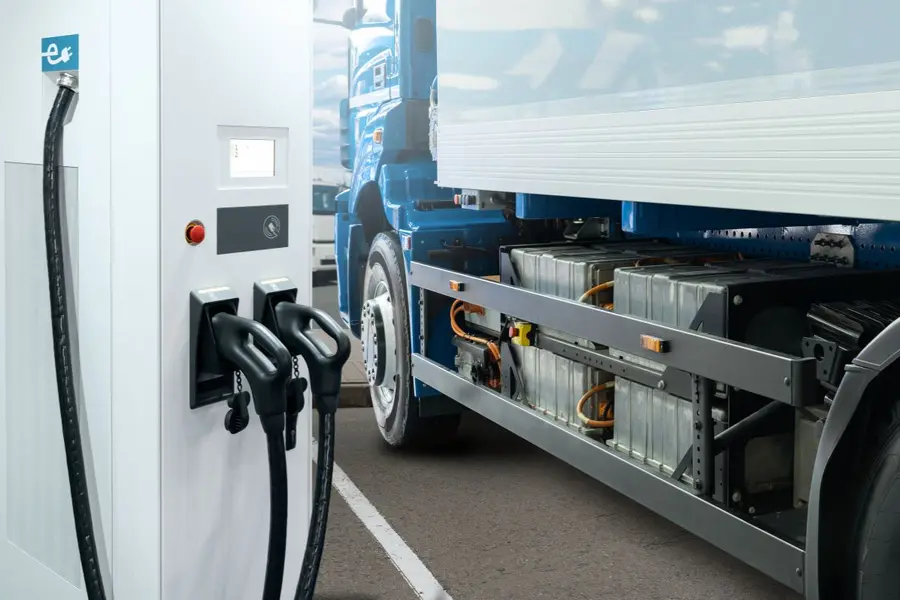
Thiruvananthapuram: Kerala is planning to develop the 622-km stretch of National Highway 66 between Kasaragod and Thiruvananthapuram as India’s first electric truck corridor, marking a major step towards cleaner freight transport.
A study by the Kerala State Electricity Board Limited (KSEBL) and the International Council on Clean Transportation (ICCT) has estimated that an initial charging network with a capacity of 12.5 MW would be required to support electric trucks along the corridor.
Also Read

The initial investment is estimated at Rs 19 crore, according to the study report released at the India Clean Transport Summit 2026 in Delhi.
The project involves more than installing charging stations. It also aims to prepare Kerala’s electricity network for the growing use of battery-powered heavy trucks, according to a KSEB release issued on Wednesday.
The study is the first of its kind in India to assess the charging requirements of an entire freight corridor, including the number and type of chargers required and their optimal locations.
Researchers analysed FASTag data from four toll plazas along NH 66, national-level truck deployment data, GPS information from 13,355 trucks and 3,39,692 parking records to map freight movement and stopping patterns along the corridor.
Charging demand expected to rise sharply
The study projects a significant increase in electricity demand as the adoption of electric trucks grows.
While the immediate charging requirement is estimated at 12.5 MW, the corridor could need 1,939 chargers with a combined capacity of 204.5 MW by 2050. The investment required by then is estimated at Rs 338 crore.
Daily electricity demand for charging is projected to increase from 32 MWh in 2030 to 833 MWh in 2050 — a 26-fold rise.
Despite the increase, the additional demand is expected to account for less than 0.2 per cent of Kerala’s projected annual electricity consumption.
Kochi, Kozhikode and Kollam are expected to develop into major charging hubs along the corridor. The Thiruvangad-Kumbalam section alone could require 76.4 MW of charging capacity by 2050.
Funding for charging network
The financial burden of developing the charging network is expected to be covered through existing Central and state allocations.
The project could utilise the Rs 2,000 crore earmarked by the Union Ministry of Heavy Industries for public charging infrastructure under the PM E-DRIVE scheme. Kerala can also use the Rs 63.12 crore already sanctioned for establishing a charging network in the state.
Speaking at the report's release, KSEB Director (Generation & REES) Rajan M P said the project could demonstrate how freight transport can be electrified while ensuring that the power grid is prepared for the transition.
“By building India’s first electric truck corridor on NH 66, a state power utility is demonstrating how the electrification of freight transport can be made practical and grid-ready,” he said.
Rajan said KSEB would strengthen its distribution systems in line with demand as battery-powered electric trucks become increasingly common along the corridor.
Why early planning matters
Officials stressed that planning the charging infrastructure in advance would be crucial, as such systems can take years to design and build.
Harsimran Kaur, a researcher at the International Council on Clean Transportation, said Kerala could not wait for electric trucks to become widespread before beginning preparations.
“Since it takes years to plan and build charging infrastructure, it would be too late if Kerala waited until electric trucks became widespread,” she said.
Kaur added that the corridor-based study would be valuable in determining the infrastructure required for the transition to electric freight transport.
The proposed corridor could ultimately become more than a network of charging stations. According to KSEB, it could serve as a model for how states can prepare their electricity systems in advance for the gradual transition of India’s freight sector from diesel to electric power.
Published: 02 Sept 2026, 07:01 pm IST
ABOUT THE AUTHOR
Disclaimer: Kindly avoid objectionable, derogatory, unlawful and lewd comments, while responding to reports. Such comments are punishable under cyber laws. Please keep away from personal attacks. The opinions expressed here are the personal opinions of readers and not that of Mathrubhumi.