
In Thiruvananthapuram city, a 6.5-kilometre stretch is expected to run underground or through tunnels, while the remainder of the alignment would be constructed as an elevated corrido
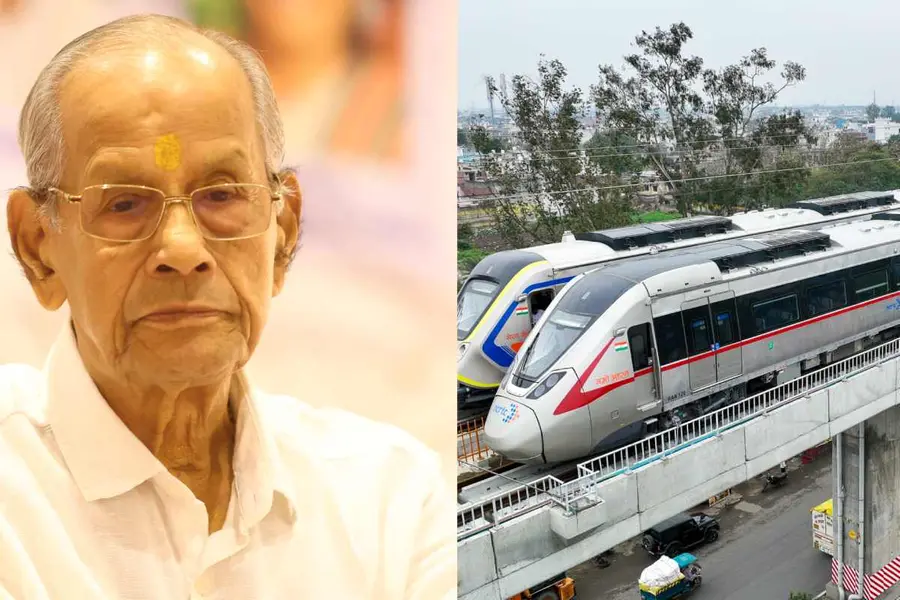
Thiruvananthapuram: Detailed plans for a proposed high-speed rail project in Kerala, prepared by “Metro Man” E. Sreedharan, have been released, outlining a major overhaul of the state’s rail infrastructure.
The proposed line, spanning 473.2 kilometres from Pujappura in Thiruvananthapuram to Mundayad in Kannur, is designed to enable trains to operate at speeds of up to 200 km/h. Once completed, the journey between Thiruvananthapuram and Kannur is expected to take approximately three and a half hours.
The project envisions a double-track standard gauge system, aligned with international railway standards, to facilitate future technological upgrades.
A total of 23 stations are proposed along the route, including Thiruvananthapuram Airport, Varkala, Kollam, Kottarakkara, Pathanamthitta Junction, Tiruvalla, Kottayam, Vaikom, Tripunithura, Palarivattom (Ernakulam), Aluva, Kochi Airport, Chalakudy, Thrissur Junction, Pattambi Junction, Malappuram, Kozhikode Airport, Kozhikode Junction, Balussery, Nadapuram and Kuthuparamba, before terminating at Mundayad in Kannur.
The average distance between stations is projected to be 21.5 kilometres. The line would directly connect three airports (excluding Kannur), with a supplementary plan for a high-quality road link between Mundayad station and Kannur Airport, approximately 10 kilometres away.
In Thiruvananthapuram city, a 6.5-kilometre stretch is expected to run underground or through tunnels, while the remainder of the alignment would be constructed as an elevated corridor. The project proposes acquiring a 20-metre-wide land corridor, which could later be leased back to landowners for agricultural or livestock use under regulated conditions.
The proposal also describes the project as a “green rail corridor”, powered by electricity generated from dedicated solar plants, with surplus energy intended to be supplied to the Kerala State Electricity Board (KSEB).
Initially, the service would operate 12-coach trains with a capacity of around 800 passengers. During peak hours, trains are expected to run every 20 minutes, and every 40 minutes during off-peak periods. In later phases, train length could be increased to 16 coaches, with service intervals reduced to as little as five minutes, potentially enabling a daily capacity of up to 2.28 lakh passengers. The system is designed as reservation-only, with no standing passengers permitted.
The estimated cost of the project is around ₹60,000 crore, averaging ₹127 crore per kilometre. Of this, ₹36,000 crore is proposed as equity funding from the central and state governments in a 51:49 ratio, while the remaining ₹24,000 crore would be raised through crowd funding.
If approved by the state government, construction is expected to be completed within five years. The report also outlines possible future extensions, including Kannur to Kasaragod, Kozhikode to Kalpetta, and links from Pattambi and Thrissur to Palakkad in a second phase.
Published: 30 May 2026, 06:57 pm IST
Related Topics
Disclaimer: Kindly avoid objectionable, derogatory, unlawful and lewd comments, while responding to reports. Such comments are punishable under cyber laws. Please keep away from personal attacks. The opinions expressed here are the personal opinions of readers and not that of Mathrubhumi.
