
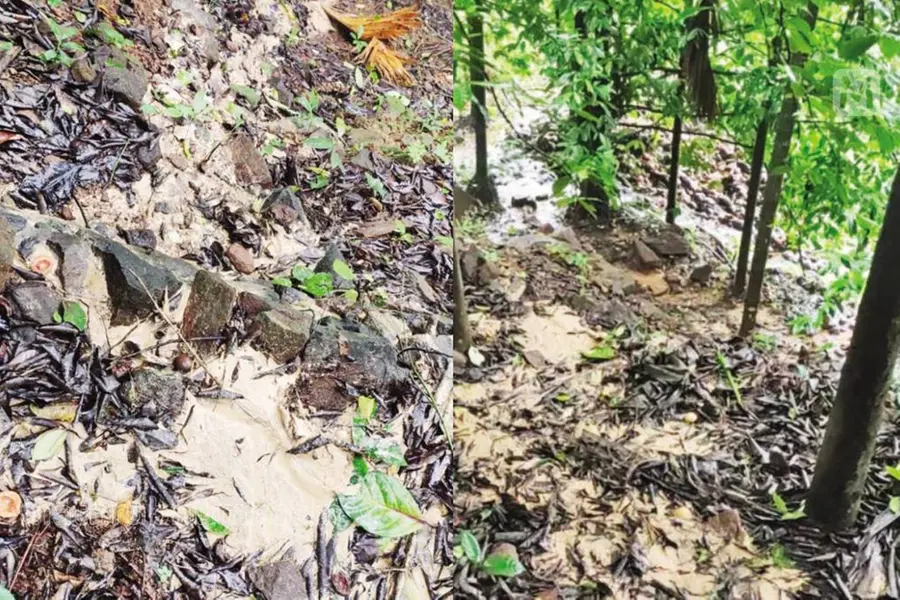
Pathanamthitta: A new study claims that Kasaragod, Kannur, and Malappuram districts are most prone to soil piping, the natural phenomena that eventually cause disasters like landslides.
Meanwhile, Soil piping has also been noticed extensively in Wayanad, Idukki, Thrissur, and Kozhikode districts. According to the study, the phenomenon is least found in Palakkad, Pathanamthitta, Ernakulam, and Thiruvananthapuram districts.
A total of 29 soil pipes were found in Kasaragod, 17 in Kannur, 24 in Malappuram, and 26 in Wayanad. Most are similar to human-sized tunnels. According to a study conducted by former scientist G Shankar of the National Centre for Earth Science Studies in Thiruvananthapuram, it was found that soil piping is a threat to the sustainability of Kerala.
Soil piping
Soil piping, also known as 'pipe erosion,' causes subsurface erosion. It occurs when water seeps through the soil, saturating it during rainfall, and the subsoil in unstable areas flows underground through channels resembling pipes. This underground phenomenon can lead to rapid soil settlement and landslides.
Various factors contribute to soil piping, including topography, slope, soil texture, rainfall, groundwater flow, agricultural practices, logging, mining, and more. Heavy rains in Kerala have exacerbated the issue by increasing soil saturation. Roots left in the soil from fallen trees and burrows made by animals such as rats and rabbits can also become soil pipes.
The study suggests reinforcing the soil with compounds like gypsum and lime and constructing ditches to drain rainwater on slopes. Soil piping was identified as the cause behind the Puthumala landslide, and experts are investigating its potential role in the Chooralmala landslide.
Published: 03 Aug 2024, 10:15 am IST
Related Topics
Disclaimer: Kindly avoid objectionable, derogatory, unlawful and lewd comments, while responding to reports. Such comments are punishable under cyber laws. Please keep away from personal attacks. The opinions expressed here are the personal opinions of readers and not that of Mathrubhumi.
