
Kerala High Court orders MSC to pay Rs 1,262.6 crore for MSC Elsa 3 sinking.
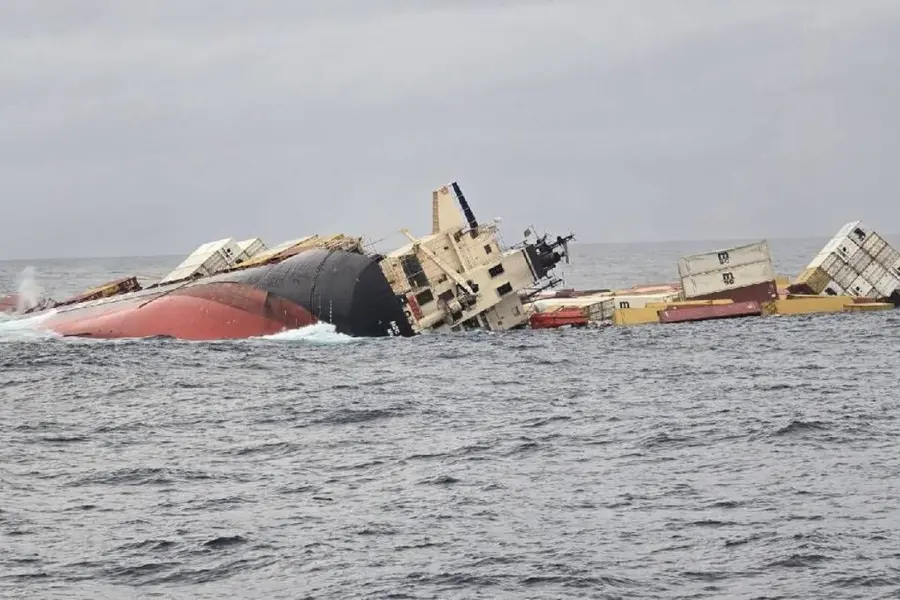
Kerala High Court on Thursday issued an interim order directing the shipping company MSC to pay over Rs 1,200 crore in connection with the ship-sinking incident. The court directed the shipping company to pay Rs 1,262.6 crore in compensation for environmental damage caused by the sinking of the MSC LS-3 ship. The order was issued by Justice MA Abdul Hakim in an admiralty suit filed by the state government.
The compensation takes into account the environmental and economic losses caused by the oil spill from the sunken ship and chemicals released from containers into the sea. The state government had argued for a much higher compensation of Rs 9,531 crore.
Company challenges quantum and jurisdiction
However, the shipping company contended that the amount sought by the government was unrealistic. It also argued that the Kerala government had no authority to file an admiralty suit, as the accident occurred 14.5 nautical miles off the state’s maritime boundary.
Following the filing of the admiralty suit by the government, the court also ordered the arrest of the vessel, which arrived at Vizhinjam Port.
Ship-sinking and aftermath
The sinking of the container ship MSC Elsa 3 off the Kerala coast occurred on May 25, 2025. MSC ELSA 3, carrying 640 containers, including hazardous cargo, sank roughly 38 nautical miles off the Kerala coast.
The vessel was carrying about 85 metric tonnes of diesel and 367 metric tonnes of furnace oil, alongside 13 containers with dangerous materials such as calcium carbide. A recent study has revealed that the accident caused serious ecological damage in the south-eastern Arabian Sea, disrupting water quality and marine life.
The Ministry of Earth Sciences confirmed that oil persisted for several days despite turbulence and currents, signalling the risk of continued leakage. Conducted by the Centre for Marine Living Resources and Ecology (CMLRE), the study called for urgent sealing of the wreck’s fuel compartments and long-term monitoring of the area.
Chemical analysis detected polyaromatic hydrocarbons such as naphthalene, anthracene and pyrene, along with heavy metals like nickel, copper, and lead. The findings confirm the wreck as a source of hydrocarbon and heavy-metal pollution.
Biological impacts were visible across the food chain, with polluted zooplankton and stressed seabirds. Experts warned these pollutants could move into fish and ultimately humans.
Published: 25 Sept 2025, 10:43 am IST
Disclaimer: Kindly avoid objectionable, derogatory, unlawful and lewd comments, while responding to reports. Such comments are punishable under cyber laws. Please keep away from personal attacks. The opinions expressed here are the personal opinions of readers and not that of Mathrubhumi.
