
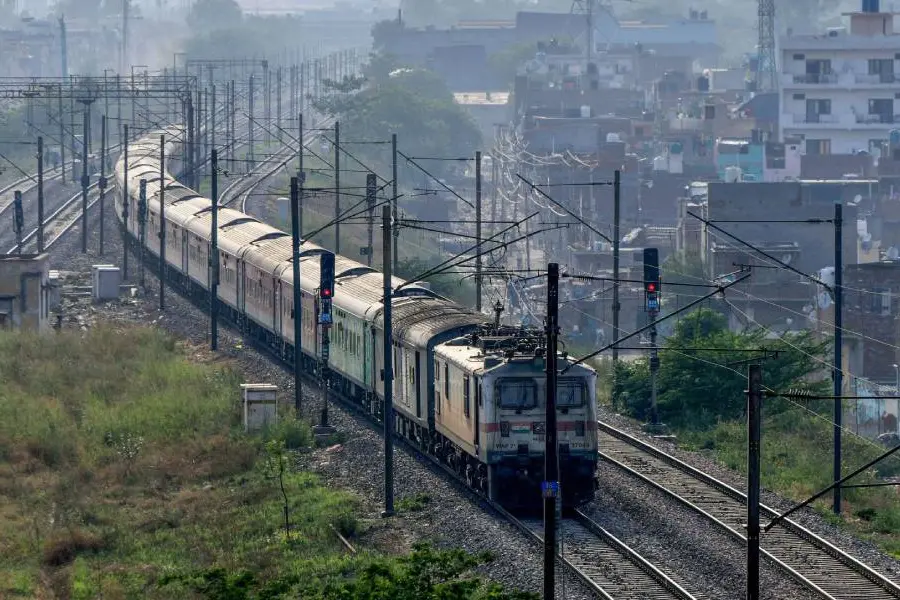
Kannur: For the first time in Kerala, the Train Collision Avoidance System (TCAS-Kavach) is getting ready on its rail lines which will act as a shield to avoid accidents. Generally, if two trains are approaching on the same track, it will be difficult for the loco pilots to stop the train immediately. Here Kavach, the automatic braking system of the train, will work at a certain distance and the collision will be avoided. The first Kavach is coming up at the Ernakulam Junction-Shoranur Junction section along 108 km. It is the busiest line in Kerala and falls under B-category in terms of train density.
The system, including the infrastructure, is being constructed at a cost of Rs 67.99 crore. Therefore, GPS is also used in the system. A tender was called for the same. The completion period is stipulated to be 18 months.
At present, 'Kavach' has been set up on the Vande Bharat trains to Kerala. New vehicles are also launched with ‘Kavach’. However, the system was not working in Kerala as it lacked GPS technology in its signal system. With the setting up of the GPS technology, including tower, Kavach will be in place on the Shoranur-Ernakulam route.
Extending the 'Kavach’
In the South Central Railway, ‘Kavach’ was implemented on only 139 trains and along 1465 km of the track. In the wake of frequent train tragedies, the Railway Kavach scheme is being extended. In addition to the states of West Bengal, Uttar Pradesh and Chhattisgarh, tenders have been issued to prepare the system in the southern states of Kerala, Karnataka and Tamil Nadu.
In the June 17 Jalpaigud train collision in Bengal, there was no Kavach system on those trains. On June 3, 2023, when three trains collided at Balasore in Odisha, there was no Kavach either on the trains.
Here's how it works
The Kavach was developed by the Research Design and Standards Organisation (RDSO). The Kavach is activated when two trains approach on the same track. The automatic braking system of the train will work within the specified distance. Thus the collision will be avoided. It works through GPS and radio technology.
The 'Kavach' will warn of problems on the track, speeding, danger signals etc.
Published: 07 Sept 2024, 07:53 am IST
Disclaimer: Kindly avoid objectionable, derogatory, unlawful and lewd comments, while responding to reports. Such comments are punishable under cyber laws. Please keep away from personal attacks. The opinions expressed here are the personal opinions of readers and not that of Mathrubhumi.
