
The Mangalore-Chennai Mail had just crossed the Kadalundi bridge on June 22, 2001, when the girders collapsed. Six coaches, behind the first 12, fell into the river.
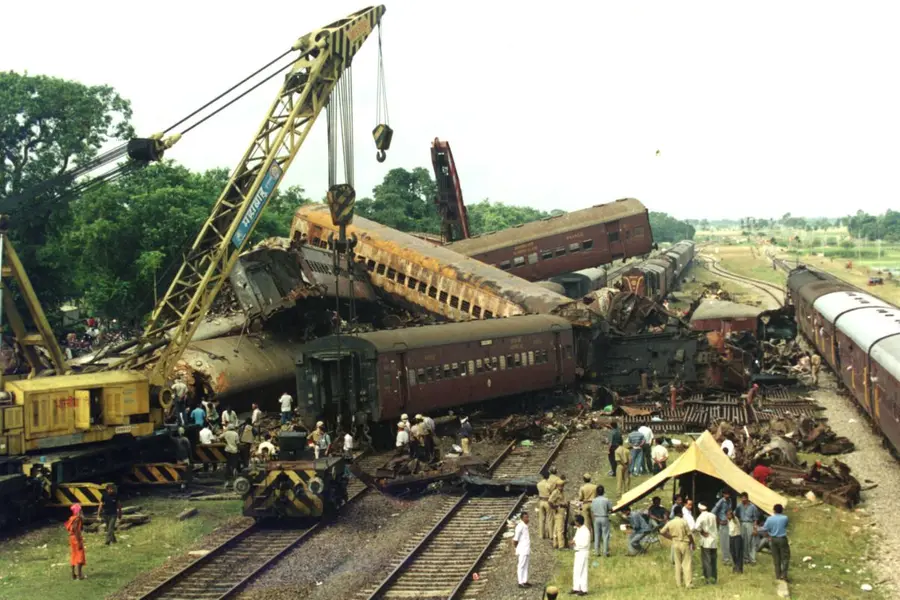
Malappuram: It had rained heavily that day. The skies had cleared only shortly before the Chennai Mail approached Kadalundi. As the train crossed the Kadalundi railway bridge, there was a sudden tremor. The coaches at the front seemed to pull backwards. Seconds later, the rear coaches plunged into the river below.
With a deafening crash, train coaches and steel girders collapsed into the Kadalundi River. The screams of hundreds were swallowed by the wind. Before long, the river turned into a scene of unimaginable tragedy.
Fifty-two lives were lost in what remains one of Kerala’s deadliest rail disasters. Nearly 300 people were injured. Some survivors later succumbed to their injuries, further increasing the toll.
On Monday, Kerala marks the 25th anniversary of the Kadalundi train disaster, the state’s worst rail accident since the Peruman tragedy. Yet, even after a quarter century, the exact cause of the accident remains unresolved.
The Mangalore-Chennai Mail had just crossed the Kadalundi bridge on June 22, 2001, when the girders collapsed. Six coaches, behind the first 12, fell into the river. Two of them landed on a sandbank. The low tide at the time significantly reduced the death toll, as water levels in the river were unusually low.
Within moments of the accident, local residents and fishermen rushed to the site. Khalasis (dockyard worker) from Beypore soon joined the rescue effort.
It was a gruelling operation.
Heavy rain lashed the area as rescuers battled to reach trapped passengers. Armed with crowbars and basic tools, locals broke open windows and doors. Later, gas cutters were brought in to slice through twisted metal.
From inside the mangled coaches came desperate cries for help. Hands emerged through broken windows, searching for rescuers.
Many passengers were saved. Survivors helped rescue fellow passengers. Yet, despite the heroic efforts, 43 people died on the very first day. Several bodies were so badly mutilated that identification became difficult.
Hospitals in Tirurangadi, nearby towns and Kozhikode overflowed with victims. Morgues ran out of space. Healthcare workers struggled to cope as ambulances and anxious relatives crowded roads and hospital corridors.
The following day brought even more heartbreaking scenes. Body parts surfaced in different parts of the river, drifting with the current. The death toll continued to rise.
Post-mortem reports later indicated that many victims, dazed by injuries sustained in the fall, had drowned after losing consciousness.
Even today, the whereabouts of some missing passengers remain unknown.
The commission appointed to investigate the accident arrived at certain conclusions, but many questions remain unanswered. As years passed, the tragedy slowly faded from public memory, becoming little more than a chapter in history.
Malayali driver at the controls
The locomotive was driven by C. Gopalakrishnan, a native of Kanjikkulam in Palakkad district.
The train was travelling at around 50 kmph.
“There was nothing unusual while crossing the bridge,” he later recalled. “Suddenly, I felt a pull from behind. When I checked the vacuum meter, I noticed a drop of nearly 20 centimetres. I immediately applied the brakes.”
Attempts to contact the guard through the walkie-talkie failed.
“Then I noticed what looked like smoke rising from the river in the distance. I immediately sent the assistant loco pilot to check.”
Hand that time could not erase
For journalist VT Santhosh Kumar, who reported the tragedy that night and is now Mathrubhumi's Special Correspondent in Chennai, one image remains etched in memory.
I ran out of my house after hearing the sound of something collapsing with a tremendous crash. The noise came from the direction of the Kadalundi bridge. Although it was nearly two kilometres away from my home, the river between us allowed the sound to travel unobstructed. On many nights, the rattling sound of freight trains crossing the old iron bridge had jolted me awake.
Mobile phones were only beginning to become common then, but within minutes, the news had spread from one person to another. A train had fallen from the Kadalundi bridge into the river. It seemed to be the Madras Mail.
I was getting ready to leave for work. I was on the night shift at the Kozhikode desk. I called the News Editor and informed him about the accident.
"Go straight there. No need to come to the office first," came the reply from NPR (NP Rajendran).
There was a footpath from my house to the Kadalundi railway bridge. Before the Kottakkadavu bridge was built, many people used that route to reach Kadalundi and board trains. The pipeline bridge at Balathiruthi had not yet come up. I wrongly assumed that taking my motorcycle and making a slight detour would get me closer to the bridge more quickly.
By the time I reached the road, the atmosphere had completely changed.
People were standing at junctions directing traffic. Empty jeeps returning from elsewhere were being stopped and diverted towards the accident site. In those days, jeeps were the primary mode of transport.
At the southern end of the Kadalundi railway bridge, the girders had collapsed. Three coaches of the Chennai Mail were hanging from the broken structure. Two more coaches were submerged in the river.
Passengers rescued from the mangled compartments were being carried or supported to the roadside. They were loaded into any vehicle available and rushed to hospitals. Some bodies, probably those confirmed dead, lay covered with cloth by the roadside. Those with less serious injuries waited for transport.
Neither the police nor the fire force had arrived yet. The local people who had rushed to the scene within moments of the accident had transformed themselves into a disaster-response force.
The riverbank was crowded, but so was the river itself.
Sand workers from the Kadalundi River and fishermen from Chaliyam were leading the rescue efforts. Several people were in country boats. Divers were already in the water. Except for those trapped deep inside or beneath the coaches, almost everyone had been brought ashore—alive or dead.
Announcements and instructions continued to pour from the loudspeaker of a nearby mosque.
In any disaster, it is usually local residents who arrive first and begin rescue operations. But the scale of organisation and coordination witnessed at Kadalundi was extraordinary. It drew praise from across the country.
When I finally reached the riverbank beneath the bridge, I saw something I have never forgotten.
Through the window bars of a coach that was almost completely submerged, a single hand protruded above the water.
Somewhere inside the twisted compartment, the rest of the body was trapped. Rescuers had been unable to retrieve it.
Perhaps it was a hand reaching out for help. Perhaps it was a final farewell when death became certain.
Until the next day, when gas cutters were brought in, and the window bars were sliced open, that unidentified hand remained there, rising and falling with the tides, visible above the water's surface.
Even today, whenever I walk near the new Kadalundi bridge, that hand returns to my mind.
Published: 21 Jun 2026, 10:47 am IST
Related Topics
Disclaimer: Kindly avoid objectionable, derogatory, unlawful and lewd comments, while responding to reports. Such comments are punishable under cyber laws. Please keep away from personal attacks. The opinions expressed here are the personal opinions of readers and not that of Mathrubhumi.
