
Prof (Dr) Jagathy Raj VP, Vice-Chancellor of Sreenarayanaguru Open University (SGOU) speaks to Mathrubhumi about how his university became the first in Kerala to receive a Letter of Intent from the National Council for Vocational Education and Training (NCVET), Ministry of Skill Development and Entrepreneurship
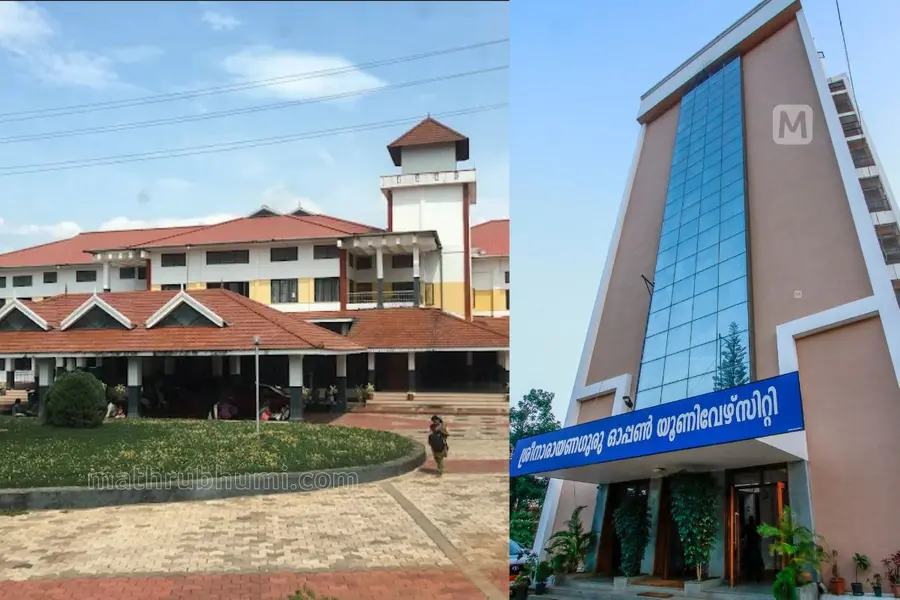
Sreenarayanaguru Open University (SGOU), Kollam, has received a Letter of Intent from the National Council for Vocational Education and Training (NCVET), Ministry of Skill Development and Entrepreneurship, Government of India, for Dual Recognition as an Awarding Body and an Assessment Agency -- making it the first university in Kerala to reach this milestone.
With this recognition, SGOU will be able to develop and award NSQF-aligned vocational qualifications and conduct competency-based assessments. Through its open and distance learning mode, the University aims to make recognised skill certification more accessible to learners across Kerala.
NCVET’s dual-recognition framework permits an institution to carry out both certification and assessment functions for approved, NSQF-aligned qualifications, subject to its regulatory requirements.
Mathrubhumi spoke to Prof (Dr) Jagathy Raj VP, Vice-Chancellor of SGOU about the university’s achievement and its plans to make nationally-recognised vocational education accessible to learners across the state. Read edited excerpts.
Sreenarayanaguru Open University has achieved a significant milestone by receiving a Letter of Intent from NCVET for dual recognition. What does this mean for the university?
This is a landmark achievement for Sreenarayanaguru Open University and a significant step forward for vocational education in Kerala. We are proud to be the first university in the state to achieve this milestone. The Letter of Intent from the National Council for Vocational Education and Training, under the Ministry of Skill Development and Entrepreneurship, Government of India, recognises our potential to function as both an Awarding Body and an Assessment Agency.
This is particularly important because it expands the university’s role beyond conventional academic programmes. We can now move towards offering structured vocational qualifications that respond to the changing needs of the employment market. Our objective is to combine academic learning with practical skills, enabling learners to improve their employability, pursue new career opportunities and participate more meaningfully in the economy.
Could you explain the significance of dual recognition as an Awarding Body and an Assessment Agency?
These two functions are complementary and essential to building a credible vocational education system. As an Awarding Body, SGOU will be able to design and award vocational qualifications aligned with the National Skills Qualifications Framework (NSQF), subject to the applicable recognition and approval requirements.
As an Assessment Agency, the university will be able to undertake competency-based assessments in accordance with the prescribed standards. This means that the emphasis will not be limited to what a learner knows theoretically; it will also extend to what the learner can actually do.
The combination of these functions will help us develop a comprehensive approach to skill education, from designing relevant qualifications to assessing competencies and awarding recognised credentials. We want our programmes to reflect professional standards and meet the expectations of employers and industry.
How will this initiative benefit learners across Kerala, particularly those who cannot pursue conventional higher education?
Accessibility is at the heart of our mission. Many people in Kerala have the ability and ambition to learn new skills but cannot attend regular colleges because of employment, family responsibilities, financial limitations or geographical constraints. Others may have discontinued their education at an earlier stage and are looking for opportunities to restart their learning journey.
The open and distance learning system can make a substantial difference to these groups. Working adults, homemakers, young people seeking employment and individuals who missed out on formal education can benefit from flexible learning opportunities.
Our vision is to make quality, nationally recognised skill education accessible to every learner in Kerala, irrespective of their circumstances. This milestone allows SGOU to take that vision forward by creating pathways through which people can acquire practical skills, demonstrate their competencies and obtain recognised qualifications.
We believe that education should not be restricted by age, location or the stage at which someone left the formal education system. Learning must remain a continuing opportunity throughout life.
The initiative is aligned with the National Education Policy 2020. How does SGOU plan to translate this vision into practice?
The National Education Policy 2020 emphasises the integration of vocational education with general education. This is an important shift in the way we understand education and career development.
For a long time, vocational education has often been treated as separate from mainstream academic learning. However, the knowledge economy requires people who possess both conceptual understanding and practical competencies. A graduate may have strong theoretical knowledge, but additional occupational skills can improve their ability to apply that knowledge in the workplace.
At SGOU, we see this as an opportunity to create a more flexible and inclusive education ecosystem. Our vocational programmes will aim to complement academic learning and provide learners with opportunities to develop industry-relevant competencies.
The broader objective is to reduce the artificial distinction between academic education and skill training. Both are necessary, and both should be respected as valuable pathways to personal development and professional success.
What kinds of skill-based programmes can learners expect from SGOU in the coming months?
We are planning to introduce skill-based certificate and diploma programmes in emerging sectors in the coming months. The selection of programmes will be guided by changing employment patterns, industry requirements and the skills that learners need to remain competitive.
We want to identify areas where there is a clear demand for trained personnel and where flexible learning can make a meaningful contribution. The focus will be on developing programmes that are relevant to contemporary professional environments and that help learners acquire demonstrable competencies.
The precise programme offerings will depend on curriculum development, regulatory requirements, the relevant approvals and the availability of appropriate assessment mechanisms. We will proceed systematically to ensure that quality is not compromised in our effort to expand access.
Our intention is to make vocational education practical, relevant and accessible, while ensuring that the qualifications carry credibility and value for learners.
How will SGOU ensure that these programmes meet industry expectations rather than remain confined to theoretical instruction?
The effectiveness of vocational education depends on its relevance to the real world. A programme must equip learners with competencies that can be applied in professional situations. For this reason, curriculum design and assessment will be crucial.
We need to understand the expectations of employers, the changing nature of occupations and the technological developments influencing different sectors. This understanding must inform the learning outcomes and the competencies that our programmes seek to develop.
Competency-based assessment is especially important in this context. It provides a framework for evaluating whether learners have acquired the knowledge and practical abilities required for a particular qualification.
We will also need to explore appropriate partnerships and engagement with industry and other stakeholders wherever relevant. Such collaboration can help us understand emerging skill requirements and keep our programmes responsive to changes in the employment market.
Ultimately, our success will be measured not merely by the number of programmes we introduce, but by the value they create for learners and their ability to use their skills effectively.
What role can open and distance learning play in addressing the skill gap in Kerala?
Open and distance learning can help address the skill gap by extending educational opportunities beyond conventional institutional boundaries. Kerala has a diverse population of learners, including people in rural areas, working professionals, homemakers and individuals who need to balance education with other responsibilities.
A flexible learning system can help these groups pursue further education without necessarily giving up their employment or disrupting their family lives. It can also support lifelong learning by allowing individuals to update their competencies as professional requirements change.
However, accessibility must go hand in hand with quality. Learners need appropriate learning resources, clear programme structures, reliable assessment systems and qualifications that are meaningful in the employment market.
Our responsibility is to build a system that combines flexibility with academic rigour and professional relevance. Through vocational education, SGOU can contribute to creating more opportunities for people to improve their skills and strengthen their prospects.
How important is this milestone in the larger context of Kerala’s economic and social development?
Skill development is closely connected with economic growth, social mobility and individual empowerment. A person who acquires relevant skills may be able to secure employment, improve existing career prospects, start an enterprise or become more productive in their current occupation.
For Kerala, it is important to ensure that educational opportunities respond to the aspirations of young people as well as the needs of adults who want to re-enter the workforce or move into new professions. We must also recognise the potential of people whose abilities have not been fully utilised because they lacked access to suitable education or training.
Vocational education can help bridge this gap. By providing opportunities to acquire recognised qualifications, we can help learners convert their abilities into demonstrable competencies.
As a public university, SGOU has a responsibility to contribute to inclusive development. Our approach must ensure that opportunities for learning and skill acquisition reach people across different social and geographical backgrounds.
What are the major challenges in expanding vocational education through the open and distance learning system?
One of the principal challenges is ensuring that flexible learning delivers the same commitment to quality and credibility that learners expect from any recognised educational programme. Vocational education requires careful attention to curriculum standards, learning outcomes, practical competencies and assessment procedures.
Another challenge is keeping programmes aligned with the rapid changes taking place in technology and industry. Skills that are relevant today may need to be updated as occupations evolve. This requires continuous engagement with stakeholders and a willingness to revise learning content when necessary.
We must also ensure that learners understand the value of vocational qualifications and the opportunities available to them. Effective academic guidance and awareness are important components of this process.
The Letter of Intent is an important step, but the real work lies in translating this opportunity into high-quality programmes that produce meaningful outcomes. We intend to approach the task with responsibility, careful planning and a strong commitment to learners.
What message would you like to convey to young people and adults considering vocational education?
I would encourage learners to view skill development as an investment in themselves. The world of work is changing rapidly, and the ability to learn, adapt and acquire new competencies has become increasingly important.
Vocational education should not be viewed as an alternative only for those who cannot pursue conventional academic programmes. It is a valuable pathway in its own right, offering opportunities to develop specialised abilities and improve professional prospects.
At the same time, people who have discontinued their education should not feel that their opportunities have come to an end. There are different stages in life at which individuals may wish to return to education, change careers or acquire new skills.
Through its vocational education initiatives, SGOU seeks to support this continuing journey of learning. We want to create opportunities for people to discover their potential and move towards their goals with greater confidence.
Finally, what is your long-term vision for Sreenarayanaguru Open University as it expands into vocational education?
Our long-term vision is to strengthen SGOU as an inclusive institution that connects education with the changing needs of society. We want to create opportunities for people to learn throughout their lives, acquire relevant competencies and improve their personal and professional prospects.
The dual-recognition initiative represents an important step towards this goal. It provides a foundation for expanding our contribution to vocational education while supporting the national vision of integrating skills with mainstream education.
We will focus on developing programmes that are relevant, accessible and aligned with the required standards. We also want learners to feel that the university is a place they can turn to whenever they need to upgrade their knowledge or acquire new skills.
Our achievement as the first university in Kerala to reach this milestone is a matter of pride. More importantly, it brings with it a responsibility to create meaningful opportunities for the people of Kerala. If we can help more individuals acquire recognised skills, improve their livelihoods and participate confidently in the changing world of work, we will have made a worthwhile contribution to society.
Published: 31 Oct 2026, 03:07 pm IST


Related Topics
Disclaimer: Kindly avoid objectionable, derogatory, unlawful and lewd comments, while responding to reports. Such comments are punishable under cyber laws. Please keep away from personal attacks. The opinions expressed here are the personal opinions of readers and not that of Mathrubhumi.
