
Experts have also expressed concern over the financial implications of the scheme.
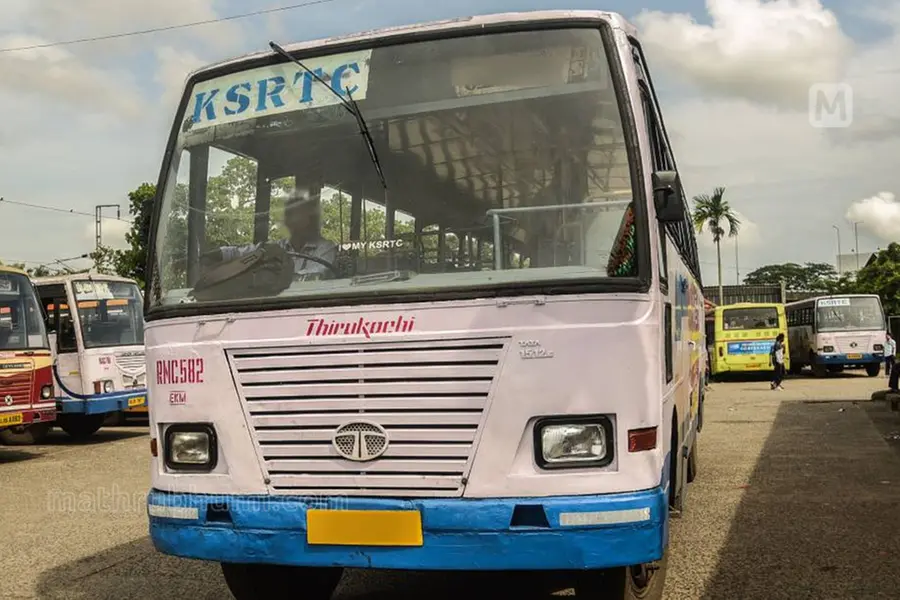
Palakkad: Private bus operators in Kerala have raised concerns over the newly announced free travel scheme for women in KSRTC buses, warning that the move could severely affect not only private operators but also the wider public transport system in the state.
The newly sworn-in UDF government on Monday announced a series of welfare measures, including free travel for women in KSRTC buses from June 15.
Following the announcement, the Private Bus Operators Association said the proposal could drive passengers away from private buses and threaten the survival of the sector. Operators said they would raise the matter with Chief Minister V D Satheesan and expressed hope that the government would take a favourable stand.
Private bus owners had earlier voiced concerns over the proposal when it was included in the UDF manifesto ahead of the elections.
Private operators fear loss of passengers
“If women are allowed free travel in KSRTC buses, nobody will travel in private buses anymore. Only students will remain as passengers. That would eventually destroy the sector itself,” All Kerala Bus Operators Organisation state general secretary T Gopinathan said.
“We believe the government will not move ahead with a decision that completely damages the public transport system,” he added.
Gopinathan said private buses continue to carry the majority of passengers in Kerala, while KSRTC’s share remains below 20 per cent.
“Most people in Kerala depend on private buses for travel. In the current situation, the government cannot entirely take over and run the state’s public transport system on its own. Therefore, there should also be efforts from the government to protect private buses,” he said.
He further claimed that private buses remain the cheapest mode of transport for ordinary people in Kerala.
“If the government introduces free travel, private buses may not even be able to buy diesel or pay staff salaries from the very next day. That is the reality. But we are not thinking about launching protests over this issue,” he said.
The operators also pointed out that private bus services function under extensive government regulation, including permits, routes, schedules, employee wage structures and fare fixation.
“We believe the government will not suddenly take a decision that destroys a sector functioning fully under its control,” Gopinathan said.
He added that similar concerns had earlier been conveyed to V D Satheesan during his “Puthuyuga Yatra” when he was Leader of the Opposition. Operators said they now plan to meet the Chief Minister and Transport Minister soon.
Experts flag financial burden
Experts have also expressed concern over the financial implications of the scheme, warning that Kerala is already facing a structural fiscal squeeze, where revenue deficits force the state to borrow even for routine expenditure.
Critics argued that additional welfare commitments could push the state’s subsidy burden beyond ₹1 lakh crore, affecting investment in infrastructure and development projects.
Concerns have also been raised about KSRTC’s financial health. Experts warned that the corporation, already burdened by debt, could face further stress if government subsidy payments are delayed.
Analysts noted that Kerala differs from neighbouring states because of its strong private transport network. They warned that shifting women passengers entirely towards free KSRTC services could reduce earnings for thousands of private operators and also affect state road tax collections.
Examples from neighbouring states were also cited.
In Karnataka, the “Shakti” free travel scheme is projected to cost around ₹5,300 crore annually, with reports of delayed subsidy payments and reduced allocations for other development works.
In Telangana, the state leadership has flagged financial pressure and reduced capital expenditure linked to welfare commitments.
Some activists have also questioned a blanket free travel policy, arguing that targeted benefits for marginalised groups such as fisherwomen and Kudumbashree workers would be financially more sustainable than extending free travel to financially independent passengers.
Published: 18 May 2026, 06:57 pm IST
Related Topics
Disclaimer: Kindly avoid objectionable, derogatory, unlawful and lewd comments, while responding to reports. Such comments are punishable under cyber laws. Please keep away from personal attacks. The opinions expressed here are the personal opinions of readers and not that of Mathrubhumi.
