
Supreme Court praises Malayali lawyer in Harish Rana euthanasia case.
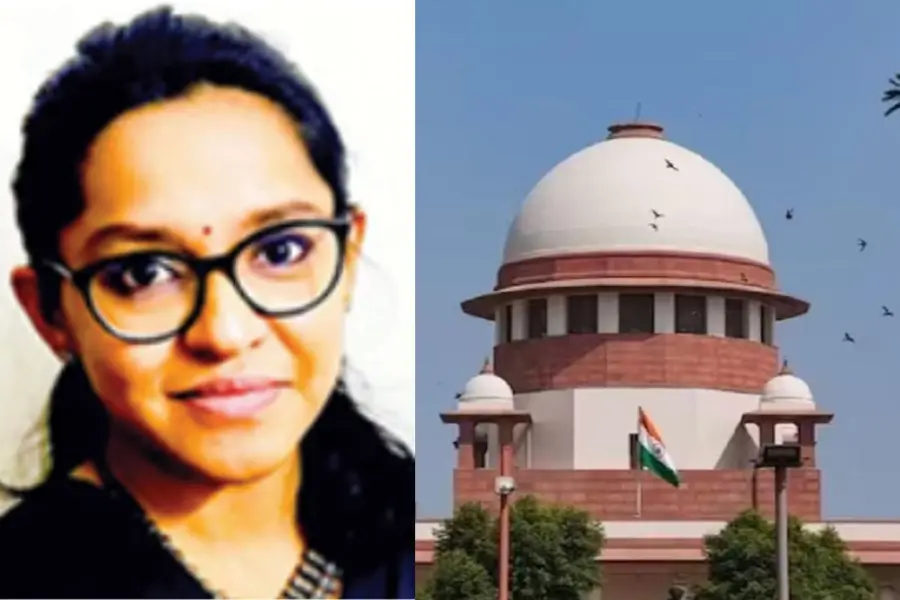
The Supreme Court on Wednesday praised Malayali lawyer Rashmi Nandakumar and her legal team for their research and advocacy while hearing a case on passive euthanasia involving a 31-year-old man who has been in a coma for more than 12 years.
Justice K V Viswanathan, part of a bench with Justice J B Pardiwala, commended the lawyers representing petitioner Harish Rana for their extensive legal research and detailed submissions in a matter involving complex questions of medical ethics and the right to die with dignity.
The praise came as the court allowed passive euthanasia for Rana by permitting the withdrawal of his artificial life support.
Court commends research and legal submissions
Justice Viswanathan provided a detailed commendation of the legal team representing Rana, highlighting the quality of their advocacy and the depth of their research.
The court said the lawyers had cited a “large number of judgments”, including Indian precedents and significant rulings from international jurisdictions.
This research helped the bench navigate the complex intersection of medical ethics and the right to die with dignity.
Justice Viswanathan noted that the lawyers “very ably presented the case” and filed “detailed written submissions covering all aspects” of the matter.
The submissions addressed technical issues including the medical definition of Clinically Assisted Nutrition and Hydration (CANH) and the nuanced “best interest” principle.
Because the case represented the first substantive application of the Common Cause guidelines in their full measure, the work of the lawyers also helped the court identify practical complexities and procedural gaps in the existing law.
Lawyers named by the Supreme Court
The bench specifically named the members of the legal team who worked on the case.
Rashmi Nandakumar and Dhvani Mehta represented the petitioner. They were assisted by Shivani Mody, Anindita Mitra, Yashmita Pandey, Manish Jain, Vikash Kumar Verma and Jugal Kishore Gupta.
The court also praised the conduct of Additional Solicitor General Aishwarya Bhati and her team.
Justice Viswanathan observed that she handled the case in a “non-adversarial manner”, describing it as being in line with the “highest traditions of the office of the Additional Solicitor General”.
The collaborative approach between the petitioner’s lawyers and the government’s counsel helped the court reach a decision rooted in “love, loss, medicine and mercy”.
Court allows passive euthanasia for coma patient
The case concerned Harish Rana, who suffered severe head injuries after falling from the fourth floor of a building in 2013. He has remained in a comatose condition for more than a decade.
Passive euthanasia refers to the intentional act of letting a patient die by withholding or withdrawing life support or treatment necessary to keep them alive.
A bench of Justices Pardiwala and Viswanathan directed the All India Institute of Medical Sciences (AIIMS), Delhi, to admit Rana to palliative care so that his artificial life support can be withdrawn.
The bench said the withdrawal must be carried out with a tailored plan to ensure that the patient’s dignity is maintained.
Earlier, the court had expressed a desire to meet Rana’s parents and had examined a report on his medical history submitted by a secondary medical board from AIIMS-Delhi, describing it as a “sad” report.
The primary medical board had also said the chances of recovery were negligible.
On December 11, the court noted that according to the primary medical board’s report, Rana was in a “pathetic condition”.
Under guidelines issued by the apex court in 2023, both a primary and secondary medical board must be constituted to provide expert opinion before withdrawing artificial life support for a patient in a vegetative state.
Published: 12 Mar 2026, 08:43 am IST
Related Topics
Disclaimer: Kindly avoid objectionable, derogatory, unlawful and lewd comments, while responding to reports. Such comments are punishable under cyber laws. Please keep away from personal attacks. The opinions expressed here are the personal opinions of readers and not that of Mathrubhumi.
