
Kerala is preparing to implement a credit and semester system in higher secondary education, aligned with NEP 2020, starting next academic year
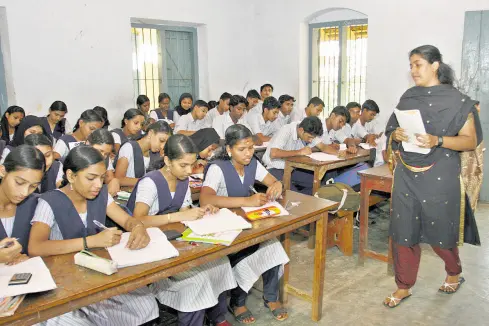
Thiruvananthapuram, Kerala: Plans are underway to reform higher secondary education in the state by implementing a credit and semester system, similar to that in higher education. This year, the government is aiming to introduce this structural change alongside the higher secondary curriculum reform.
Government sources told Mathrubhumi that the move will be subject to a policy decision following detailed deliberations. The new curriculum is set to be implemented from the next academic year.
The National Education Policy (NEP) 2020 has recommended a credit system for higher secondary education. The proposal suggests organising 1,200 hours of study time in an academic year, carrying 160 credits. As schools following the NCERT syllabus have begun transitioning to this model, state schools are also planning to align with this national shift.
If implemented, the two-year Plus Two programme will be converted into four semesters. The examination pattern will also undergo changes. It is estimated that the new scheme will help reduce the stress associated with the syllabus.
At present, there are four core subjects in a combination. Although NCERT has proposed reducing this to three, no decision has been taken to implement the change.
Drastic change in NEP
NEP 2020 proposes a major structural shift from pre-primary to Plus Two. Kerala has not approved the 5+3+3+4 structure. The proposal is to treat classes 9 to 12 as a single unit. In Kerala, however, it has been decided to include classes 8 to 12 in the school consolidation initiative. The NEP places emphasis on elective studies, and 160 credits over 1,200 hours have also been recommended for classes 11 and 12.
Shift from lectures to teacher-student dialogue
Students and teachers in higher secondary classes are calling for a change in learning style, in tune with changing times. This demand was raised in the presence of General Education Minister V. Sivankutty during a state-level public discussion on curriculum reform. The current classroom teaching model should be revised, and a more interactive dialogue between teachers and students should be encouraged.
There was also a call to ensure safety by installing CCTV in examination halls, and to provide a fitness centre in every school for stress-free study and physical well-being.
Important instructions
- Local knowledge should be included in the curriculum.
- Naipuni Kendrams for job training.
- Practical work should be conducted for Humanities.
- Practical and assessment evaluations in science subjects sometimes do not align.
- It is not possible to confirm whether pictures were drawn by the student or by AI; therefore, a viva is required alongside the practical.
- Sufficient specialist teachers are needed for holistic education.
- Introduce new methods to make studying Social Science and History more engaging, such as field trips.
- For students interested in research, a separate question paper should be provided in addition to the general paper.
- The burden of the science syllabus should be reduced.
- The number of subject combinations should be limited.
Published: 26 Jul 2025, 02:55 pm IST
Disclaimer: Kindly avoid objectionable, derogatory, unlawful and lewd comments, while responding to reports. Such comments are punishable under cyber laws. Please keep away from personal attacks. The opinions expressed here are the personal opinions of readers and not that of Mathrubhumi.
