
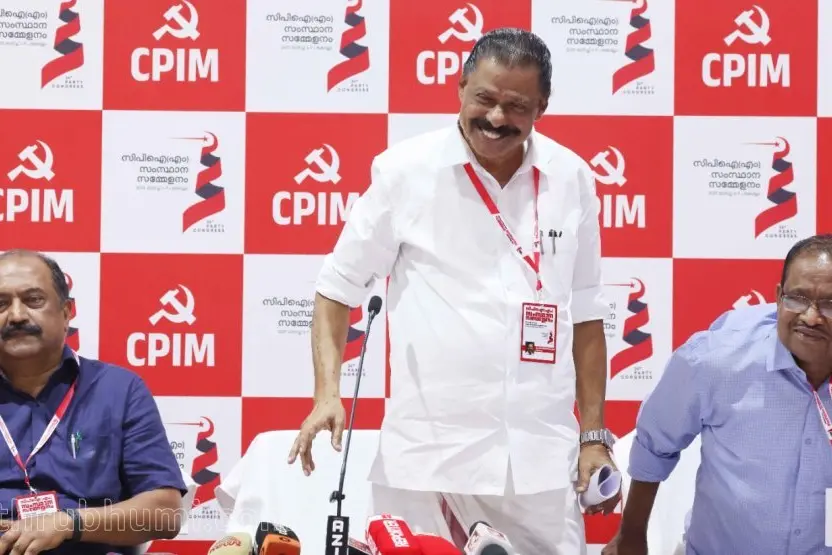
Kollam: Accepting unfettered capital investments, permitting private participation in the public sector, and increasing fees and surcharges based on income—these are the main gateways in the 'new path' the CPM envisions for Nava Keralam (New Kerala). The first day of discussions on the policy document and organisational report at the ongoing state conference aligned with this vision. The CPM unequivocally asserts that securing new financial resources is essential to ensure overall development and welfare.
Without identifying new financial sources, Kerala will stagnate, said CPM state secretary M V Govindan at a press conference. Resource mobilisation must be increased and capital investment—regardless of its form—should be welcomed, he said. The policy document envisions utilising investments without strings attached effectively for the benefit of the country and the people, ensuring that nothing against the public interest will be entertained.
The state's alternative policy advocates enhancing internal resource mobilisation without burdening the people, guiding Kerala towards a new direction through collective growth. Public sector institutions and cooperative societies must join hands in the state's developmental initiatives. Citing the LIFE Mission's achievement of constructing five lakh houses, Govindan said cooperative societies, in collaboration with local bodies, could contribute funds along with government grants. If beneficiaries return the grants later, more houses could be completed under this model, he added.
The document also hints at a policy shift in the cooperative sector, paving the way for private participation. Though presented under the PPP model, the party's proposal acknowledges that private partnership will be facilitated. While upholding its commitment to strengthening the public sector, the party will extend necessary support to revive loss-making units. The party plans to strengthen its engagement with the people and attract the new generation to Left politics. "Without taking forward the lives of the people, their trust cannot be won. For that, funds are required. If we stand still citing lack of money, stagnation is inevitable. The document proposes ways to secure these funds," Govindan said.
Several sectors have not seen any increase in revenue for a long time, he pointed out. Efforts to mobilise resources from such sectors are vital for Kerala's growth. The Centre extensively uses cess and surcharges to boost revenue, with nearly 20 percent of its tax income generated through such levies, which are not shared with states. The party suggests exploring the possibility of imposing cess. The fundamental question the party raises is whether all welfare benefits given to the poor should be extended to the affluent as well.
"Our approach is to prioritise the underprivileged, not to treat everyone equally," the policy document states. It also suggests considering differential fee collection based on income. The document proposes expanding the existing system of charging fees based on income in government hospitals to other government services. However, final decisions on such matters will be taken only after detailed deliberations and consultations.
Identifying and collecting fees from various sectors is a natural step in resource mobilisation. Despite the ongoing financial crisis, around 70 percent of the revenue, including arrears, was collected, enabling the treasury to avoid shutdown. Alternative measures like KIIFB and the pension fund were introduced during the previous government’s term as part of resource mobilisation. If Kerala continues to tolerate the Centre's neglect, stagnation will be the ultimate outcome, Govindan warned. The only way forward is to explore new avenues and guide Kerala into a knowledge society and knowledge economy, he added.
He alleged that the media is trying to whitewash far-right ideologies by portraying Kerala's alternative policies as a failure.
The discussion on the organisational report will last seven and a half hours, with 47 participants. Responding to whether there was criticism against the secretary on the second day of the conference, Govindan said criticism is inevitable and necessary. "However, it is not the kind of criticism you are suggesting. Criticism and self-criticism are essential, but the evaluation is that the party centre's functioning is commendable," he said. He also dismissed reports of alleged favouritism towards Kannur district.
Published: 07 Mar 2025, 09:21 pm IST
Related Topics
Disclaimer: Kindly avoid objectionable, derogatory, unlawful and lewd comments, while responding to reports. Such comments are punishable under cyber laws. Please keep away from personal attacks. The opinions expressed here are the personal opinions of readers and not that of Mathrubhumi.
