
Kerala High Court dismisses plea against Christian priests' temple entry; calls for non-Hindu rule review.
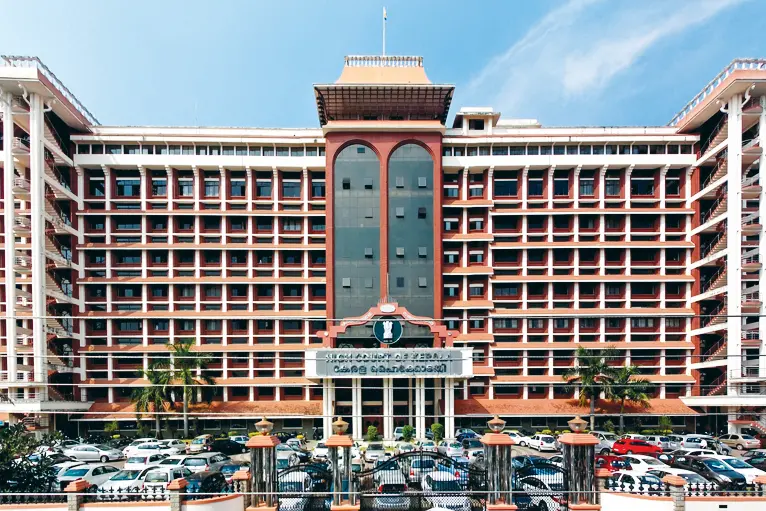
In a major judgment, the Kerala High Court has dismissed a petition challenging the entry of Christian priests into a Hindu temple, while simultaneously directing the State Government to review the rule that imposes a blanket ban on non-Hindus. The Bench, comprising Justice Raja Vijayaraghavan V and Justice K. V. Jayakumar, noted an "apparent inconsistency" between the parent Act and its subordinate rules.
The case arose following an incident on 7 September 2023, at the Adoor Sree Parthasarathy Temple. During Sreekrishna Jayanthi celebrations, two Christian priests, including Dr. Zacharias Mar Aprem, were invited to the premises. The petitioner, Sanil Narayanan Nampoothiri, a teacher and devotee, alleged that the priests were led inside the temple in their priestly robes, offered prayers, and received prasadam.
Conflict Between Parent Act and Subordinate Rules
The petitioner argued that the entry violated Rule 3(a) of the Kerala Hindu Places of Public Worship (Authorisation of Entry) Rules, 1965, which prohibits non-Hindus from entering places of public worship.
However, the Court observed that the parent legislation—the Kerala Hindu Places of Public Worship (Authorisation of Entry) Act, 1965—contains no such prohibition. The judges clarified: "a subordinate legislation cannot go beyond the scope of the parent Act". The Court further noted that if inconsistency exists between the parent Act and the Rules, the former must prevail.
The Role of the Thanthri as 'Spiritual Custodian'
The Travancore Devaswom Board and the Temple Advisory Committee defended the entry, stating the priests were "Guests of Honour" who had received express permission from the temple’s Thanthri via telephone.
The Court upheld this distinction, stating: "The Thanthri occupies a pivotal and sacrosanct position in the temple hierarchy and is traditionally regarded as the spiritual custodian and ritual authority — often described as the father of the deity". The Bench ruled that a permissive, ceremonial entry as an Athithi (guest) is fundamentally different from an entry claimed as a matter of right.
Call for Legislative Reconsideration
While dismissing the plea, the Court emphasised that many aspects of the 1965 Rules are "impracticable and difficult to enforce or execute". The judgment highlighted that the legal framework must function as a "unifying force that fosters mutual respect and coexistence" rather than becoming an instrument for fomenting disharmony.
The Court has now called upon the Kerala Government to examine whether Rule 3(a) requires "reconsideration, amendment or modification" to align it with constitutional principles, following consultations with the Devaswom Board, Thanthris, and religious scholars
Published: 07 Feb 2026, 09:43 pm IST
Disclaimer: Kindly avoid objectionable, derogatory, unlawful and lewd comments, while responding to reports. Such comments are punishable under cyber laws. Please keep away from personal attacks. The opinions expressed here are the personal opinions of readers and not that of Mathrubhumi.
