
Senior advocate K K Venugopal, appearing for the Kerala Government, sought to withdraw the petition, citing that the issue had become infructuous after the apex court's recent verdict in a similar case involving the Tamil Nadu Governor.
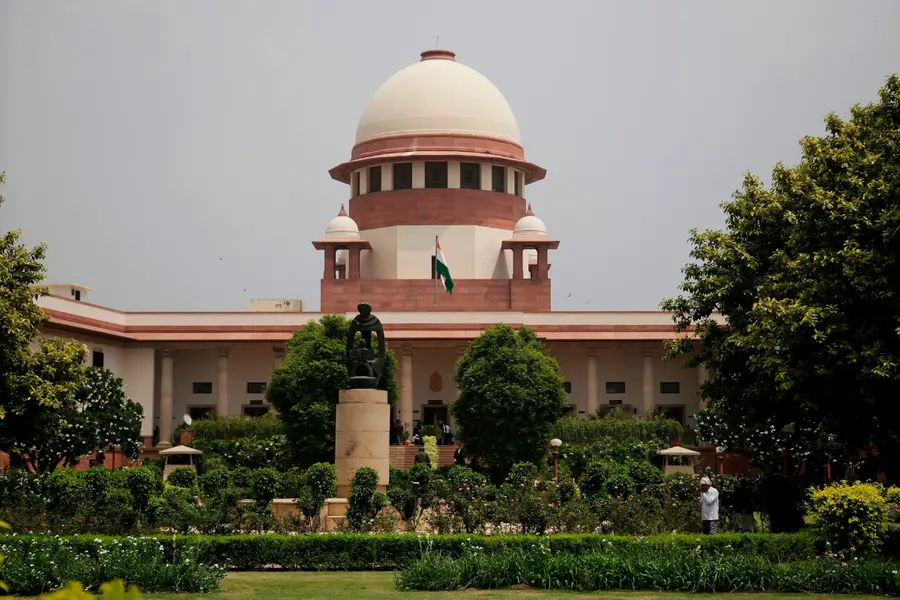
New Delhi: The Supreme Court on Monday deferred to July 25 the hearing on Kerala's petitions against former governor Arif Mohammed Khan for delaying assent to Bills passed by the state assembly, even as the Centre opposed the state's move to withdraw its plea.
A bench comprising Justices P S Narasimha and A S Chandurkar adjourned the matter following a request from Attorney General R Venkataramani for more time.
Senior advocate K K Venugopal, appearing for the Kerala Government, sought to withdraw the petition, citing that the issue had become infructuous after the apex court's recent verdict in a similar case involving the Tamil Nadu Governor.
However, both Attorney General Venkataramani and Solicitor General Tushar Mehta opposed the withdrawal, urging the bench to wait for the Supreme Court’s ruling on a Presidential reference under Article 143 regarding the grant of assent to state Bills.
Mehta further submitted that the Kerala matter could be tagged with the pending Presidential reference case. In response, Venugopal expressed his surprise: "Why are my lords hesitant for the state to withdraw the petition? There has to be some rationale... this only means both parties will charge money."
The bench clarified its position, saying: "We will make it very clear, tentatively there can't be an objection to withdraw." The case will now be heard on July 25.
Earlier, on April 22, the apex court had said it would examine whether its April 8 judgment in the Tamil Nadu case, which set a timeline for Governors and the President to act on Bills, would apply to Kerala's situation.
In that verdict, the top court had struck down the Tamil Nadu Governor’s move to reserve 10 Bills for the President’s consideration in a second round, calling it “illegal” and “erroneous in law”. Notably, the bench had, for the first time, laid down a three-month deadline for the President to decide on such Bills from the date of receipt.
Kerala had filed a similar plea seeking directions to ensure timely action on Bills passed by its legislature.
Back in 2023, the court had taken note of Kerala's complaint that then-Governor Arif Mohammed Khan had sat on several Bills for nearly two years. Khan, who now serves as Bihar’s Governor, had referred some of the Bills to President Droupadi Murmu, where they remain pending.
In its plea, the state contended that the Governor had reserved seven Bills for Presidential assent, although he was constitutionally required to act on them himself under Article 200. None of the Bills, Kerala argued, involved matters pertaining to Centre-state relations.
The delay, according to the state government, amounted to a subversion of the legislative process, leaving the assembly's work "ineffective and otiose." The bills in question, it said, were of public interest and should have been addressed "as soon as possible," as mandated by the Constitution.
Of the seven bills, the Union Home Ministry later informed Kerala that the President had withheld assent to four: the University Laws (Amendment) (No. 2) Bill, 2021; Kerala Co-operative Societies (Amendment) Bill, 2022; University Laws (Amendment) Bill, 2022; and University Laws (Amendment) (No. 3) Bill, 2022.
The Constitution does not define a time frame for the President to assent or reject bills referred for consideration. Article 361 protects the President and Governors from being held accountable in court for actions taken in the performance of their duties.
Published: 14 Jul 2025, 03:26 pm IST
Disclaimer: Kindly avoid objectionable, derogatory, unlawful and lewd comments, while responding to reports. Such comments are punishable under cyber laws. Please keep away from personal attacks. The opinions expressed here are the personal opinions of readers and not that of Mathrubhumi.
