
The effort now is not to discard caste but to represent it. That has brought about a major shift in politics.
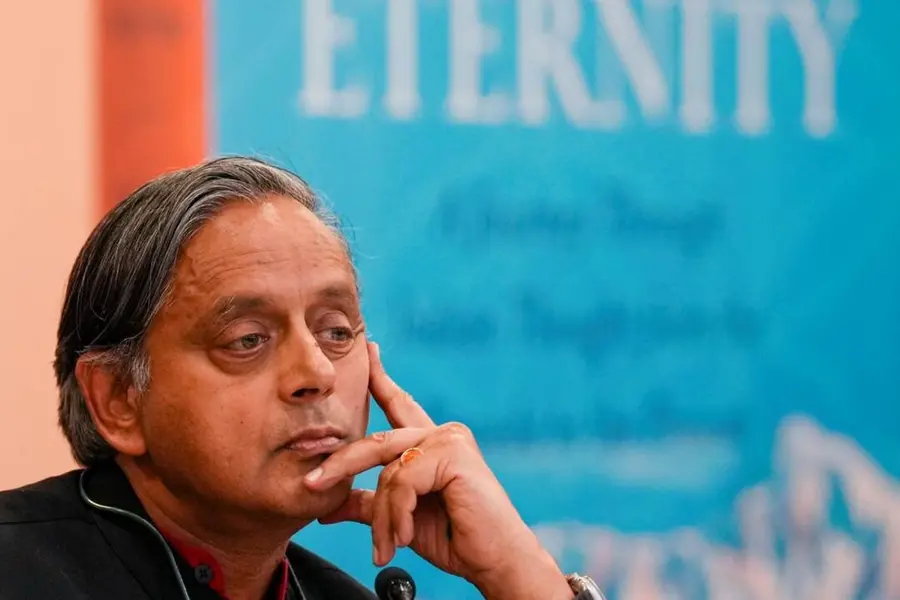
Congress leader Shashi Tharoor has said that while there is nothing wrong with a population census, making caste the criterion for everything could cause problems in the country. In an interview with Mathrubhumi.com, Tharoor said that we are now on the opposite side of what leaders like Jawaharlal Nehru and Dr B R Ambedkar had hoped for.
? The demand for a caste census is not new and has been raised by the Opposition for some time. However, it is the NDA government that has suddenly announced it now.
If welfare schemes and entitlements in our country are to be decided on the basis of caste, then shouldn’t we know the numbers of each caste? I believe there was a discussion in the Lok Sabha in 2013 or so regarding this. Even within the Congress, there were two opinions at that time—one group felt that caste-based enumeration was inappropriate, while another believed it was necessary. In my view, there is nothing wrong in knowing caste-wise figures.
Personally, I do not believe in caste. However, if our people live their lives based on caste, then there is no harm in trying to understand what they are referring to. If the next census includes such a question, so be it. There can be differing opinions on how that data should be used. So, collecting population data is not wrong; but we need to discuss what to do with that information. Making caste the standard for everything will undoubtedly cause issues."
? Congress leader Rahul Gandhi has often used the slogan, Jitni aabadi, utna haq (rights in proportion to population)
That phrase is not his original coinage, but a quote. I am not willing to endorse it unconditionally. If we accept that logic, won’t it end up validating the BJP’s argument? Around 80 percent of India’s population is Hindu. Does that mean Hindus should decide everything? South India has a smaller population compared to North India. If we say the North will decide everything, would that be acceptable? Basing decisions solely on population will create various problems. We must also debate the Supreme Court's guideline that reservations should not exceed 50 percent.
Jawaharlal Nehru, our first Prime Minister, hoped that the very idea of caste would fade away in India. Dr Ambedkar wanted caste to be eradicated. That was the vision of our early leaders. We have now arrived at the opposite position. Politicians now ask for votes and organise people based on caste. The effort now is not to discard caste but to represent it. That has brought about a major shift in politics.
? There has been controversy over some Congress leaders' remarks following the terrorist attack in Pahalgam. The party leadership had to remind members not to speak against the party line.
My personal opinion is that every Indian citizen has the right to express their views on any matter. Some say we must wage war, destroy Pakistan, and reclaim Pakistan-occupied Kashmir. Others say we should avoid war. These are all personal views, not meant to provoke controversy. The Congress Working Committee’s decision is the party line, and there is no doubt about that. Congress President Mallikarjun Kharge and Lok Sabha Opposition Leader Rahul Gandhi have spoken in alignment with that view, and we must accept it. Anyone speaking against it is not acting in accordance with party discipline. Still, I do not see any harm in a democratic debate.
This is my personal opinion, not the party line. I am not opposing the party. But I do not consider it a major issue if someone says they do not want war—even though my personal view is that military action is necessary.
?Given your deep experience in foreign affairs, what is your opinion on how the country is handling the Pahalgam issue?
We cannot know everything the government is doing—it is likely that many steps are being taken confidentially. But I have confidence that Indian diplomats have extensive experience and know exactly what needs to be done. No one knows what we intend to do in Pakistan. Whatever we do, we must ensure the world understands our stance. Already, three or four countries have come forward urging de-escalation and advising against war.
? Is there a possibility of war?
Some have pointed out that Prime Minister Modi said this is not an era of war. I responded that this is not an era of terrorism either. We cannot let such actions go unanswered. I agree with the Prime Minister on this matter. We must teach Pakistan a lesson they will never forget. For that, certain diplomatic steps are essential. Just as the world backed the US after the killing of Bin Laden, we must garner global sympathy to put severe pressure on Pakistan’s military. We must try to get Pakistan back on the FATF (Financial Action Task Force) grey list, push the US to stop upgrading Pakistan’s F-16 fleet... there are many things we can do. Whether those steps are being taken or not, I cannot say.
There is no dispute over what the Centre has done so far in this matter. Everyone knows India’s response will not stop here. Whether it will be a Balakot-style action that avoids civilian casualties, or something else entirely, no one knows. I believe no one wants a long-drawn war. What matters most is ensuring the continuation of India’s success story—our development, our economic growth, our progress. We must not lose all that hard-won progress in a moment of rage.
The response must be calculated, deliberate. Like a chess match, we need to think four steps ahead before striking. A major war would be a problem. I don’t believe the Pakistani military has the capacity to sustain a long war. Their economy is in ruins. The public has turned against their army. A minor skirmish might help them regain public support. But they are also facing issues on the Afghan border—where the Taliban is hostile—and in Balochistan. If we engage them in a conflict, they may not be able to cope. In my opinion, we must strike decisively, but also make other strategic moves. Not everything has to be public; some steps can be taken covertly. We have the technological edge. Cyber warfare is an option. If we can cripple some of their systems remotely, we must do so. 21st-century warfare isn’t just about guns and artillery.
? Like halting the Indus Waters Treaty?
That’s more of a symbolic move. We don’t yet have the infrastructure to store all that water. But for Pakistan, it is a signal—a message that we are willing to take action if needed.
? Congress leader Udit Raj criticised you for comparing the Pahalgam attack with the Hamas attack in Israel and for stating that no intelligence is 100% foolproof, questioning your loyalty to the party.
I was a bit surprised. He’s someone who served five years as a BJP MP. He knows well how BJP members speak and what they say. I speak only for myself.
? The BJP has appointed Rajeev Chandrasekhar as the Kerala state president. As a fellow Malayali and businessman, do you see him as a worthy opponent?
We already had a contest, didn’t we? What bigger competition is there? This very month marks the first anniversary of that victory.
Published: 02 May 2025, 09:34 pm IST
Disclaimer: Kindly avoid objectionable, derogatory, unlawful and lewd comments, while responding to reports. Such comments are punishable under cyber laws. Please keep away from personal attacks. The opinions expressed here are the personal opinions of readers and not that of Mathrubhumi.
