
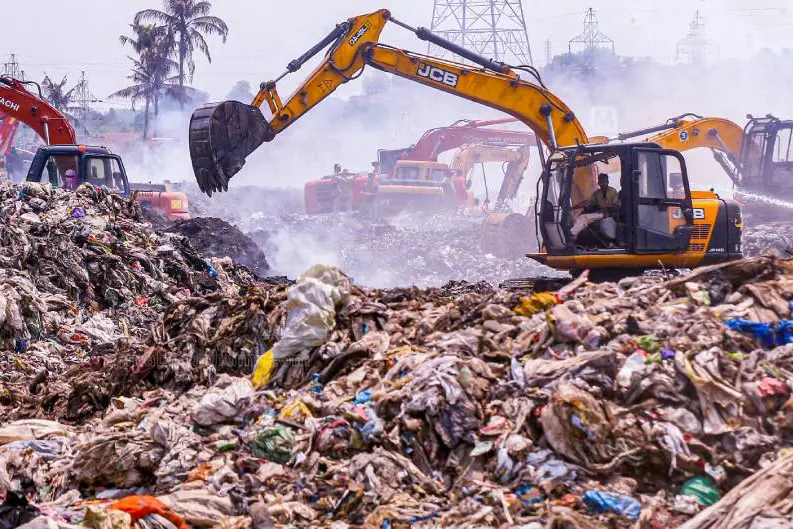
Kochi: The latest special audit report by the Kerala state audit department on the Brahmapuram waste plant has revealed concerning numbers. The report states that waste disposal management via biomining at the plant has caused a huge financial burden for the state.
The main finding is that the same rate paid for removing sorted waste is being applied to the waste that is being landfilled in the project area. As a result, an additional cost of Rs 9.48 crore has been incurred through this process.
The report also indicates that waste containing harmful metals were used for landfilling on the riverbank without permission. This finding is based on an audit of the first four bills paid to the company managing the waste disposal at the plant. Therefore, the audit report indicates that a huge amount will have to be paid extra by the end of the contract period.
But is biomining all bad?
Meanwhile, the audit report also confirms that the separation of pollutants through biomining is satisfactory. But the separated waste when landfilled has caused both economic and environmental problems.
Waste is being segregated into five categories, including Inert, Coarse Fraction, and Refuse-derived fuel (RDF). The rate for transporting the segregated waste to cement companies is Rs 1,690 per ton, which the report states is the highest rate in the country. The RDF waste is being handed over to cement companies outside the state, while C&D inert waste and coarse fraction components are being buried at Brahmapuram itself.
In addition to the waste being buried at Brahmapuram, the same rate of Rs 1,690 per ton, which includes transportation charges, is being paid for the waste that is being taken elsewhere. The main concern is that no transportation costs are required for waste to be deposited within the project area, yet the same rate is being paid for waste that needs to be transported outside. The audit suggests that the lack of proper approach when the contract was made is the reason for this excessive cost.
Water problem
According to World Health Organization standards, there should be no presence of lead in drinking water. However, the audit report highlights that the lead levels in the inert materials used for sanitary landfilling at the Brahmapuram plant, located near the Chitrapuzha River, exceed the permissible limit. Furthermore, the landfill was carried out without the approval of the Pollution Control Board.
The contract does not state that inert materials could be used for landfilling. This is a direct violation of the biomining agreement entered into by the company with the municipality, the report says. The company did not seek the possibility of using inert materials for road construction, nor did the municipality provide assistance for this. The report also says that the company started landfilling even before obtaining the permission from the municipality. The audit report issued by the Senior Deputy Director of the State Audit Department also demands an explanation for why the municipality gave permission to the contractor company to continue biomining despite violating the conditions.
Published: 18 Dec 2024, 08:30 am IST
Related Topics
Disclaimer: Kindly avoid objectionable, derogatory, unlawful and lewd comments, while responding to reports. Such comments are punishable under cyber laws. Please keep away from personal attacks. The opinions expressed here are the personal opinions of readers and not that of Mathrubhumi.
