
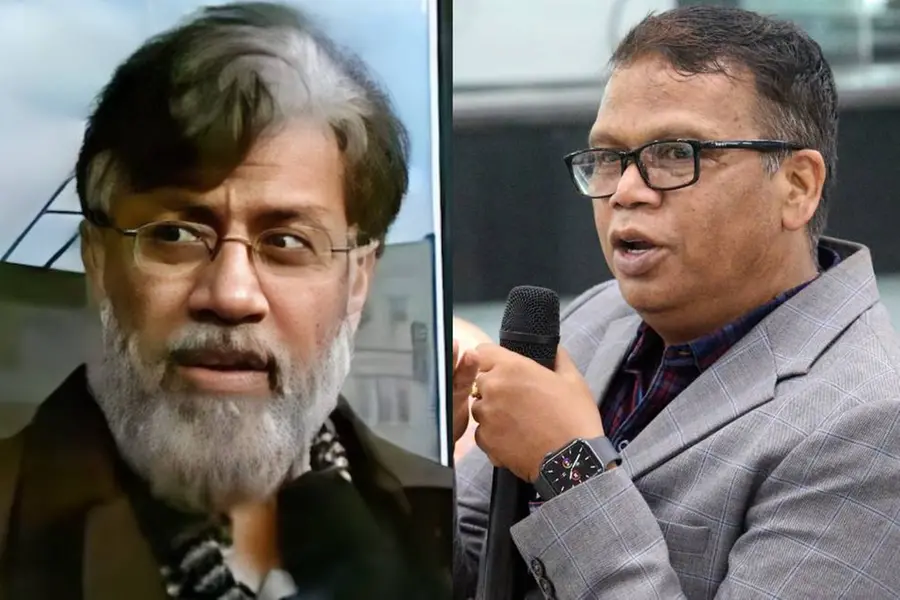
Kochi: The extradition of 26/11 Mumbai terror attack accused Tahawwur Rana to India marks a crucial moment in the ongoing investigation into the deadly 2008 attacks, according to Loknath Behera, former Kerala Police Chief and a senior officer who was part of the initial probe conducted by the National Investigation Agency (NIA). Behera also pointed out that the evidence gathered during the investigation indicated that Rana had also travelled to Kochi and held interviews, though his intentions remained unclear.
"We don't know what his intentions were, and now we can find that out," he said.
Behera, who served as Inspector General with the NIA during the time of the investigation, said Rana’s presence in India could help uncover the full extent of the conspiracy behind the coordinated attacks that left 166 people dead in Mumbai.
"I am personally very happy that Rana has finally been extradited, even after 14 years of being chargesheeted by the NIA. He was chargesheeted in absentia in 2011 in Delhi," he said.
Behera noted that Indian authorities had so far been unable to question Rana, a Pakistani-origin Canadian national, making his arrival a major development for investigative agencies.
"The Indian investigators and other agencies could now get more details of the larger conspiracy, which goes even beyond the Mumbai attacks," he added.
Rana, who had been detained in Los Angeles, was extradited to India on Thursday and brought to Delhi by a team comprising multiple Indian agencies. His name has long been linked to David Coleman Headley, the Pakistani-American terrorist who conducted reconnaissance of targets in Mumbai and was a key figure in the planning of the attacks.
Behera, now the Managing Director of Kochi Metro Rail Ltd, reiterated Rana’s closeness to Headley and suggested that his role may extend further than what has so far been documented.
"Rana's presence in India is crucial to the investigation, and I am confident that the NIA, Mumbai Police, and other agencies will work together effectively to extract maximum information and turn it into concrete evidence for filing supplementary charge sheets in the respective courts of law," he stated.
He expressed hope that Rana’s extradition would lead to his successful prosecution and the highest possible punishment under Indian law.
The 26/11 attacks involved 10 terrorists from Pakistan who arrived by sea and launched coordinated strikes across Mumbai at prominent locations including CST railway station, the Taj and Oberoi hotels, and the Chabad House. The siege lasted for nearly 60 hours and led to the deaths of 166 people, including foreign nationals.
PTI
Published: 10 Apr 2025, 07:51 pm IST
Disclaimer: Kindly avoid objectionable, derogatory, unlawful and lewd comments, while responding to reports. Such comments are punishable under cyber laws. Please keep away from personal attacks. The opinions expressed here are the personal opinions of readers and not that of Mathrubhumi.
