
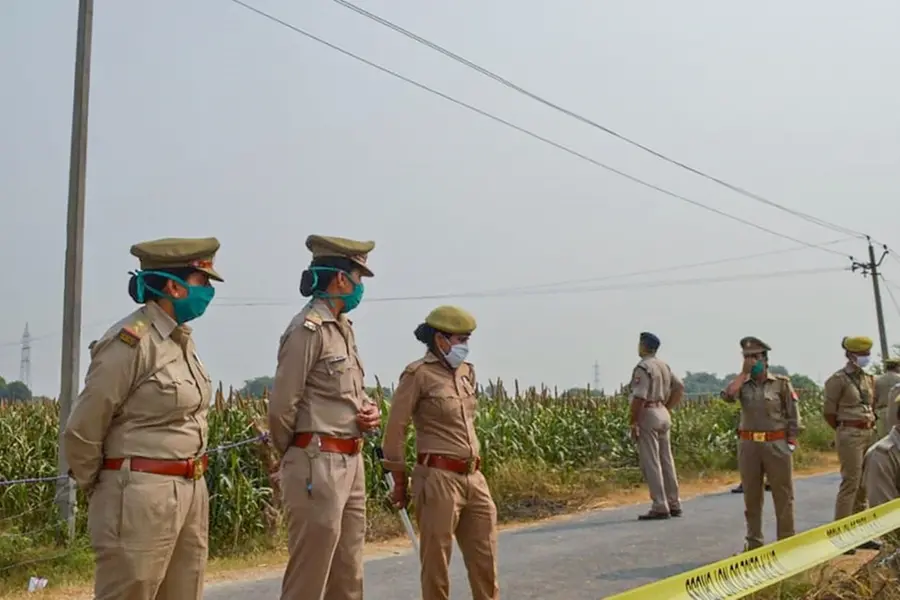
The India Justice Report 2025 (IJR), released on 15 April by Tata Trusts in collaboration with various civil society groups and data partners, paints a sobering picture of gender inequality, staffing deficits, and systemic backlogs in India’s justice system. Among its most striking revelations is the massive gender disparity within the police force.
Out of 2.4 lakh (240,000) women serving in police across India, only:
- 960 are in the prestigious Indian Police Service (IPS) cadre.
- 24,322 are posted in non-IPS officer ranks such as Deputy Superintendent of Police (DySP), Inspector, or Sub-Inspector.
- An overwhelming 2.17 lakh serve as constables — the entry-level position.
This means over 90 per cent of women in uniform remain stuck in junior ranks, highlighting deep-rooted barriers to promotion and leadership.
No state meets gender representation targets
Despite increasing advocacy for gender diversity in law enforcement, not a single state or Union Territory has met its own target for women’s representation in the police. Madhya Pradesh stands out with the highest number of women DySPs at 133, but this figure is still minuscule when compared to the overall force.
Broader findings across the justice system:
Police Sector
- Women remain severely underrepresented in higher ranks.
- Scheduled Castes (SCs) make up 17% and Scheduled Tribes (STs) 12% of the police, falling short of proportional representation.
- 78% of police stations now have Women Help Desks, a positive step, but insufficient in addressing systemic gaps.
Judiciary
- The share of women in the district judiciary has risen to 38%.
- Representation of SCs and STs in the district judiciary remains disproportionately low at 14% and 5% respectively.
- India has only 15 judges per million people, far below the Law Commission’s recommended 50.
- High Courts are operating with 33% judicial vacancies, while district courts have a 21% shortfall.
- Judges in High Courts like Allahabad and Madhya Pradesh are burdened with 15,000 cases each, while district court judges are managing 2,200 cases on average.
Prisons
- The national prison occupancy rate stands at 131%.
- Uttar Pradesh is among the worst performers, with one-third of its jails running at over 250% capacity.
- Medical staffing is grossly inadequate: there is only 1 doctor for every 775 prisoners, far above the recommended 1:300 ratio. In some large states like Haryana, West Bengal, and Uttar Pradesh, the ratio exceeds 1,000:1.
- Across all Indian prisons, there are just 25 qualified psychologists or psychiatrists available.
Legal aid
- Per capita expenditure on legal aid has nearly doubled from 2019 to 2023, now at ₹6.46.
- The number of paralegal volunteers (PLVs), critical to grassroots legal access, has dropped by 38% in five years, with just 3 PLVs per lakh population remaining.
State rankings
- Karnataka retained its position as the best-performing state in overall justice delivery.
- Andhra Pradesh, Telangana, Kerala, and Tamil Nadu followed, highlighting the southern states’ consistently better performance.
- Bihar, Chhattisgarh, and Odisha showed the most improvement since the last report.
- Uttar Pradesh and Uttarakhand also climbed the ranks, surpassing Gujarat and Haryana on the improvement index.
- Sikkim ranked first, followed by Himachal Pradesh and Arunachal Pradesh.
The report also evaluated the performance of 25 State Human Rights Commissions, and included thematic essays on access to justice for persons with disabilities and mediation as a dispute resolution method.
System at breaking point by 2030?
The IJR warns that without urgent reforms, India’s justice system will continue to disproportionately affect the marginalised and vulnerable. With the prison population projected to rise to 6.8 lakh (680,000) by 2030, infrastructure and staffing across police, judiciary, and prisons may reach critical levels.
Data sources
The findings were drawn from a wide range of official government data portals, including:
- National Crime Records Bureau
- Ministry of Law and Justice
- National Judicial Data Grid
- Prison Statistics India
The report underscores a clear message: India’s justice system cannot deliver fairly or effectively until structural inequalities—particularly gender, caste, and infrastructure—are addressed with urgency and accountability.
Published: 15 Apr 2025, 05:46 pm IST
Disclaimer: Kindly avoid objectionable, derogatory, unlawful and lewd comments, while responding to reports. Such comments are punishable under cyber laws. Please keep away from personal attacks. The opinions expressed here are the personal opinions of readers and not that of Mathrubhumi.
