
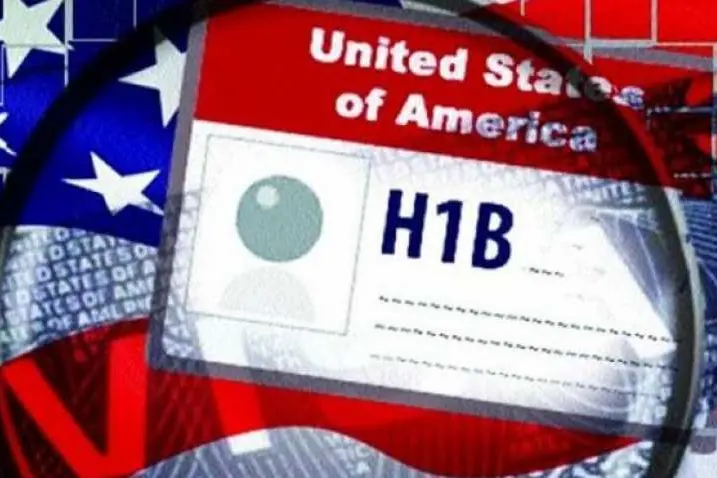
As Donald Trump’s potential return to the presidency looms, Indian professionals, especially those dependent on the H-1B visa programme, are watching closely. His second term could bring significant shifts in immigration policies, particularly those affecting high-skilled workers, potentially altering the landscape for Indian talent in the US.
Trump's Stance on H-1B Visa Programme
During his first term, Donald Trump consistently opposed the H-1B visa programme, arguing that it took jobs away from American workers. His administration took several steps to make the programme more restrictive, including tightening eligibility requirements and increasing scrutiny during the application process. Under Trump, visa denial rates surged. From 2016 to 2020, the average denial rate for H-1B visas was around 18%, compared to just 3.2% under President Biden. The number of Requests for Evidence (RFEs) also tripled, causing delays and uncertainty for many applicants.
With Trump’s return to power, it’s expected that the H-1B visa programme will see further tightening. Among the possible changes are higher wage requirements for H-1B visa holders, which aim to protect American jobs but could place a financial burden on foreign workers. There is also speculation that Trump could reduce the number of H-1B visas issued each year and prioritise applicants with advanced degrees or specialized skills.
Additionally, Trump’s administration tried to implement policies that would raise the minimum wages for H-1B visa holders in specific cities to over $200,000, regardless of the applicant’s experience level. Although a court blocked this rule in 2020, similar measures may be reintroduced in the future, potentially making it harder for foreign workers to find employment in the US.
H-4 Visa Holders
One of the most significant challenges under Trump’s previous administration was the effort to restrict the work rights of H-4 visa holders—spouses of H-1B workers. In 2018, Trump officials attempted to eliminate the rule that allowed H-4 visa holders to work, although this was not fully realised. However, experts predict that the second Trump administration might revisit these restrictions. H-4 holders could face longer processing times for work authorization, or the programme could be completely eliminated, leaving many spouses of H-1B workers without the opportunity to work.
International Students and OPT: A Bleak Future?
The future of Optional Practical Training (OPT), a programme that lets international students work in the US after graduation, could also be in jeopardy under Trump’s second term. OPT has been a key pathway for international students, particularly in STEM fields, to gain valuable work experience in the US. During Trump’s first term, there were attempts to limit the OPT programme and its 24-month extension for STEM graduates. Although these attempts were resisted, Trump’s senior advisor, Stephen Miller, who was influential in shaping immigration policy, might push for stricter regulations in the future. If OPT is restricted, it would make the US a less appealing destination for students from India and other countries seeking to gain work experience after their studies.
Trump's Proposal for Automatic Green Cards
Trump has also proposed granting automatic green cards to all US college graduates, which could benefit the international student community, including Indian students. However, this proposal might be accompanied by policies that raise wages for H-1B and green card holders, potentially pricing many foreign professionals out of the job market. This could make it even harder for skilled foreign workers to thrive in the US economy.
Trends and data
In recent years, the US government has progressively imposed stricter regulations on work visas. According to the USCIS, there was a significant decrease of nearly 40% in eligible registrations, dropping from 758,994 for FY24 to 470,342 for FY25. This decline is attributed to the introduction of a 'beneficiary-centric' approach aimed at curbing fraud. Overall, the total number of registrations also decreased, from 780,884 to 479,953 during the same period.
Published: 06 Nov 2024, 04:01 pm IST
Related Topics
Disclaimer: Kindly avoid objectionable, derogatory, unlawful and lewd comments, while responding to reports. Such comments are punishable under cyber laws. Please keep away from personal attacks. The opinions expressed here are the personal opinions of readers and not that of Mathrubhumi.
