
With Kumar repatriated and the government declining to intervene, the post overseeing electoral rolls sat vacant until October 17.
Recent disclosures under the Right to Information (RTI) Act have revealed how the central government chose not to intervene when two Election Commissioners protested against internal administrative decisions within the Election Commission of India (ECI). While the Cabinet Secretariat stood back to safeguard the poll body's independence, these newly disclosed government records have reignited scrutiny over a parallel, sensitive development: the abrupt shunting out of Deputy Election Commissioner Sanjay Kumar right in the middle of a nationwide voter list exercise.
A sudden exit in the middle of voter revision
Also Read

Sanjay Kumar was no ordinary bureaucrat in Nirvachan Sadan. Serving as Deputy Election Commissioner from August 2024 until August this year, he held direct charge of the commission's crucial Electoral Roll and Information Technology divisions. It was Kumar who formally signed the ECI’s 24 June 2025 order that set into motion the Special Intensive Revision (SIR) across the country.
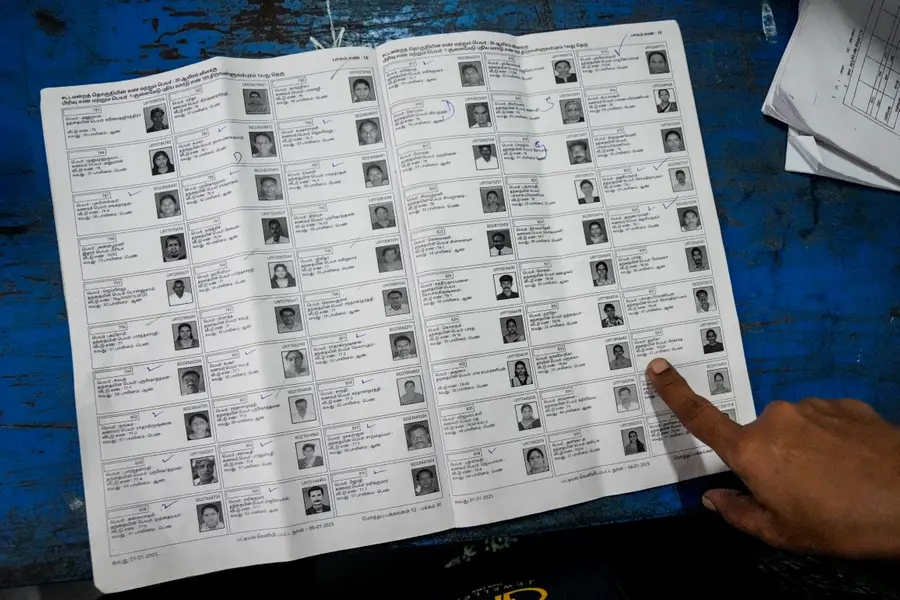
The SIR is a massive administrative exercise designed to cleanse, verify, and update voter rolls before citizens head to the voting booths. Yet, on 24 August, Kumar was suddenly repatriated back to his parent cadre before completing his normal tenure. It may be noted that reports said the repatriation was on personal grounds. His unexpected exit occurred precisely when internal friction among top officials over the administration of voter rolls was reaching its peak.
The disputed work orders and commissioner complaints
The controversy began brewing on 28 July 2026, when Senior Deputy Election Commissioner Maneesh Garg took charge as link officer for the administration division and issued an order redistributing official work among top officers. The very next day, on 29 July, Election Commissioners Dr Sukhbir Singh Sandhu and Dr Vivek Joshi wrote separate, urgent letters to Union Cabinet Secretary T.V. Somanathan.
The Commissioners protested that Garg had altered responsibilities without consulting the full Commission. As documented in a Cabinet note released under the RTI query filed by retired Commodore Lokesh K. Batra:
"Both the ECs have stated that Shri Garg, after assuming the charge as link officer of DEC (Admn), has issued an order regarding work allocation of equivalent and senior officers to him without discussing the revised work allocation with the Commission or the officers concerned. Further, aforementioned ECs have stated that this has happened despite repeated oral and written instructions to all concerned officers against taking such actions without prior discussion/ approval of the Commission."
The Commissioners noted that these actions breached the Chief Election Commissioner and Other Election Commissioners (Appointment, Conditions of Service and Term of Office) Act, 2023. Dr Joshi also recorded that when he asked the Administration Division for the official file, the paperwork was withheld from him. Furthermore, the disputed work order threatened to centralise powers to add, delete, and alter voter records at the Delhi headquarters rather than keeping them with state-level election officials. Although the ECI later clarified on 26 September that the controversial redistribution was never enforced, the confrontation exposed deep fissures.
The tussle over IT files and bypassed oversight
Beneath the dispute over designations lay an operational tussle over the commission's digital voter data systems. Dr Seema Khanna, who joined the ECI on deputation from the National Informatics Centre in 2025, headed the IT department and ran its core digital infrastructure. Historically, her files had always passed through Sanjay Kumar for administrative vetting.
Tensions surfaced when Dr Khanna was elevated to Level 15 (equivalent to an Additional Secretary). Because Kumar held the rank of Joint Secretary at Level 14, Garg issued an internal instruction directing Dr Khanna’s files to bypass Kumar entirely and travel directly to the Election Commissioners.
Both Election Commissioners raised red flags, writing to the Cabinet Secretary that cutting out Kumar—whom they regarded as a seasoned officer—was an outright violation. Although Garg’s bypass directive was never officially implemented, the arrangement changed anyway once Kumar was repatriated on 24 August: Garg stepped in as link officer, and Dr Khanna’s files began routing directly through Garg instead.
Why the centre refused to step in
Despite the gravity of the Commissioners' letters, the central government decided not to take action. Official notes reveal that the Cabinet Secretariat considered asking Chief Election Commissioner Gyanesh Kumar for his view on 3 August, but concluded the next day that stepping into Nirvachan Sadan’s internal disputes would cross a constitutional line.
As recorded in the Cabinet note:
"The Commission is a Constitutional Body and is insulated from executive interference by design to ensure that it functions independently and in a transparent manner. The working and functioning of the Commission are governed by the rules and guidelines of the Election Commission. The above communications are from the Election Commissioners in their individual capacity and, while they must be taken with due seriousness, they cannot be seen as a formal communication from the Commission as a whole."
The government pointed to Section 18 of the 2023 Act, which stipulates that the Commission conducts its business collectively through consensus or majority decisions. Because the complaints arrived from the two Commissioners as individuals rather than as an official resolution from the full panel, the Cabinet Secretariat ruled that taking action would be inappropriate. On 5 August, Cabinet Secretary Somanathan simply acknowledged the letters, marking copies to the Department of Personnel and Training and the Establishment Officer to record the matter for future decision-making regarding the officer.
Fresh appointments ahead of upcoming elections
With Kumar repatriated and the government declining to intervene, the post overseeing electoral rolls sat vacant until 17 October, when the Appointments Committee of the Cabinet named Prakash Rajpurohit, a 2010-batch IAS officer, as Deputy Election Commissioner until 2030.
Rajpurohit steps into Nirvachan Sadan at a sensitive moment. With assembly elections scheduled early next year, the commission faces the task of reorganising work allocations and settling the administrative friction that surfaced around the voter revision exercise.
Published: 23 Oct 2026, 12:43 pm IST
Related Topics
Disclaimer: Kindly avoid objectionable, derogatory, unlawful and lewd comments, while responding to reports. Such comments are punishable under cyber laws. Please keep away from personal attacks. The opinions expressed here are the personal opinions of readers and not that of Mathrubhumi.