Cabinet Secretariat took no action on 2 Election Commissioners’ complaints against EC officer: RTI
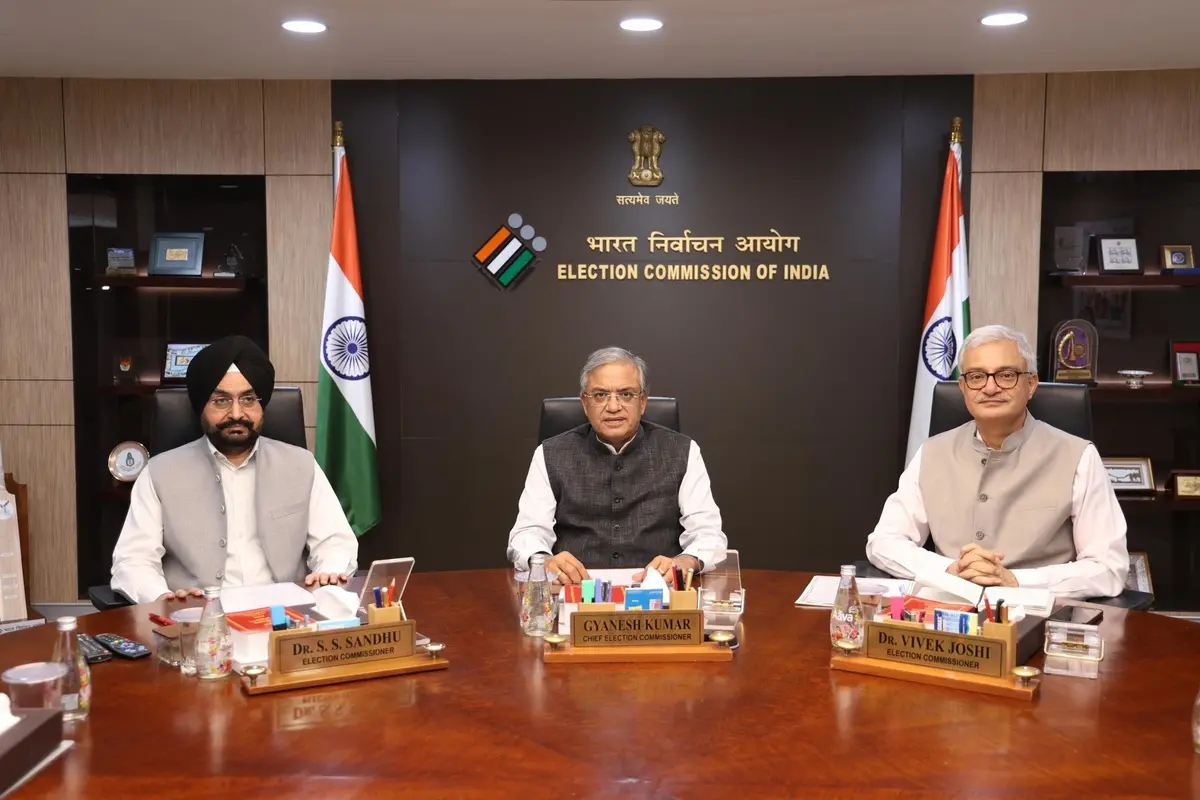
New Delhi: The Cabinet Secretariat took no action on complaints sent by two Election Commissioners against the conduct of an officer in the Election Commission of India (ECI), stating that the communications were made in their “individual capacity” and that action without an official communication from the Commission as a whole could be inappropriate, documents released under the Right to Information (RTI) Act show.
Election Commissioners Sukhbir Singh Sandhu and Vivek Joshi had sent separate communications on July 29 to Cabinet Secretary T.V. Somanathan, raising concerns about the working of Senior Deputy Election Commissioner Maneesh Garg, an IAS officer posted to the Commission by the Appointments Committee of the Cabinet (ACC) on September 2, 2024.
The letters were provided in an RTI response to activist Commodore Lokesh K. Batra (retd).
The Indian Express had reported in September that Sandhu and Joshi wrote to the Cabinet Secretary after a work allocation order within the poll body raised concerns about the centralisation of powers to add or delete names and update records in electoral rolls, instead of allowing officials at the state level to handle these tasks.
In a statement on September 26, the Election Commission said the work redistribution orders issued by Garg had not been implemented following directions from the two Commissioners. The poll panel also said the letters to the Cabinet Secretary concerned an officer on deputation, rather than policy or information technology division matters.
Also read | Can CEC and Election Commissioners be prosecuted? Supreme Court examines legal immunity
What did the Commissioners allege?
According to a Cabinet note included in the RTI response, both Commissioners alleged that Garg, after assuming charge as link officer of the Deputy Election Commissioner (Administration), issued an order changing work allocations among officers of equivalent or higher rank without consulting the Commission or the officers concerned.
They said the move came despite repeated oral and written instructions against making such changes without prior discussion or approval of the Commission.
The Commissioners alleged that Garg’s actions violated the Chief Election Commissioner and Other Election Commissioners (Appointment, Conditions of Service and Term of Office) Act, 2023.
Joshi also said that when he sought the relevant file from the Administration Division, it was not provided to him.
Why did the Cabinet Secretariat not act?
A Cabinet note prepared on August 3 proposed seeking the Chief Election Commissioner’s opinion on the complaints.
However, a subsequent note stated that acting on communications from individual Election Commissioners without an official communication from the Commission as a whole could be construed as interference in the functioning of the constitutional body.
“The Commission is a Constitutional Body and is insulated from executive interference by design to ensure that it functions independently and in a transparent manner,” the note said.
It added that the communications, while deserving due seriousness, could not be treated as a formal communication from the Commission as a whole.
The note concluded that, in the absence of such an official communication, taking action at that stage could be inappropriate. It recommended acknowledging the letters and sending a copy to the office of the Chief Election Commissioner for information.
Also read | Supreme Court issues notice to EC, Gyanesh Kumar over voter deletions in SIR exercise
What does the law say?
The Cabinet note referred to Section 18 of the Chief Election Commissioner and Other Election Commissioners (Appointment, Conditions of Service and Term of Office) Act, 2023.
The provision states that the Commission’s business should be transacted unanimously as far as possible, with differences of opinion decided by a majority.
The note also said that although Garg had been appointed by the ACC, he was serving as an officer of the Election Commission, and his work and conduct were governed by the poll panel’s rules and guidelines.
Cabinet Secretary acknowledged the complaints
The draft note signed by Cabinet Secretary T.V. Somanathan was also marked to the Secretary of the Department of Personnel and Training and the Establishment Officer for the matter to be placed on record.
The note said this would enable the matter to be considered in future decision-making concerning the officer.
Somanathan acknowledged receipt of the two letters on August 5, 2026. Copies of the acknowledgement were sent to both Election Commissioners.
(With PTI inputs)