
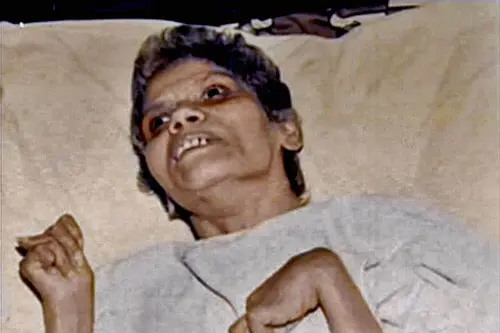
During the hearing of the suo motu case of Kolkata rape and murder case, Supreme Court Chief Justice of India (CJI) D Y Chandrachud drew attention to the tragic story of nurse Aruna Shanbaug. Citing both the cases, he highlighted the need for safer working conditions for health professionals and cited Shanbaug’s case as a stark example of the gender violence plaguing the system.
Who was Aruna Shanbaug?
Aruna Shanbaug was a 25-year-old junior nurse at Mumbai’s King Edward Memorial (KEM) Hospital. She was brutally raped in 1973 by a contract sweeper at the hospital.
The attack occurred while she was changing clothes in the hospital basement. He choked her with a dog chain and raped her. This cut off oxygen to her brain, resulting in a brain stem contusion, cervical cord injury, and cortical blindness. She was discovered at 7:45 am the following morning by a cleaner.
The attack left her in a vegetative state for 42 years until her death on May 18, 2015. Shanbaug's attacker Sohanlal B Walmiki was initially convicted of rape and robbery and sentenced to two concurrent seven-year prison terms. He was later released and is believed to have settled in Delhi.
What is passive euthanasia?
In January 2011, the Supreme Court addressed a euthanasia petition filed by journalist Pinki Virani on Shanbaug’s behalf. Although the court rejected the petition, it led to the landmark legal acceptance of 'passive euthanasia' in India. Passive euthanasia involves intentionally letting a patient die by withholding life support, such as a ventilator or feeding tube.
As India wrestles with rising cases of sexual assault, rape, and harassment, the adequacy of justice in such cases is increasingly questioned. Is a seven-year prison term sufficient for someone who caused a lifetime of suffering, as in Aruna Shanbaug’s case? And will justice be delivered in the Kolkata rape-murder case? These are pressing concerns as the nation continues to confront issues of gender violence and justice.
Published: 21 Aug 2024, 04:56 pm IST
Related Topics
Disclaimer: Kindly avoid objectionable, derogatory, unlawful and lewd comments, while responding to reports. Such comments are punishable under cyber laws. Please keep away from personal attacks. The opinions expressed here are the personal opinions of readers and not that of Mathrubhumi.
