
This India-UK FTA is being hailed as the largest post-Brexit trade agreement signed by Britain and holds massive potential for job creation, export growth and market expansion—especially for Indian businesses.
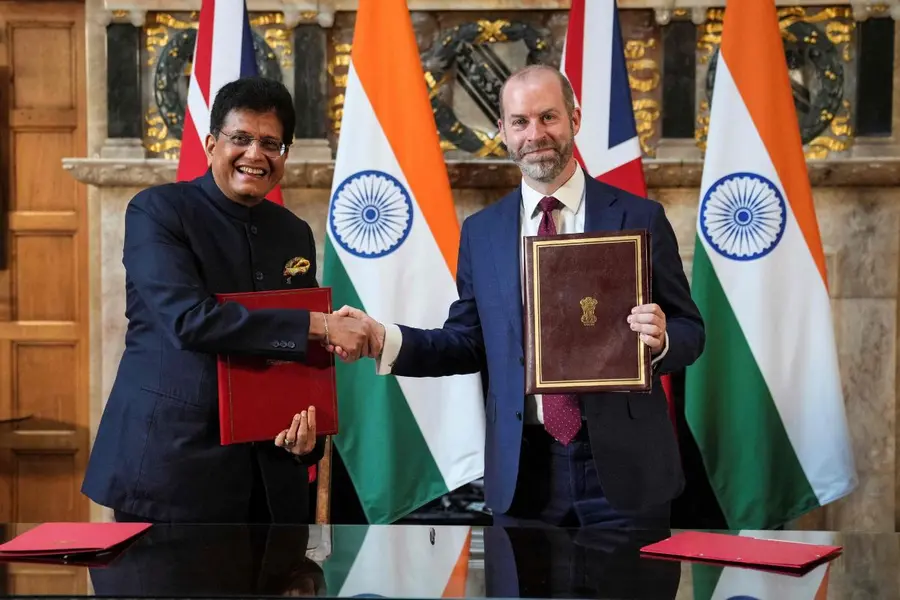
In a major boost to India’s global trade ambitions, India and the United Kingdom have signed a historic Free Trade Agreement (FTA) that is set to double bilateral trade to $120 billion by 2030. The agreement was formalised during Prime Minister Narendra Modi’s visit to the UK, with British PM Keir Starmer also in attendance. Commerce Minister Piyush Goyal and his UK counterpart Jonathan Reynolds signed the pact, marking one of the most comprehensive trade deals India has ever entered into.
This India-UK FTA is being hailed as the largest post-Brexit trade agreement signed by Britain and holds massive potential for job creation, export growth and market expansion—especially for Indian businesses.
Key objectives of FTA
The India-UK FTA is designed to:
- Eliminate or remarkably reduce tariffs on most goods traded between the two countries
- Simplify trade regulations to boost services and investment flows
- Promote economic growth and job creation across multiple sectors
- The agreement covers several areas, including goods, services, innovation, intellectual property, government procurement and labour mobility.
Benefits for India
One of the key highlights of the agreement is that 99% of Indian exports will gain duty-free access to UK markets. This is expected to remarkably boost exports in labour-intensive sectors such as:
- Textiles and apparel
- Leather products
- Footwear
- Gems and jewellery
- Engineering goods
- Toys, sports equipment, and automotive components
- In addition, Indian food products, marine goods and organic chemicals will benefit from lower tariffs, making them more competitive in the UK.
Gains for the UK
British exporters will also benefit from lower import duties on a wide range of products, including:
- Whisky and gin: Import duties will be halved initially from 150% to 75%, and further reduced to 40% over the next 10 years
- Luxury automobiles: Tariffs will be slashed from over 100% to just 10% (subject to quotas)
- Other UK goods like cosmetics, chocolates, soft drinks, salmon, lamb, medical devices and aerospace parts will see reduced duties, offering more affordable prices for Indian consumers
Boost for services and professionals
The FTA also aims to make it easier for professionals to work across borders. The agreement allows for:
- Movement of independent professionals (eg yoga teachers, artists, chefs)
- Entry of business visitors, investors and intra-company transferees
- Family members of eligible professionals to live and work in the host country
Social security agreement
India and the UK have also concluded discussions on a Social Security Agreement (Double Contribution Convention). This would prevent duplicate social security contributions by Indian professionals temporarily working in the UK — a long-standing demand from the Indian business community.
Trade performance and outlook
- India’s exports to the UK grew by 12.6% to reach $14.5 billion in 2024–25
- Imports from the UK rose by 2.3%, totaling $8.6 billion
- Overall trade volume increased to $21.34 billion in 2023–24, up from $20.36 billion in the previous year
Once ratified by the UK Parliament, the agreement is expected to be implemented within a year, according to reports. It is being widely regarded as one of the most comprehensive and impactful bilateral trade pacts for both nations.
Published: 24 Jul 2025, 04:49 pm IST
Disclaimer: Kindly avoid objectionable, derogatory, unlawful and lewd comments, while responding to reports. Such comments are punishable under cyber laws. Please keep away from personal attacks. The opinions expressed here are the personal opinions of readers and not that of Mathrubhumi.
