
Voter dissatisfaction is rising in West Bengal, but Mamata Banerjee’s welfare-driven model continues to anchor key support bases ahead of the 2026 Assembly elections.
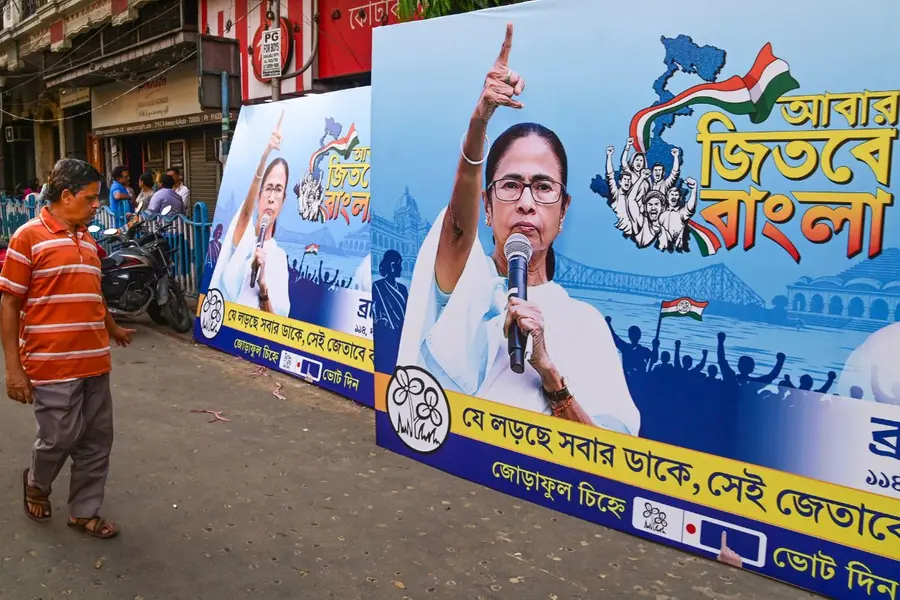
West Bengal is heading into the 2026 Assembly elections with a complex political mood, marked by visible voter dissatisfaction, yet anchored by a deeply entrenched welfare ecosystem built by Chief Minister Mamata Banerjee and the Trinamool Congress (TMC).
The central question shaping this election is not whether anti-incumbency exists, but whether it is strong enough to dismantle a model that has consistently delivered electoral victories for over a decade.
Also Read

Recent opinion poll projections suggest continuity, albeit with reduced dominance.
The TMC is expected to secure a comfortable majority in the 294-seat Assembly, though with a notable drop from its 2021 tally.
Meanwhile, the BJP is projected to expand its footprint, signalling a tightening contest rather than a dramatic power shift.
Despite this, Mamata Banerjee continues to hold a clear edge in leadership preference over BJP’s Suvendu Adhikari, reflecting her enduring personal connect with voters.
The underlying currents of voter discontent are largely economic. Employment and development have emerged as the most pressing concerns among voters, followed by issues such as law and order and women’s safety.
There is also unease around electoral roll revisions under the Special Intensive Revision (SIR) exercise.
Importantly, a significant portion of respondents express doubt over whether existing welfare schemes can adequately address unemployment, indicating a gap between immediate relief and long-term economic expectations.
However, this dissatisfaction has not yet crystallised into a sweeping anti-incumbency wave. West Bengal’s electoral history shows a pattern of selective voting rather than wholesale rejection.
A substantial number of sitting legislators have retained their seats across elections, suggesting that voters often differentiate between local representation and broader governance concerns.
This trend points to a “corrective” form of anti-incumbency, where seat losses occur without necessarily dislodging the ruling party.
At the heart of the TMC’s resilience is its expansive welfare architecture. Schemes such as Lakshmir Bhandar, Kanyashree and Swasthya Sathi have built a vast beneficiary base, particularly among women and economically vulnerable groups.
Ahead of the 2026 polls, the party has doubled down on this approach through its “Didi’s 10 promises” agenda, which includes enhanced direct cash transfers, support for unemployed youth, expanded healthcare access, and increased agricultural spending.
This welfare-first strategy ensures consistent voter engagement by delivering tangible, recurring benefits at the household level.
For many voters, these schemes represent reliability and immediate support, which can outweigh broader dissatisfaction around macroeconomic issues.
Yet, the model is not without its constraints. West Bengal’s rising debt burden and high social sector expenditure have raised concerns about fiscal sustainability.
A significant share of the state’s budget is now directed towards welfare commitments, forcing trade-offs in areas such as education, healthcare infrastructure, and industrial incentives.
These adjustments highlight the growing financial pressure required to sustain the model.
Ultimately, the 2026 election outcome will hinge on whether voter dissatisfaction evolves into a broader, unified sentiment across the state.
If concerns around jobs and governance deepen and converge, the electoral gap could narrow further.
However, if welfare-driven loyalty, especially among core beneficiary groups, remains intact, the TMC is likely to retain power, even with reduced margins.
As it stands, West Bengal appears poised for continuity, but with a more competitive political landscape than in previous elections.
Published: 02 Apr 2026, 11:36 am IST
Related Topics
Disclaimer: Kindly avoid objectionable, derogatory, unlawful and lewd comments, while responding to reports. Such comments are punishable under cyber laws. Please keep away from personal attacks. The opinions expressed here are the personal opinions of readers and not that of Mathrubhumi.