
Astronaut Shubhanshu Shukla is set to return to India after his successful ISS mission and US rehabilitation, to a hero’s welcome
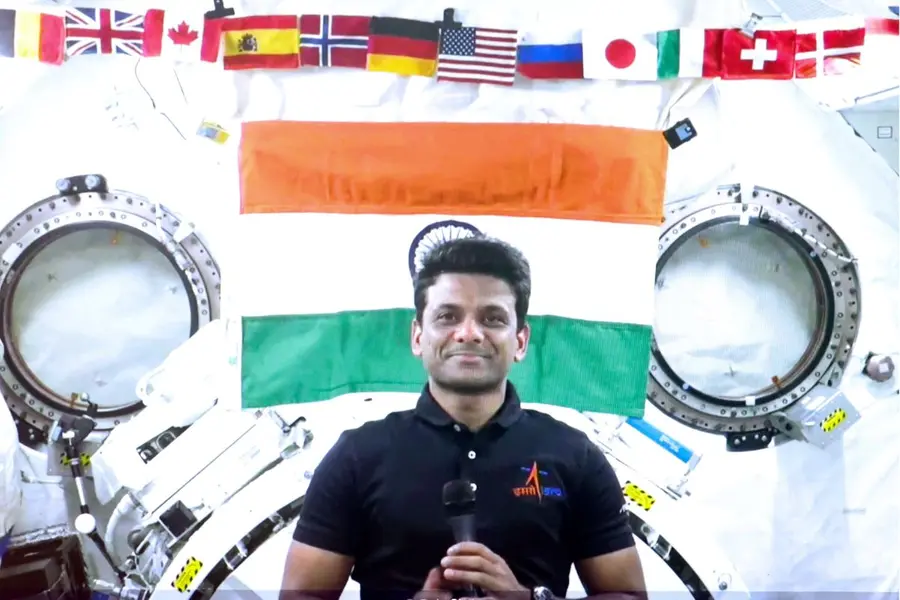
New Delhi, Aug 16: Astronaut Shubhanshu Shukla, who made history as one of India’s space ambassadors aboard the International Space Station (ISS), is set to return home after completing his mission and post-mission rehabilitation in the United States.
Shukla, who participated in crucial space experiments and collaborative projects with NASA and other international partners, spent weeks in rehabilitation following his safe return to Earth. The extended programme helped him recover from the physical toll of microgravity, ensuring he regained strength and full mobility before resuming normal life.
Now, with his recovery complete, Shukla is preparing to fly back to India, where he is expected to receive a hero’s welcome. His journey has not only inspired millions of Indians but also strengthened the country’s position in the global space community.
The astronaut’s homecoming is being seen as a proud moment for the nation, symbolising both personal triumph and India’s growing stature in human spaceflight.
Officials said Shukla will also share his mission experiences with young students and scientists in India, further fuelling the country’s ambitions for its upcoming Gaganyaan human spaceflight programme.
As he returns to his homeland, Shubanshu Shukla carries with him not just scientific achievements but also the dreams and aspirations of a billion people who followed his journey with pride. Check out what his sister had to say ahead of his return:
Mission Overview: Axiom Mission 4 (Ax-4)
Role: Shubhanshu Shukla served as the mission pilot for Axiom Mission 4 (Ax-4)—a privately organised human spaceflight to the International Space Station (ISS).
Significance: He made history as the first ISRO astronaut to visit the ISS and became the second Indian to travel to space after Rakesh Sharma in 1984.
Launch & Crew: The mission launched on June 25, 2025, from Kennedy Space Center aboard a SpaceX Falcon 9 capsule, under the leadership of Commander Peggy Whitson. His colleagues included astronauts from Poland (Sławosz Uznański-Wiśniewski) and Hungary (Tibor Kapu).
Duration: He spent approximately two to three weeks (14 to 20 days) aboard the ISS, conducting vital scientific research and outreach.
Scientific Contributions: During his stay, he completed around 60 scientific experiments, with at least seven specially designed by ISRO or Indian academic institutions. These experiments covered areas such as:
- The cognitive effects of screen exposure
- Microbial adaptation
- Muscle atrophy
- Crop resilience in microgravity
Context & Impact
This mission not only marks a proud milestone for India but also plays a critical role in preparing for the upcoming Gaganyaan human spaceflight programme (India’s own crewed mission expected around 2027). It provided invaluable experience in areas such as crew-ground coordination, health monitoring, psychological preparedness, and cross-cultural collaboration aboard the ISS.
Published: 16 Aug 2025, 01:16 pm IST
Disclaimer: Kindly avoid objectionable, derogatory, unlawful and lewd comments, while responding to reports. Such comments are punishable under cyber laws. Please keep away from personal attacks. The opinions expressed here are the personal opinions of readers and not that of Mathrubhumi.
