
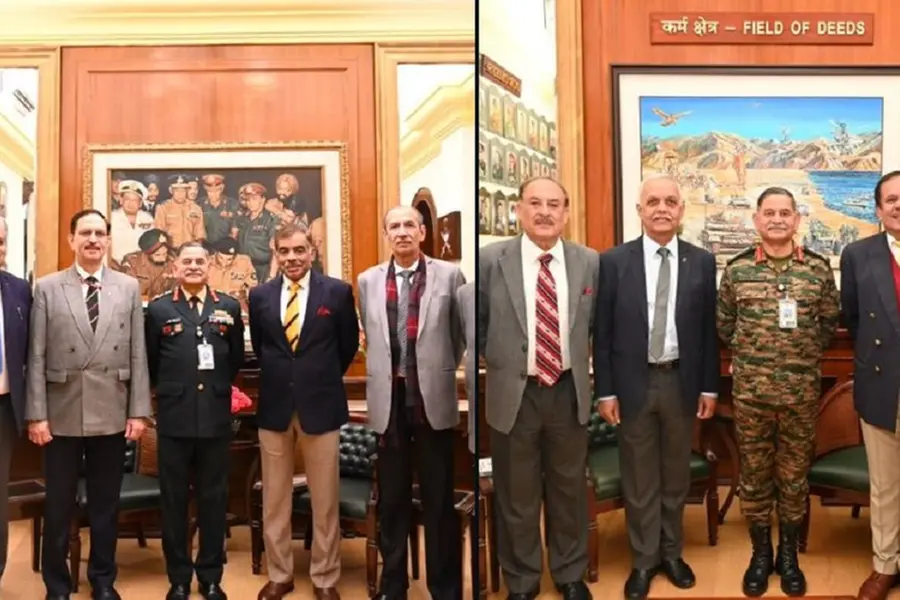
As India prepares to commemorate Vijay Diwas on December 16, marking its historic victory over Pakistan in the 1971 war and the consequent formation of Bangladesh from erstwhile East Pakistan, a contentious decision has emerged. The iconic photograph of the Bangladesh war surrender, long displayed in the Army Chief’s lounge, has been replaced by a new painting. The original photograph, a powerful symbol of India’s military triumph and Bangladesh’s liberation, depicted Pakistan’s Lt. Gen. A.A.K. Niazi surrendering to India’s Lt. Gen. Jagjit Singh Aurora, alongside 93,000 Pakistani soldiers.
Veterans raise concerns over photograph removal
The photograph’s removal has drawn sharp criticism, particularly from military veterans. They argue the move downplays the significance of the 1971 war, a pivotal moment in India’s history, and diminishes the leadership of former Prime Minister Indira Gandhi. Veterans have expressed dismay, calling it a potential attempt to rewrite military history under the banner of “decolonisation.”
Some also see this as a shift in focus, with greater emphasis on more recent conflicts, such as the 1999 Kargil war, possibly overshadowing the unifying legacy of the 1971 victory. The timing, so close to Vijay Diwas, has deepened concerns, with many viewing the change as a disrespectful gesture towards one of India’s most celebrated military achievements.
Symbolism of the replacement artwork
The new painting, titled Karam Kshetra – Field of Deeds, aims to integrate cultural and mythological themes into military symbolism. Painted by an army officer, it shows the serene snow-covered peaks of the Himalayas and the iconic Pangong Tso lake. On the left, representations of Garuda and Krishna's chariot bring a symbolic connection to India's rich cultural heritage, while on the right, modern military assets take centre stage. These include tanks, all-terrain vehicles, infantry carriers, patrol boats, indigenous Light Combat Helicopters, and Apache attack helicopters. This visual juxtaposition effectively underscores India's strategic readiness, blending tradition with advanced warfare technology.
Army sources have stated the change reflects efforts to incorporate indigenous strategic principles into contemporary military thinking. However, critics argue that sidelining historical milestones in favour of mythology risks undermining key chapters of India’s military legacy.
Legacy of the 1971 war
The 1971 war is considered India’s first major military victory as a united nation. For many veterans, it represents not only a decisive triumph but also a moment of national pride and global recognition. The replacement of the photograph has reignited debates about preserving historical memory and balancing it with efforts to redefine India’s military ethos in a modern context.
Published: 14 Dec 2024, 02:11 pm IST
Related Topics
Disclaimer: Kindly avoid objectionable, derogatory, unlawful and lewd comments, while responding to reports. Such comments are punishable under cyber laws. Please keep away from personal attacks. The opinions expressed here are the personal opinions of readers and not that of Mathrubhumi.
