
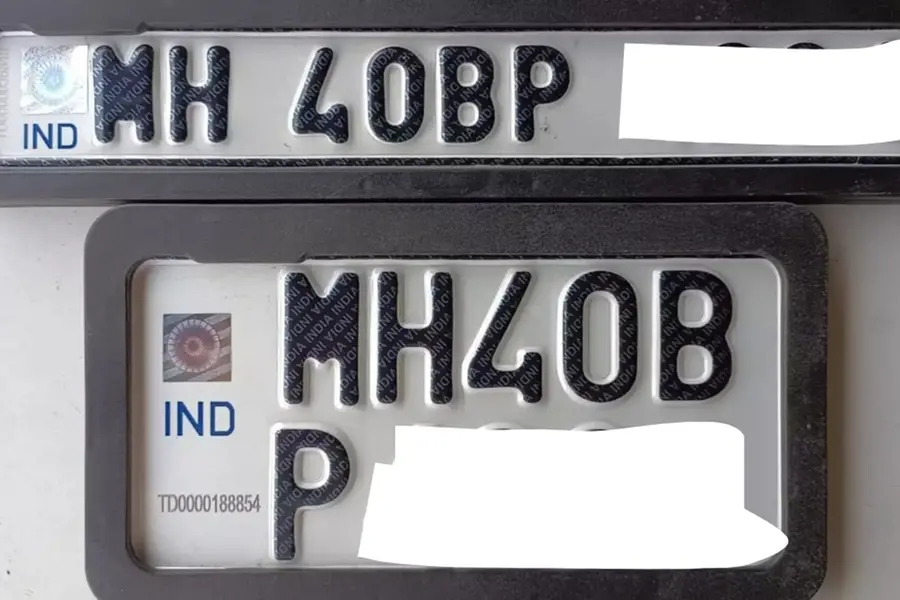
Mumbai: Despite the government-mandated requirement for high-security registration plates (HSRPs) on vehicles registered after April 1, 2019, nearly 10 lakh new vehicles in Maharashtra continue to ply without them, according to an internal transport department review.
The HSRP rule was introduced to curb vehicle theft and ensure uniform identification, with manufacturers responsible for installing the plates before delivering vehicles. However, the Maharashtra Transport Commissioner’s office has now directed Regional Transport Offices (RTOs) to launch a crackdown on vehicles registered post-2019 but still operating without HSRPs.
What is HSRP?
A High-Security Registration Plate (HSRP) is a tamper-proof vehicle number plate made of a special aluminum alloy, designed to enhance security and prevent vehicle theft. It features a chromium-based hologram of the Ashok Chakra, a retro-reflective film inscribed with ‘India’, a unique 10-digit laser-engraved serial number, and the hot-stamped letters ‘IND’ in blue.
The plate is affixed using non-removable snap locks, ensuring that any attempt to forcibly remove it results in damage, making it difficult to misuse or replace illegally. Additionally, except for two-wheelers and tractors, all vehicles must have a chromium-based hologram sticker on the windshield, displaying registration details. The implementation of HSRPs aims to create a standardized vehicle identification system, improve law enforcement capabilities, and enhance road safety measures across India.
Regulatory failures and enforcement loopholes
The lack of strict enforcement has allowed many vehicle owners to replace HSRPs with fancy number plates, often featuring illegible fonts or creatively arranged numbers to evade detection by traffic cameras. Some dealerships have also been found delivering vehicles without proper HSRP installation, instead sending the plates separately for customers to fix themselves.
Activists and former transport officials have raised concerns over the failure to hold vehicle manufacturers and dealers accountable, despite the law making them responsible for HSRP fitment before vehicle delivery. Critics argue that penalising vehicle owners instead of dealers shifts the blame onto unaware consumers.
The transport department has attempted to strengthen compliance by requiring dealers to upload HSRP details on the VAHAN portal before registration certificates (RCs) are issued. However, questions remain as to how these 10 lakh vehicles received RCs without HSRP verification.
Controversy over pricing and compliance
The HSRP fitment process for older vehicles (registered before April 1, 2019) has also been controversial, with opposition parties alleging excessive pricing. The Maharashtra government denies the claims, stating that HSRP charges are in line with other states.
A motor vehicle inspector admitted that there is no specific penalty for vehicles operating without HSRPs, making enforcement weak. Some experts suggest that suspending dealership licenses for repeat violations could deter non-compliance.
With Maharashtra’s total vehicle count exceeding 4 crore, the failure to implement HSRP regulations effectively highlights systemic gaps in enforcement, raising concerns over road safety and law implementation.
Published: 02 Mar 2025, 11:27 am IST
Disclaimer: Kindly avoid objectionable, derogatory, unlawful and lewd comments, while responding to reports. Such comments are punishable under cyber laws. Please keep away from personal attacks. The opinions expressed here are the personal opinions of readers and not that of Mathrubhumi.
